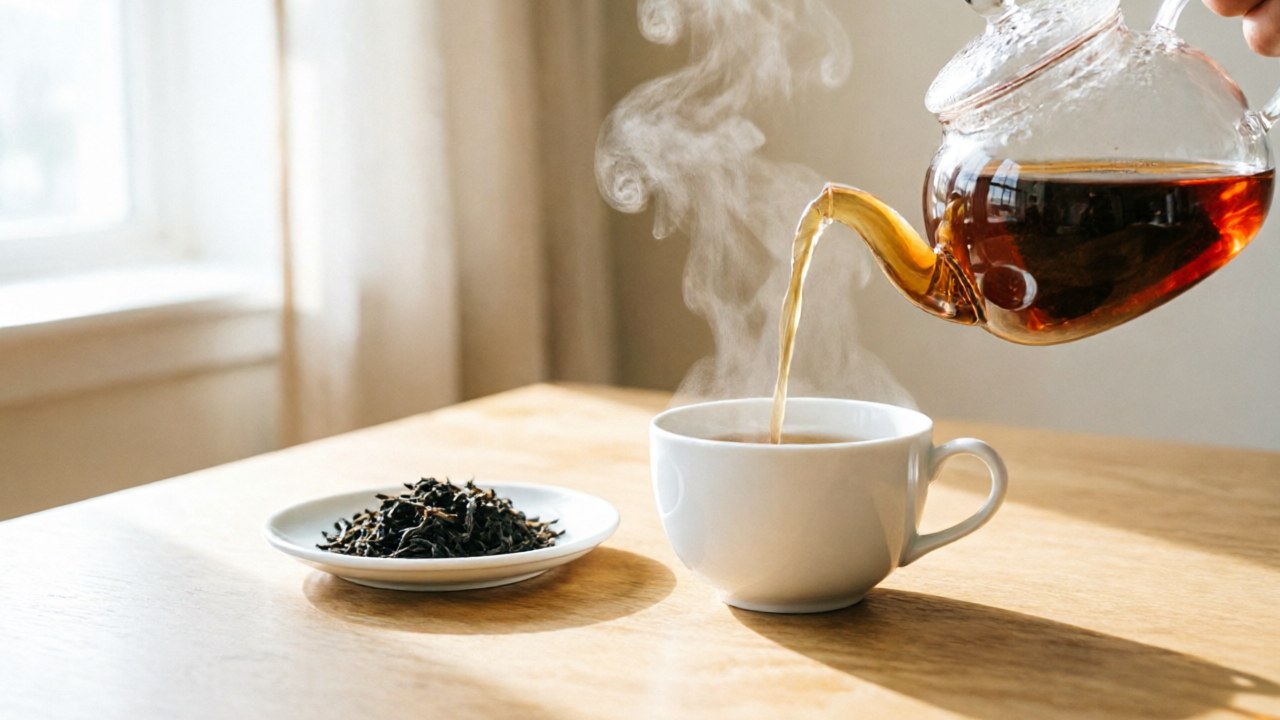
Black tea is the most oxidized tea class, and that oxidation is exactly why it tolerates near-boiling water that would scorch green leaves. But “black tea” spans Assam CTC pellets to whole-leaf Dianhong buds — each subtype wants a different vessel, ratio, and steeping logic. This guide splits the two dominant methods — Western and gongfu — and maps each black-tea subtype to its best parameters.
For the universal foundation that all these methods build on, see how to brew tea — the first-cup system covering heat, measure, pour, and taste across every tea class.
Why Black Tea Tolerates Boiling Water
Full oxidation is the scientific basis for black tea’s heat tolerance. During processing, enzymes polymerize simple catechins into larger compounds called theaflavins and thearubigins [1] — these molecules are significantly more heat-stable than the delicate catechins that define green tea. A rolling boil (212°F / 100°C) extracts rich, malty flavor from Assam or pine-smoked depth from Lapsang Souchong without turning the cup bitter. The same temperature would make a Longjing undrinkable in 30 seconds.
Not every black tea wants a boil, though. Darjeeling first-flush is processed to preserve floral aromatics closer to an oolong than a typical black — less oxidation means the aromatic compounds are more fragile. Pouring 212°F water on Darjeeling first flush destroys the very notes that make it expensive. Drop to 185–195°F and the muscatel character stays intact.
Contrast this with green tea brewing, where the entire window is 160–180°F — black tea gives you a wider target, but the variety still narrows it.
What You’ll Need
A short kit before you start. Each item solves one specific problem.
- Variable-temp kettle — A rolling boil covers Assam and Lapsang, but Darjeeling wants 185°F. The Chefman Electric Kettle ($29.99) has five presets that hit both ends without guessing.
- Glass teapot — For 2–3 cup Western sessions, a clear pot lets you watch the liquor darken. The HIWARE 1000ml Glass Teapot ($22.99) has a removable infuser and is stovetop safe.
- Basket infuser — For single-mug brewing, a cramped tea ball chokes whole-leaf teas. The OXO Brew Tea Infuser Basket ($16.95) gives leaves room to expand.
- Timer — Precision matters more than the device. The Antonki Digital Timer ($5.69, 2-pack) is magnetic and loud.
- Practice leaf — Start with a forgiving English Breakfast before risking expensive Darjeeling. Harney & Sons English Breakfast ($9.55, 4 oz tin) is a bold Assam-style blend that takes boiling water without complaint.
For custom vessel sizes, the brewing ratio tool calculates grams-per-ml across any pot or mug.
Western-Style: The 3–5 Minute Cup
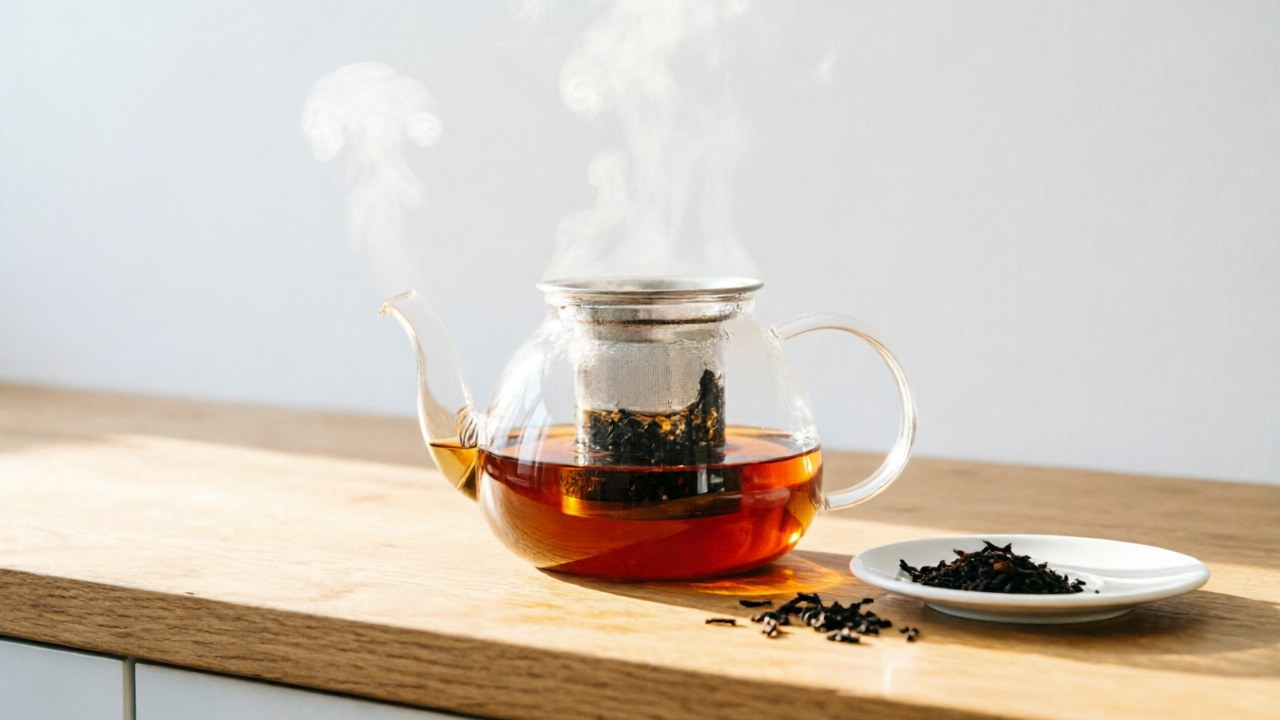
Western style is the daily cup — one vessel, one longer steep, one good mug. Most black teas were built for this method.
Steps:
- Heat water to a rolling boil (212°F / 100°C) for Assam, Ceylon, Lapsang, and English Breakfast blends. Drop to 185–195°F for Darjeeling to protect the floral notes [3].
- Measure 2g loose leaf per 240ml / 8 oz water — about 1 teaspoon for dense CTC pellets, 1 heaping teaspoon for whole-leaf. A scale beats volume every time for whole-leaf teas.
- Steep 3–5 minutes. Set a timer. Three minutes for lighter Darjeeling, four minutes for Keemun or Ceylon, five minutes for Assam and Breakfast blends that need to stand up to milk.
- Strain the leaves out immediately when the timer sounds. This is the one step that makes or breaks the cup.
- Serve plain, or with milk and sugar for Assam-style bold cups. Darjeeling and Keemun are better without.
Vessel-wise, a glass teapot with infuser handles 2–3 cups cleanly, while the OXO basket infuser is better for a single mug at your desk.
Gongfu-Style: Short Steeps, Many Rounds
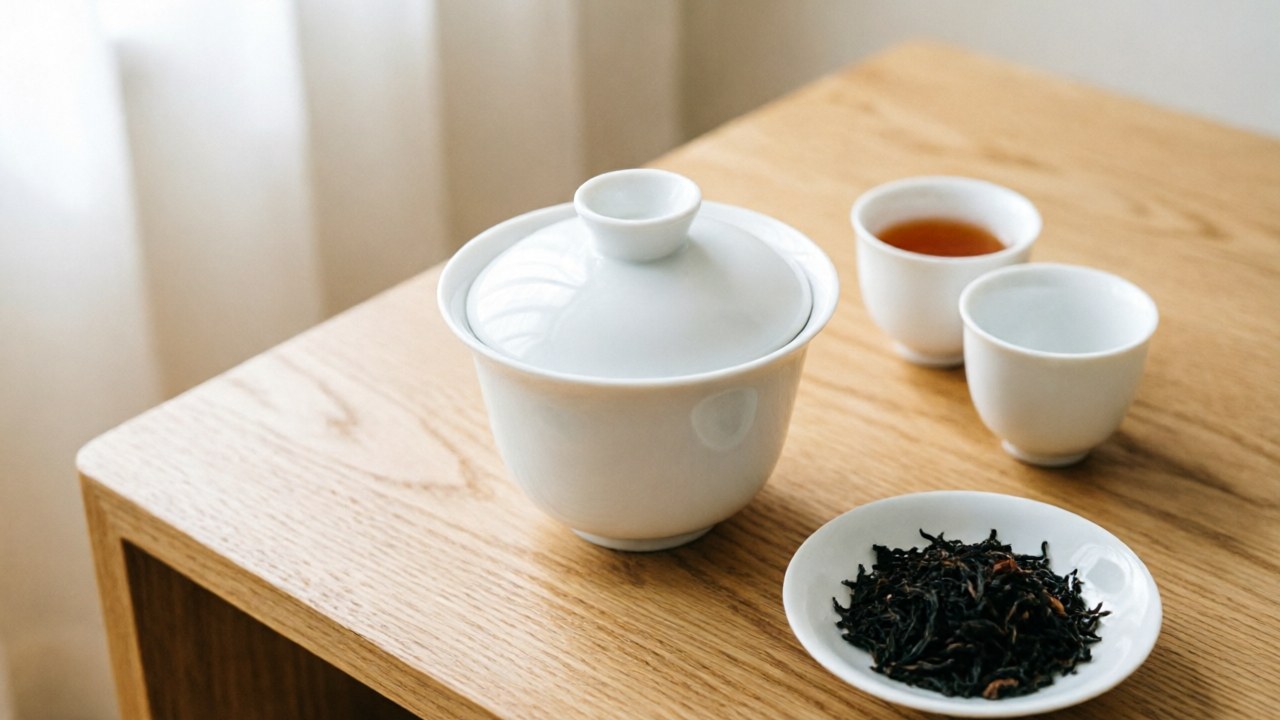
Gongfu means “skill through practice” — a small vessel, high leaf ratio, and a sequence of short steeps that let you taste how the same leaves evolve across rounds. For whole-leaf Chinese black teas, this is where they shine.
The gongfu tradition has its own deeper context. Here we borrow the method for black tea brewing, not the full ceremony.
Steps:
- Warm a small vessel (100–150ml gaiwan or yixing pot) with boiling water, swirl, discard. Cold porcelain steals heat from your first steep.
- Load 5g whole-leaf black tea — a high leaf-to-water ratio that enables short steeps. This is roughly 5× the Western density.
- Rinse (optional): flash-steep 5 seconds and discard to “wake” the leaves. Helpful for tightly rolled or aged teas.
- First steep: 8–10 seconds. Pour through a strainer into a fairness pitcher or directly into small cups.
- Subsequent steeps: add 5 seconds per round. Whole-leaf Keemun and Dianhong can yield 5–8 infusions this way.
Vessel choice: A porcelain gaiwan ($15.90, 200ml) is the versatile default — neutral, easy to clean, works across tea types. For a committed black-tea practice, a small YULONGSHENG yixing clay pot ($17.99, 220ml) seasons over sessions: porous zisha clay absorbs compounds from one brew and releases them into the next, building a richer roast character over weeks.
When to Choose Which: Western vs Gongfu
Not every black tea works both ways. The leaf shape tells you which method to use.
| Black Tea Type | Best Method | Why |
|---|---|---|
| Assam CTC / English Breakfast | Western | Broken-leaf pellets release fast; gongfu short steeps waste the leaf |
| Darjeeling (any flush) | Western | Delicate floral aromatics need longer, cooler extraction |
| Keemun (Qimen) | Gongfu | Whole-leaf with complex layers that unfold across multiple steeps |
| Dianhong (Yunnan Gold) | Gongfu | Tippy buds reward high-ratio short steeps |
| Lapsang Souchong | Both | Western for daily smoke; gongfu reveals pine-resin layers |
| Ceylon OP | Western | Large leaf but straightforward profile suits daily Western |
Rule of thumb: CTC and broken leaf → Western. Whole-leaf Chinese blacks → gongfu. For Keemun practice leaf, Davidson’s Organics Keemun Congou ($19.12, 16 oz bag) is a forgiving introduction — toasty, wine-like, and capable of 6+ flash steeps.
Variety-Specific Parameters
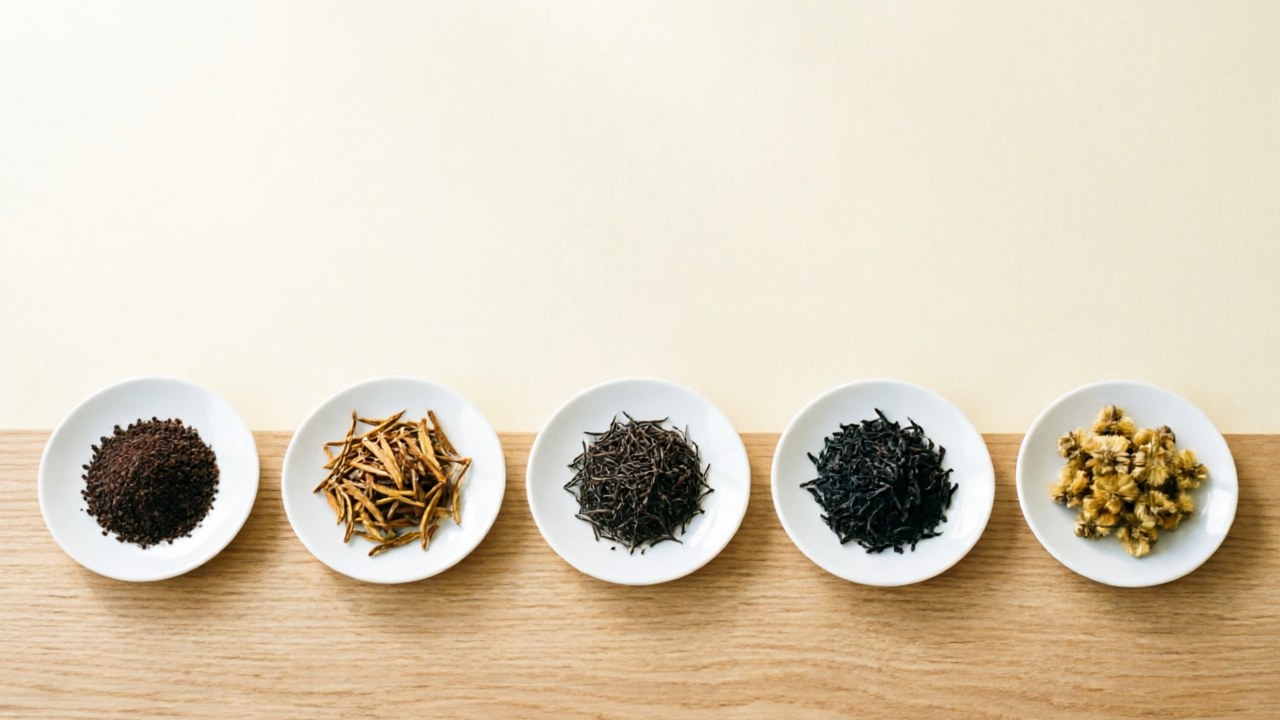
A single reference for the five most common subtypes — temperature, ratio, and time in one place [2][3]. For quick calculations across vessel sizes, pair this with the steeping time tool.
| Subtype | Water Temp | Leaf per 240ml | Western Steep | Gongfu (5g/100ml) | Notes |
|---|---|---|---|---|---|
| Assam (CTC) | 212°F / 100°C | 2g | 3–5 min | Not recommended | Milk-friendly, malty, bold |
| Darjeeling | 185–195°F / 85–90°C | 2g | 3 min | Not recommended | Floral muscatel, protect aromatics |
| Keemun | 205°F / 96°C | 2g Western / 5g gongfu | 3 min | 8–10s × 6+ | Toasty, wine-like, smoke undertone |
| Lapsang Souchong | 212°F / 100°C | 2g | 3 min | 10s × 5+ | Smoky pinewood, tar hints |
| Dianhong (Yunnan Gold) | 195°F / 90°C | 2g Western / 5g gongfu | 3 min | 8–10s × 6+ | Cocoa, honey, golden buds |
Practice leaves for each column: English Breakfast for Assam-style, Darjeeling for delicate floral, Lapsang Souchong for smoke.
Common Mistakes
Five ways a black-tea cup goes wrong — each with a quick fix.
- Over-steeping past 5 minutes — extracts bitter tannins that no amount of milk hides. Fix: set a timer and strain the moment it rings.
- Boiling Darjeeling at 212°F — destroys the floral notes that make first-flush expensive. Fix: a variable-temp kettle dialed to 185–195°F.
- Cramming whole-leaf into a tea ball — no room to expand, uneven extraction, weak cup. Fix: a wide basket infuser.
- Reboiling water — de-oxygenated water makes a flat cup regardless of leaf quality. Fix: fresh cold water each time.
- Gongfu on CTC pellets — fast-extracting broken leaf floods the first steep and leaves the next five empty. Fix: save gongfu for whole-leaf.
Re-Steeping Black Tea Leaves
Western style: add 1–2 minutes for a second cup. Most broken-leaf teas give 2 infusions max — Assam CTC and Ceylon OP can push to 3 if you don’t mind a thinner body.
Gongfu style is where re-steeping shines. Keemun and Dianhong yield 5–8 short infusions with +5 seconds per round. Stop when the liquor thins or the cup turns hollow. Lapsang Souchong holds its smoke for 4–5 rounds before the pinewood character fades.
For a deeper dive into one of the most gongfu-friendly blacks, see the Keemun variety page.
Black Tea Sub-Type Quick Reference
Not all black teas brew the same. Here’s how the main sub-types differ:
| Sub-type | Origin | Flavor profile | Best method | Milk? |
|---|---|---|---|---|
| Keemun (Qimen) | Anhui, China | Smoky, cocoa, orchid | Gongfu (short steeps) | No |
| Dianhong (Yunnan) | Yunnan, China | Malty, honey, golden buds | Gongfu or Western | Optional |
| Assam | Assam, India | Bold, brisk, malty | Western (long steep) | Yes |
| Darjeeling | Darjeeling, India | Floral, muscatel, astringent | Western (moderate steep) | No |
| Ceylon | Sri Lanka | Citrus, brisk, medium body | Western | Optional |
| Lapsang Souchong | Fujian, China | Pine smoke, intense | Gongfu | No |
Keemun and Dianhong reward gongfu brewing with multiple short steeps. Assam and Ceylon are built for the Western mug-and-pot tradition. Darjeeling sits in between — good either way but best without milk. For the Harney & Sons English Breakfast most people keep in the cupboard, that’s typically an Assam-Ceylon blend designed for Western brewing with milk.
Milk Tea, Iced Tea, and Cold Brew
Black tea’s boldness makes it the most versatile base for variations:
Milk tea: Brew black tea 30% stronger than usual (1.5 tsp per 240ml), steep 4 minutes, then add warmed milk to taste. The extra leaf compensates for the dilution. For chai, add cardamom, cinnamon, and ginger during the steep.
Iced tea: Brew a concentrate (double leaf, same water), steep 4 minutes, then pour over ice. The ice dilutes back to drinking strength. Don’t brew at normal strength and chill — the flavor goes flat.
Cold brew: 10g black tea in 1L cold water, refrigerate 8-12 hours. Cold-brewed black tea is surprisingly sweet and smooth — the cold water skips the bitter tannin extraction entirely. Strain and serve over ice.
For the caffeine content comparison between these methods, cold brew typically extracts 60-70% of the caffeine of a hot brew.
The Mind of Black Tea Brewing
Black tea forgives what green tea cannot. Boiling water doesn’t wound it — it releases the depth that oxidation built. Brew it long for a sturdy morning cup, or short and many times for the layers a whole-leaf Chinese black hides. Either way, respect the leaf: strain when the timer rings, and let the variety tell you which method it prefers.
References
[1] Wikipedia contributors. “Black tea.” Wikipedia. https://en.wikipedia.org/wiki/Black_tea — oxidation chemistry (theaflavin and thearubigin formation), CTC vs orthodox processing, flush terminology.
[2] Wikipedia contributors. “Tea — Steeping.” Wikipedia. https://en.wikipedia.org/wiki/Tea#Preparation — standard parameter ranges across Western and gongfu brewing methods.
[3] Harney, M. & Harney, P. (2010). The Harney & Sons Guide to Tea. ISBN 978-0393733225 — brewing parameters for Darjeeling (185–195°F), Assam (212°F), Keemun (gongfu), and Lapsang Souchong.