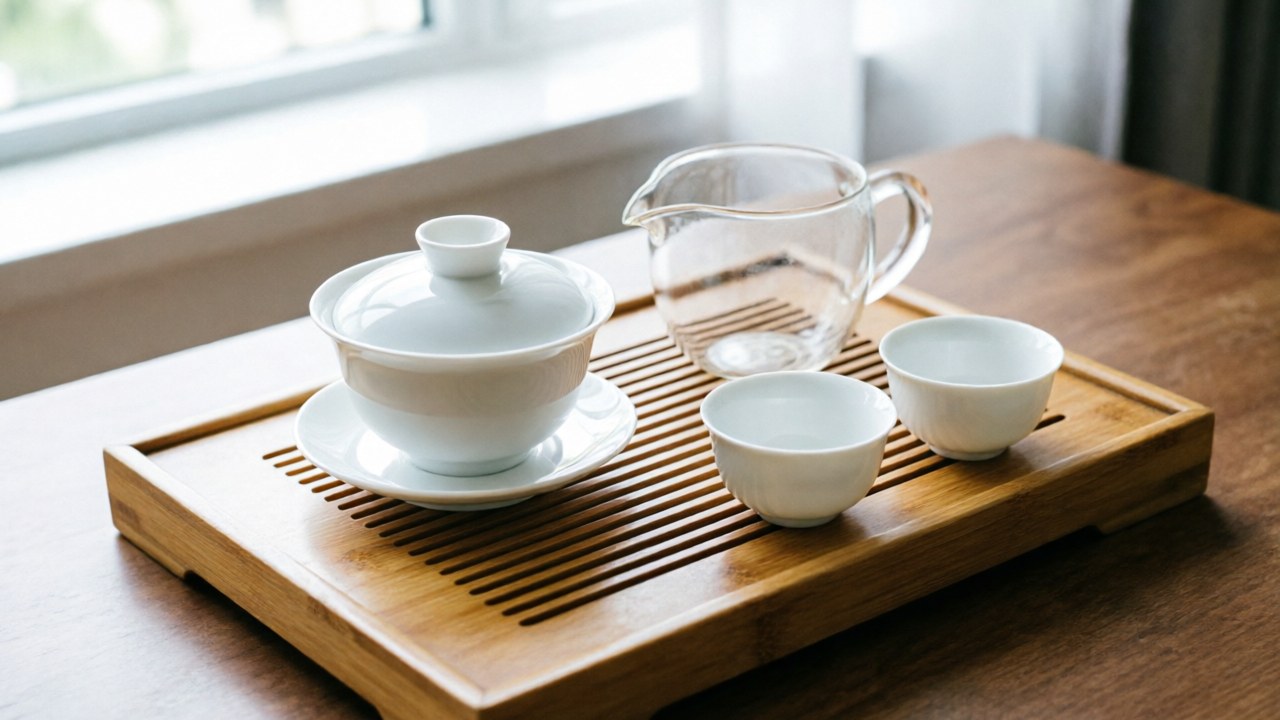
Gongfu Cha is a Chinese skill tradition — not a Japanese matcha Practice path, and not a full brewing classroom of temps and ratios. I keep this page as a tradition map: what Gongfu is, why each vessel has a role (gaiwan, tray, cha-hai, cups, kettle, cloth), and an honest nine-step home sequence you can actually run. Deep parameters export to brewing; vessel decisions export to teaware [8].
What Gongfu Cha Is (and Is Not)
The name Gongfu (or Gong Fu Cha) means making tea with skill — skillful attention, not martial “kung fu” theater [1]. The living frame is Chinese multi-steep hospitality: high leaf-to-water ratio, small vessels, and short repeated steeps that let one leaf open across many pours [1][2]. Chaozhou and related southern Chinese tables still treat this as everyday hospitality grammar, not costume drama [2][4].
It is a tradition map — how people stage skillful pours at home and table. It is not:
- Japanese matcha Practice / chanoyu — different leaf form, bowl path, and principles. Soft-link only: matcha ceremony practice.
- A brewing Special-cups technique classroom of temp/ratio/time charts — that depth belongs to Gongfu basics on the brewing side, not this tradition page.
- An occasion hosting playbook — guest menus live under brewing occasions, not ceremony Traditions.
- A wellness or medical page — no caffeine dose claims, no sterilize science.
If the map still feels large, start at the culture door: tea culture for beginners. The wider shelf lives on the Ceremony Traditions hub section.
Tradition Map — Gongfu Among the Four Ceremonies
TeaWithMind keeps four Traditions as orientation, not encyclopedia:
| Tradition | Frame | Status on this site |
|---|---|---|
| Gongfu Cha | Chinese skill multi-steep | This page |
| Chado / Chanoyu | Japanese powdered + bowl path | Practice soft-link matcha ceremony; full system at Chado |
| Darye | Korean hospitality tea | Live: Darye |
| Afternoon tea | English service + table | Live: Afternoon tea |
Practice and Tradition are not the same rail [3][10]. Practice means a runnable home sequence you can do today — matcha-ceremony owns that Japanese Practice card. Gongfu lives on Traditions + Sequences only: there is no separate Gongfu Practice card on the hub. This longform is the Sequences Rail B landing for the planned nine-step Gongfu preview on Ceremony Sequences. Soft-link contrast only — do not treat matcha-ceremony as a Gongfu rewrite.
Vessel Role Map (Not a Shopping Dump)
Each vessel has a job in the sequence. Size charts and brand top-tens belong elsewhere; roles belong here [1][5].
| Role | Job in the sequence | Home pick |
|---|---|---|
| Gaiwan (porcelain first) | Main short-steep vessel; lid control; leaf watch | Porcelain Gaiwan 150ml for solo; Liang baobao 200ml when two small cups share |
| Tray stage | Catches rinse + overflow; defines the working surface | Eorbow 17” wooden tray at home; Lyty mini bamboo tray in apartments |
| Cha-hai (fairness pitcher) | Evens strength before guest cups | JIUMEI glass fairness pitcher |
| Tasting cups | Tiny volume forces slow sips across short steeps | Liang baobao mini cups set of 4 |
| Yixing / clay pot | Upgrade when oolong or pu-erh multi-steep is the main practice | SILINE Yixing clay teapot set — not first buy for mixed greens |
| Kettle | Controllable pour + hold heat for multi-steep | Cosori gooseneck temperature kettle |
| Ceremony cloth | Wipe vessel + tray — purity gesture, not medical sterilize | luzen tea towels cloth set |
Capacity cheat-sheet: 100–150 ml gaiwan covers solo pours, 150–200 ml a shared table; 2 oz cups pace slow sips; a 17-inch tray stages two cups, an 11-inch mini stages one.
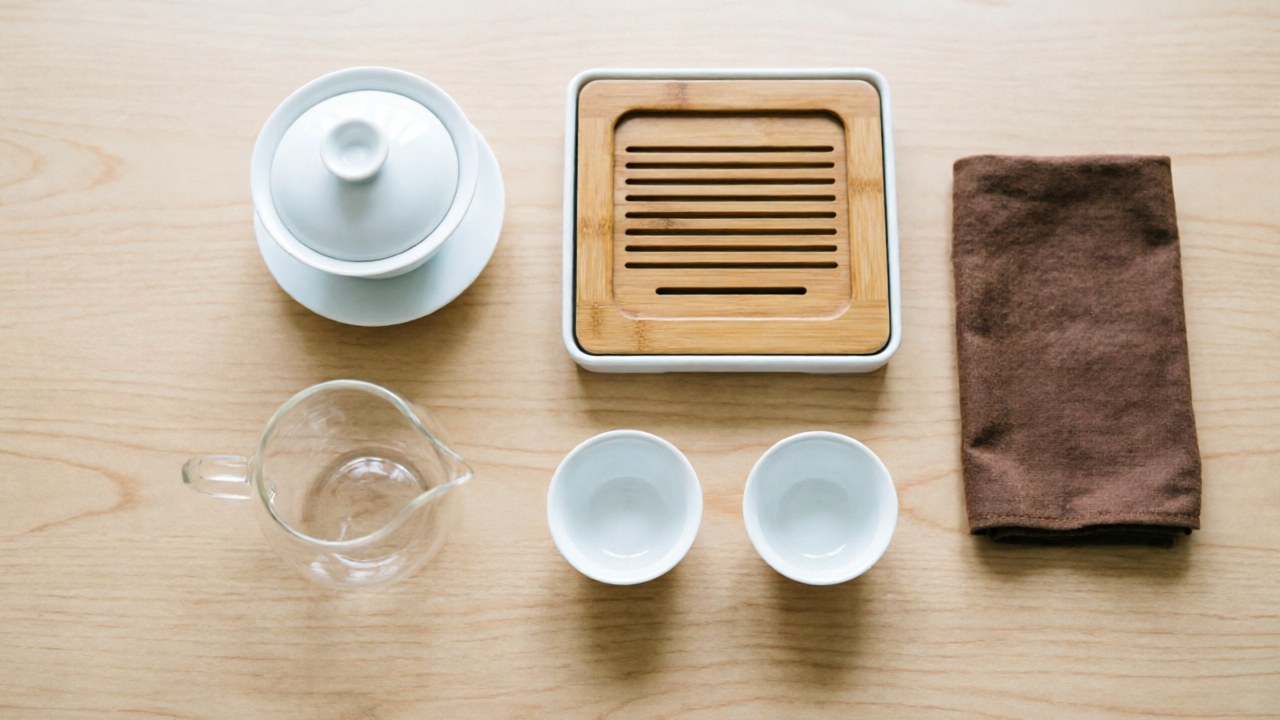
Porcelain first keeps heat and leaf visible without seasoning rules. Clay is a later path when one leaf family owns the table. Bench work agrees: material measurably changes the liquor [12] — a tasting result from measured brews, not a ritual rule. Vessel decision depth exports to how to choose a gaiwan, starter systems to teaware for beginners, tasting layouts to teaware for tasting, few-tool upgrade to personal teaware system, and rinse/dry/store care (no sterilize claims) to teaware care.
Home Sequence — Nine Honest Steps
Sequences Rail B is a nine-step home map, not a twenty-one-gesture theater encyclopedia [5][6][10]. Exact seconds and grams export to brewing; this page teaches runnable order.
- Clear and set the tray — define the stage. Full home table: Eorbow 17” tray. Apartment surface: Lyty mini tray.
- Warm vessels — hot water through gaiwan or pot, cha-hai, and cups; discard; wipe with a ceremony cloth.
- Place the dry leaf — open the bag, smell once, portion into a 150 ml porcelain gaiwan for solo or a 200 ml classic gaiwan when guests share.
- Awaken / rinse — quick hot pour, short contact, discard to the tray. This is a respect gesture, not “sterilize the leaf.”
- First short steep — fill, lid on, short count. [11] Exact °C / g / s live under Gongfu basics.
- Decant to cha-hai — full pour into the JIUMEI fairness pitcher so every cup matches.
- Serve small cups — mini Gongfu cups set of 4; both hands when hosting.
- Taste slowly — one sip; notice aroma, then liquor; do not race the next steep.
- Repeat short steeps — same leaf, shorter or similar contact; stop when the leaf is tired. [14]
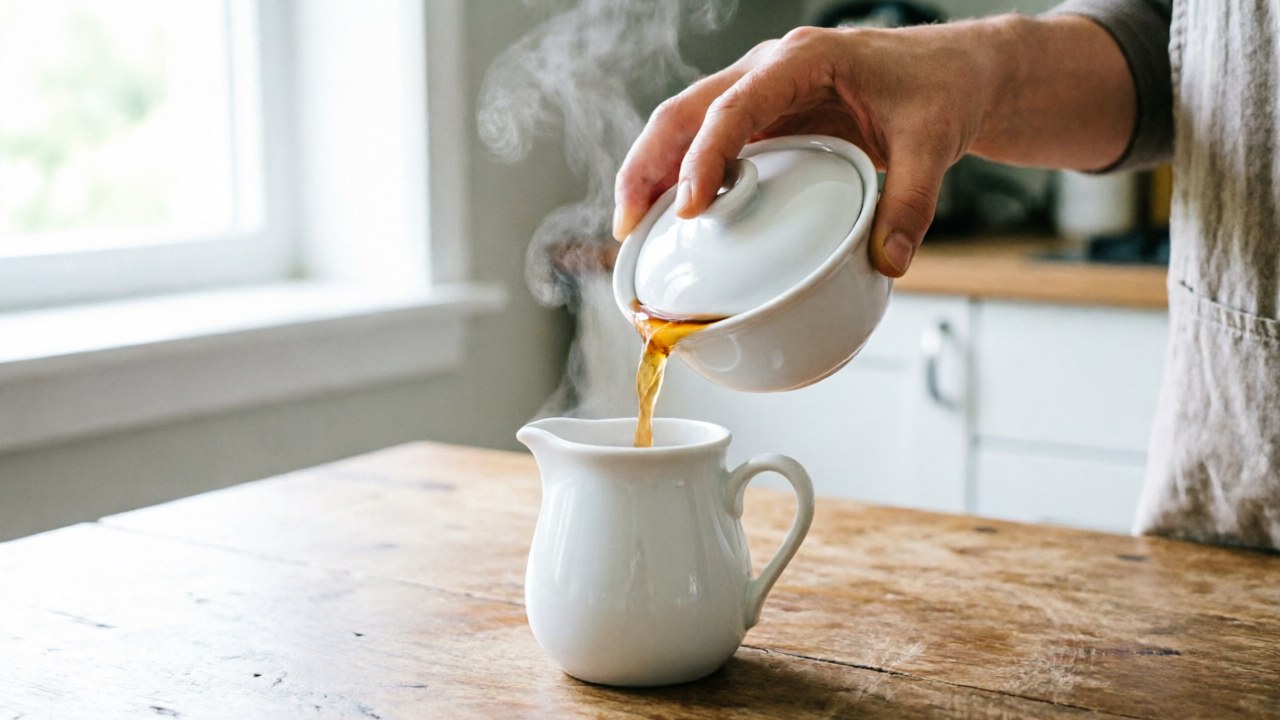
Clay path optional from step 3 onward: the SILINE Yixing set when practice is dedicated oolong or pu-erh. For a first-cup system without ceremony grammar, use how to brew tea. Cooler-water greens that are not your multi-steep main leaf export to green tea brewing.
When Not to Force a Full Ceremony
A full tray sequence is skill, not a daily obligation.
- Solo mug day — a Western single steep in a mug is honest [11]. Start with how to brew tea.
- Guest is rushed — one clean pot pour beats a half-finished nine-step performance.
- Leaf is not multi-steep worthy — dusty bagged dust and one-shot bags do not need tray theater [14].
- No tray space — travel or office: use a portable porcelain Gongfu set instead of forcing a 17” stage.
- Still learning heat control — a temperature-control kettle often helps more than buying five extra cups.
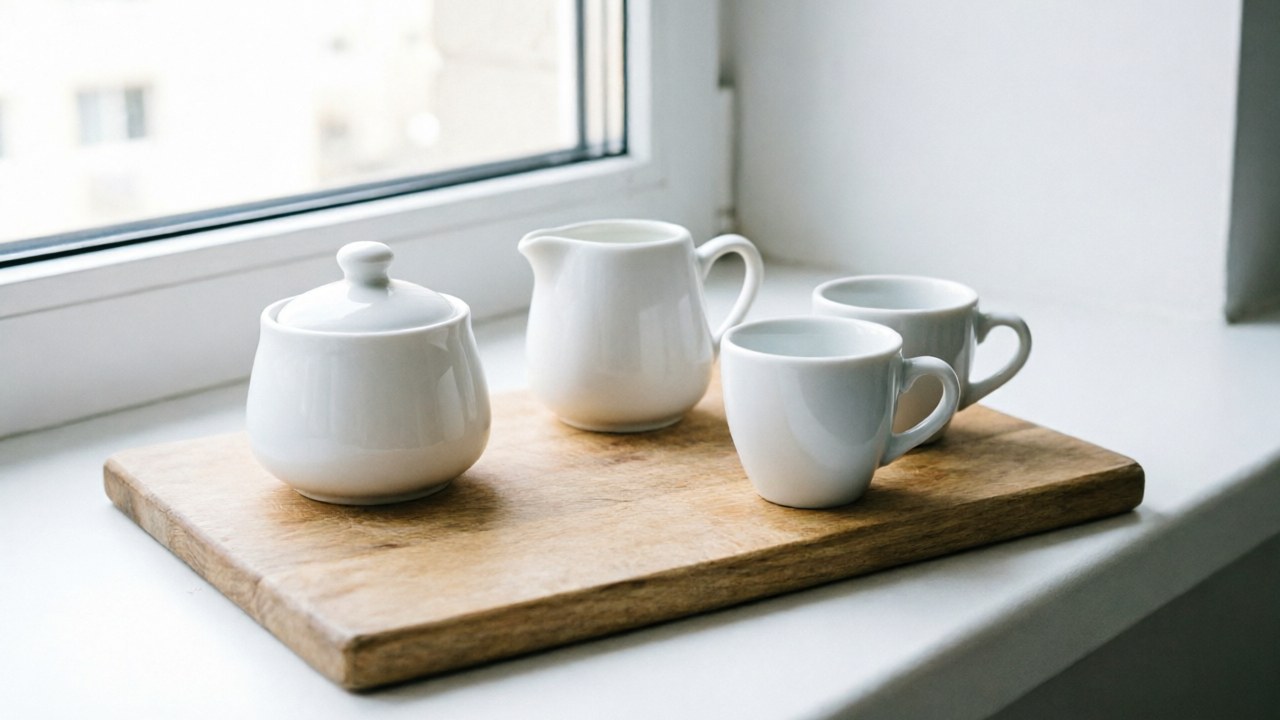
When the map feels too large, reset at tea culture for beginners.
Export Paths — Parameters to Brewing · Vessels to Teaware
Keep boundaries clean so this tradition page does not cannibalize brewing classrooms or vessel decision guides [7][10].
| Need | Go here | Status |
|---|---|---|
| Deep temp / ratio / time for Gongfu | Gongfu basics | Live |
| Gongfu vs Western compare | Gongfu vs Western brewing | Live |
| First-cup system (no ceremony) | How to brew tea | Live |
| By-leaf green classroom | Green tea brewing | Live |
| Gaiwan size / lid / material | How to choose a gaiwan | Live |
| Starter / tasting / personal / care | Teaware path rails below | Live |
| Japanese Practice sequence | Matcha ceremony | Live |
A Starter Kit Without Theater
Build by role, not by “best set of 2026.” [9]
| Role | Pick | Why |
|---|---|---|
| Solo gaiwan | Porcelain 150ml gaiwan | Small leaf watch, low cost |
| Shared gaiwan | Liang baobao 200ml | Classic lid-bowl-saucer form |
| Home tray | Eorbow 17” tray | Catches rinse without a theater sink |
| Compact tray | Lyty mini tray | Apartment table |
| Fairness | JIUMEI cha-hai | Even cups |
| Cups | Mini cups set of 4 | Slow sips |
| Clay upgrade | SILINE Yixing set | Oolong / pu-erh path |
| Heat | Cosori gooseneck kettle | Hold heat across steeps |
| Cloth | luzen tea towels | Wipe as purity gesture |
| Travel / office | LURRIER portable set | When full stage is not practical |
Soft system paths: teaware for beginners, personal teaware system, teaware care.
Path Rails — Where Gongfu Sits on the Site
- Hub: Ceremony · Traditions · Sequences
- Japanese Practice contrast: matcha ceremony
- Culture door: tea for beginners
- Vessel decision: how to choose a gaiwan
- Path rails: beginners · tasting · personal system · care
- Brewing first cup: how to brew tea · leaf classroom: green tea
- Sensory note: cha qi — the felt warmth from a good session, a body report not a medical claim
- Live: Gongfu basics · Gongfu vs Western · Chado · Darye · Afternoon tea
The Mind of Gongfu
Gongfu is not speed and not costume. It is the decision to give a leaf enough attention for many short lives in one small vessel. Warm the cup, rinse with respect, pour evenly, taste before you rush the next steep. When the day is thin, a simple mug is honest too. Skill is knowing when the full sequence serves the leaf — and when it does not.
The calm-alert lift is a body report [13].
References
[1] Wikipedia — Gongfu tea. Skill framing, multi-steep / high leaf-to-water baseline.
[2] Wikipedia — Chinese tea culture. Hospitality and regional table context for tradition map.
[3] Wikipedia — Tea ceremony. Cross-tradition orientation (Chinese / Japanese / Korean / English).
[4] Wikipedia — Chinese tea ceremony. Naming variants around Gongfu Cha vs broader Chinese service.
[5] Teasenz — Traditional Gongfu Tea Ceremony guide (structure reference). Full theater step lists are the anti-pattern this home map avoids.
[6] Path of Cha — Complete Gong Fu Cha Guide (structure reference). Cultural framing density vs Master mid-band length.
[7] Teathority — Gongfu Tea Brewing Guide (structure reference). Technique classroom depth exports to planned brewing Special cups.
[8] Google AI Overview observation for query gongfu tea ceremony (2026-07-17). Differentiates via tradition-vs-practice, vessel roles, honest nine-step home, when-not, export paths, kit by role.
[9] Amazon catalog depth for gongfu set / gaiwan / tray / yixing queries (T01 counts). Supports kit commercial viability only; no star ratings stored.
[10] TeaWithMind Information Architecture §14.9 R22 / R22b — Ceremony Practice → Traditions → Sequences → Principles. Gongfu = Traditions card + Sequences Rail B longform; parameters export to brewing.
[11] Astill, Birch & Dacombe (2001), J. Agric. Food Chem. — Factors Affecting the Caffeine and Polyphenol Contents of Black and Green Tea Infusions. Brew temperature and steep time govern extraction.
[12] Guo et al. (2024), Plants — Influence of Various Tea Utensils on Sensory and Chemical Quality of Different Teas. Bench work: purple-sand sets suited oolong and dark tea; porcelain lifted sweetness.
[13] Payne et al. (2025), Nutrition Reviews — Effects of Tea (Camellia sinensis) or its Bioactive Compounds l-Theanine or l-Theanine plus Caffeine on Cognition, Sleep, and Mood in Healthy Participants: A Systematic Review and Meta-Analysis of Randomized Controlled Trials. Attention and mood: small effects, wide uncertainty.
[14] Zhang, Yusuf, Xu & Isah (2026), J. Food Sci. — Three Successive Infusions: Scientific Insights Into a Traditional Green Tea Drinking Custom. Marker compounds fall steeply across three pours.