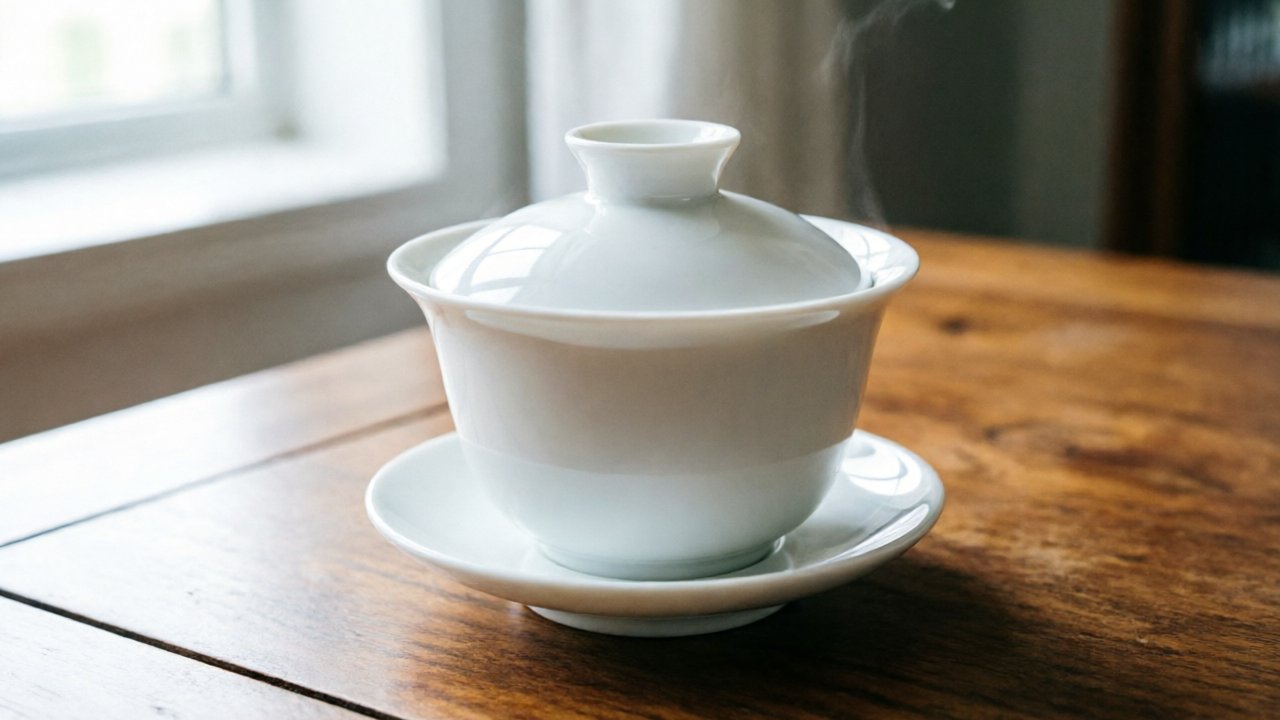
Choosing a gaiwan is less about memorizing milliliters and more about how you drink at home. Match size to session (solo sip, two cups, tasting flights), check lid fit, pour lip, and finger heat before you buy, start porcelain-first, and know when a basket mug or glass pot is still enough. Kit companions (cha-hai, small cups, gooseneck kettle) finish the pour.
This page is a vessel decision system for home buyers—not a ceremony sequence, not a leaf classroom, and not a matcha whisk kit. For the wider vessel tree, start at the Vessels lane on Teaware.
What a Gaiwan Is (and Is Not)
A gaiwan is a three-piece lidded bowl: the bowl itself, a lid that steadies the pour and holds the leaf back, and often a saucer that catches drips and cools your fingers [1]. Some sets ship without a saucer; many sancai (three-talent) sets include all three. I keep a 150 ml white porcelain bowl as the house baseline so every leaf starts from the same neutral grip and light interior [2].
At home, it’s a short multi-infusion pour tool. You watch the leaf open, stop the steep when the liquor looks right, and tip into a fairness cup or sipping cups. It isn’t a full Gongfu classroom, and it’s not a stage prop for ceremony theater.
Compared with a teapot, the open bowl gives leaf visibility and fast pour control; a teapot adds a fixed spout and often larger volume. Compared with matcha gear, a gaiwan is a steeped-leaf vessel—if you only want a whisk kit, don’t buy this vessel. Go to the matcha tools kit instead.
Size by Session Pattern
Skip the abstract 40 / 60 / 100 / 150 ml chart as your first decision. Map volume to how you actually drink.
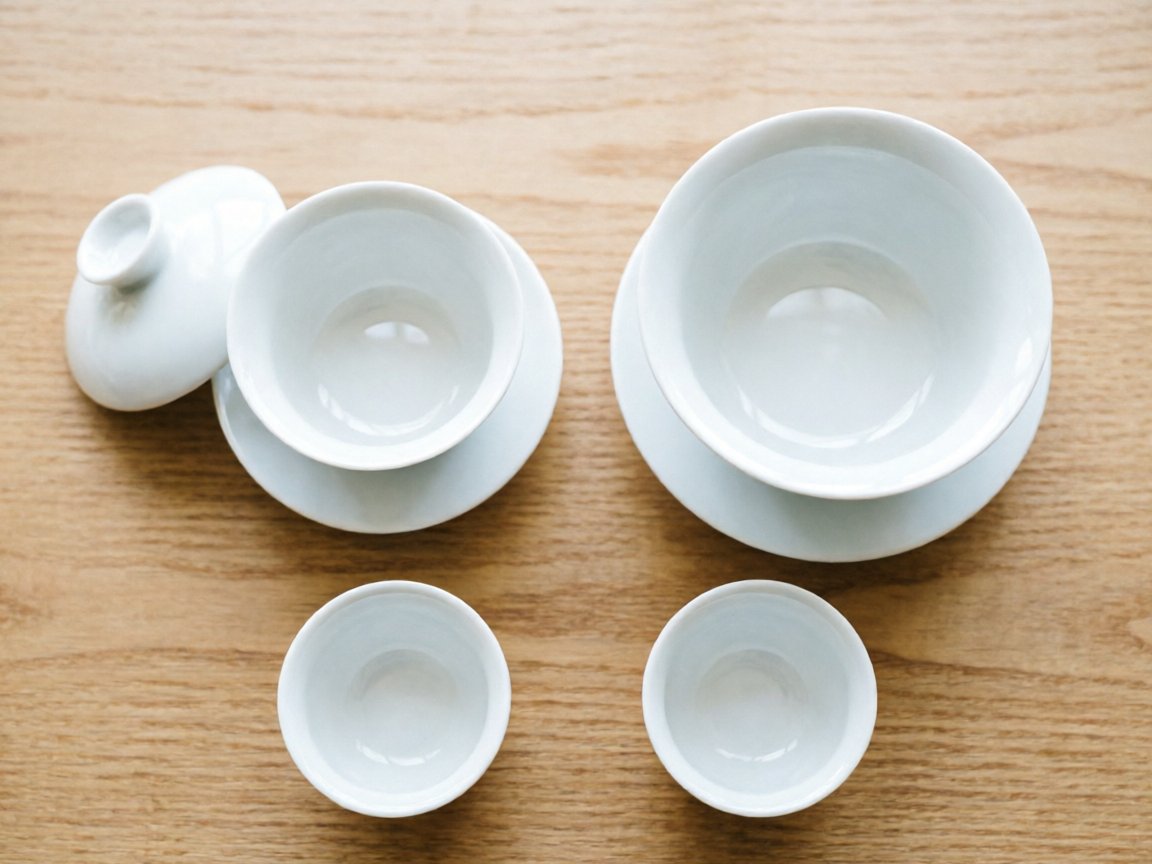
Solo sip (~100–150 ml)
One person, three to six short infusions, learning the lid hold. A 150 ml bowl is enough liquor for a calm cup without a scalding grip—you don’t need more volume on day one.
Start with the Porcelain Gaiwan 150ml (white glazed, lid + saucer) — neutral glaze, light interior, saucer included. If you want the same solo volume with classic sancai styling, the Fashion & Lifestyle Jingdezhen Porcelain Gaiwan 150ml (sancai set) is the style twin.
Two small cups / light guests (~150–200 ml)
When you split pours for two people through a cha-hai, 150–200 ml still stays holdable. The Liang baobao Porcelain Gaiwan 200ml (white) is the clean guest size. For a handmade Jingdezhen scenery glaze at the same volume, you’ll like the Woonsoon Jingdezhen Porcelain Gaiwan 200ml (scenery white glazed).
Tasting flights / shared table
Prefer one well-chosen 150–200 ml bowl plus a fairness cup over a giant bowl you can’t hold. For flights and side-by-side cups, see teaware for tasting.
| Session | Volume band | First pick |
|---|---|---|
| Solo | 100–150 ml | 150 ml porcelain (B0F5BXHX37) |
| Two cups | 150–200 ml | 200 ml white or Jingdezhen |
| Flights | 150–200 + cha-hai | Add fairness cup (B078TFLRKC) |
Material Path — Porcelain First, Then Glass or Clay
Porcelain first (default beginner path)
Porcelain is flavor-neutral, shows liquor color on a light interior, and rinses clean between greens, oolongs, and blacks. That is why it is the default on the teaware for beginners path.
Your first four porcelain options already cover solo and guest volumes: the 150 ml white beginner set, the 150 ml sancai style set, the 200 ml white guest bowl, and the 200 ml Jingdezhen scenery bowl. Buy one that matches your session; don’t buy all four on day one.
Glass when you want to watch the leaf
Glass is for green and white unfurl—Longjing green tea is a classic visual brew. Heat caution matters: thinner walls and a hotter rim than thick porcelain. The Woonsoon Chinese Glass Gaiwan 170ml is the leaf-watch pick—use slightly cooler water, shorter holds, and a saucer. It’s a second vessel, not the only first buy.
Clay upgrade (after porcelain baseline)
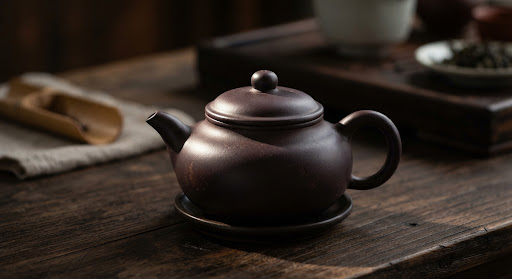
Clay (including budget zisha-style bowls) seasons over time and suits a dedicated oolong or pu-erh path—Tieguanyin oolong is a common clay pairing. It’s a poor first buy if you rotate greens and blacks in the same bowl (flavor carryover). After porcelain feels easy, the YXHUPOT Zisha Clay Gaiwan 130ml (black/white) is a budget clay step.
Lid Fit, Pour Lip, Finger Heat — Buy Filters
Reddit-style buyer reports cluster on the same three failure modes. Use them as listing filters—photos, Q&A, and return policy—not as brand roasts.
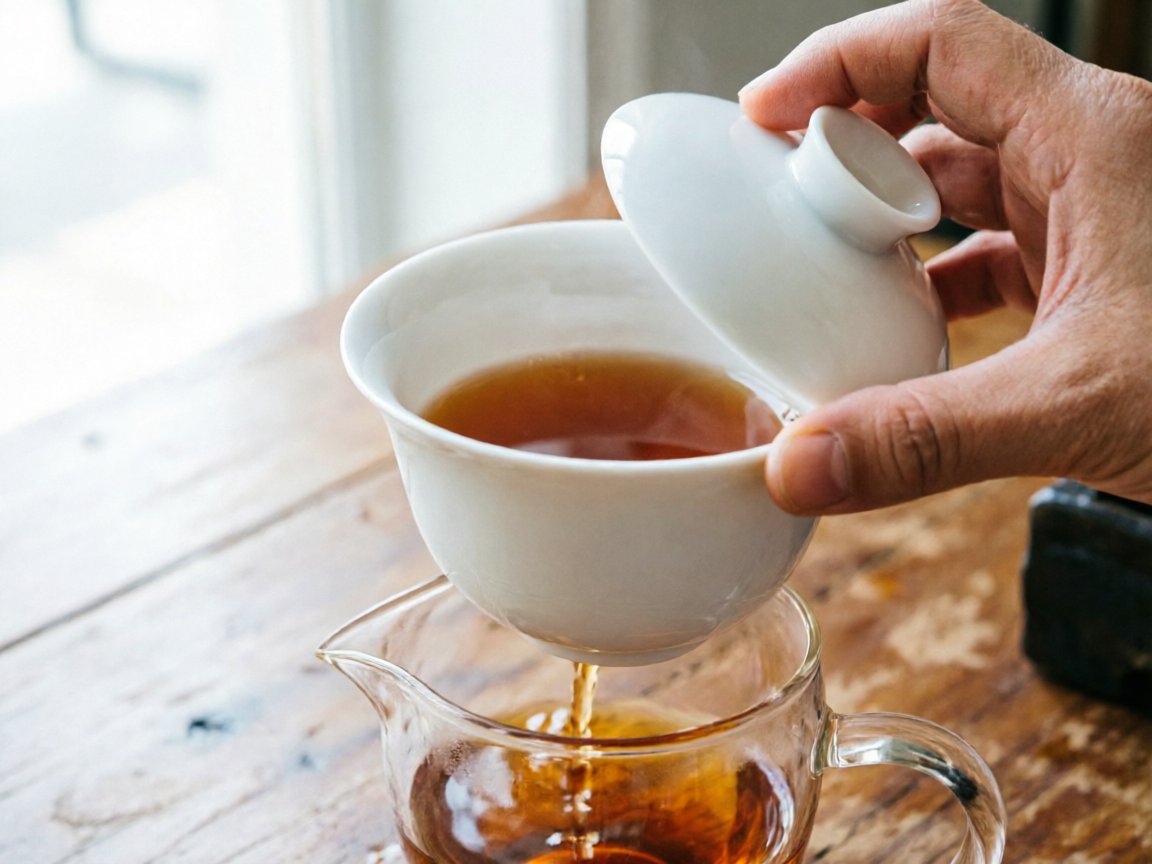
- Lid fit — The lid should seat fully and leave a small controlled gap when tilted. A rattle that dumps leaf isn’t worth fighting.
- Pour lip — You want a clean stream into a cha-hai, not a dribble down the outer wall.
- Finger heat — Rim and lid knob should stay holdable after hot water. Too-thin glass needs cooler water or shorter holds—you’ll feel the difference on the first pour.
- Interior color — Light glaze teaches liquor color; a dark interior hides over-steep cues (especially useful for Keemun black tea and other dark liquors).
- Saucer presence — A saucer catches drips and cools fingers; sancai sets often include it.
On any listing for the Porcelain Gaiwan 150ml or the Liang baobao 200ml, check those three filters in photos before you click buy.
The Hand Fit Test
A gaiwan that’s too wide for your hand is the most common first-buy mistake. Here’s how to check before ordering:
- Measure your grip. Hold a tennis ball or an orange. That’s roughly the circumference your hand naturally closes around. A 150ml gaiwan typically measures 9-10cm across the rim — if that feels wider than your comfortable grip, drop to 100-120ml.
- Check the rim height. Taller bowls (6cm+) give more finger clearance from hot walls but pour slower. Shorter bowls (4-5cm) pour fast but risk finger contact with the rim. Beginners should favor taller rims.
- Look for a rolled lip. A thickened rim edge stays cooler longer and gives your fingers a ridge to rest on. Thin, knife-edge rims look elegant but conduct heat directly to your skin.
- Consider the lid knob height. A tall lid knob keeps your thumb away from the steam vent. Low knobs look minimalist but your thumb sits directly over the hottest point.
If you’re between two sizes, always go smaller. A 100ml gaiwan you can hold confidently beats a 200ml one you’re afraid to pick up.
When NOT to Buy a Gaiwan Yet
Honest defer paths protect trust more than a forced cart:
- Still happy with a mug + basket or a glass pot for a single Western steep? Stay there. Learn heat and time first with the how to brew tea first-cup system.
- No gooseneck and no pour control yet? A kettle upgrade often gives cleaner control than a thin 80 ml bowl.
- Only want matcha whisking? That’s a different tool set—see matcha tools, not this vessel.
- Hunting kiln pedigree or auction study? That’s the appreciate lane later—not this daily decision page.
If you’re still mapping the starter vessel tree, return to teaware for beginners.
Kit Companions — Cha-Hai, Cups, Kettle
A gaiwan rarely works alone for even pours. Three companions finish the home kit:
| Role | Why | Pick |
|---|---|---|
| Fairness cup (cha-hai) | Evens strength across cups | JIUMEI Glass Cha Hai Pitcher 350ml |
| Small sipping cups | Light interior, practice volume | Porcelain Gongfu Tea Cups Set (4 pcs) |
| Gooseneck kettle | Controlled fill + temp presets | Cosori Gooseneck Electric Kettle with Temperature Control |
The cha-hai is the piece most people skip and then regret when two cups taste different. Small cups with pale interiors teach strength control. A gooseneck kettle makes fill control into a 150 ml bowl far calmer than a wide spout—you’ve got more precision without fuss. For a few-tools, deep-use path, see how to build a personal teaware system.
Common Mistakes
- Too large first buy (300 ml+ bowl) — Hard to hold, scald risk. Start at 150 ml with the Porcelain Gaiwan 150ml.
- Dark interior only — You can’t read liquor color. Prefer white or light porcelain glaze.
- Poor lid gap / warped lid — Leaf flood or stuck lid. Check listing photos; prefer sancai sets with a saucer.
- Scalding hold technique — Practice with cooler water first; use the saucer. Glass (Woonsoon 170ml) needs extra care.
- Skipping cha-hai — Uneven cups for two people. Add the JIUMEI 350ml cha-hai.
- Buying clay first for all tea types — Flavor carryover across greens and blacks. Porcelain baseline first; clay later only for dedicated leaves (YXHUPOT 130ml).
Light care tip: rinse with hot water, air-dry lid ajar, store away from strong kitchen odors.
Path Rails — Where This Vessel Fits
Soft links only—open these when the job matches; don’t treat them as duplicates of this page:
- Beginner vessel tree → teaware for beginners
- Tasting / flights setup → teaware for tasting
- Personal system (few tools, deep use) → build a personal teaware system
- Hub Vessels lane → Teaware and Vessels
- Not this job: matcha kit → matcha tools
- Brewing classroom (leaf / temp / time) → how to brew tea
Planned later (not live yet): Yixing vs gaiwan, how to choose Yixing, and teaware care.
Recommended First Buys
Recap only—products already introduced above:
- First porcelain solo: Porcelain Gaiwan 150ml
- Guest 200 ml: Liang baobao 200ml or Woonsoon Jingdezhen 200ml
- Style alt 150 ml: Fashion & Lifestyle 150ml sancai
- Glass leaf-watch: Woonsoon Glass 170ml
- Clay upgrade later: YXHUPOT Zisha 130ml
- Kit trio: JIUMEI cha-hai + Porcelain cups 4-pack + Cosori gooseneck kettle
The Mind of the Gaiwan
A gaiwan is a small decision you make with every pour: how much leaf, how hot, how long the lid rests. Choose size for the session you actually live, porcelain when you are learning, and kit pieces that keep the stream honest. The vessel does not perform ceremony for you — it teaches attention one short infusion at a time.
References
[1] Wikipedia contributors. “Gaiwan.” Wikipedia. https://en.wikipedia.org/wiki/Gaiwan — three-piece lidded bowl (bowl, lid, and often saucer) definition.
[2] Steep Atlas. “Gaiwan Guide: How to Choose Your First Gaiwan.” https://steepatlas.com/teaware/your-first-gaiwan/ — beginner size and porcelain-first decision framing used as structural benchmark only.