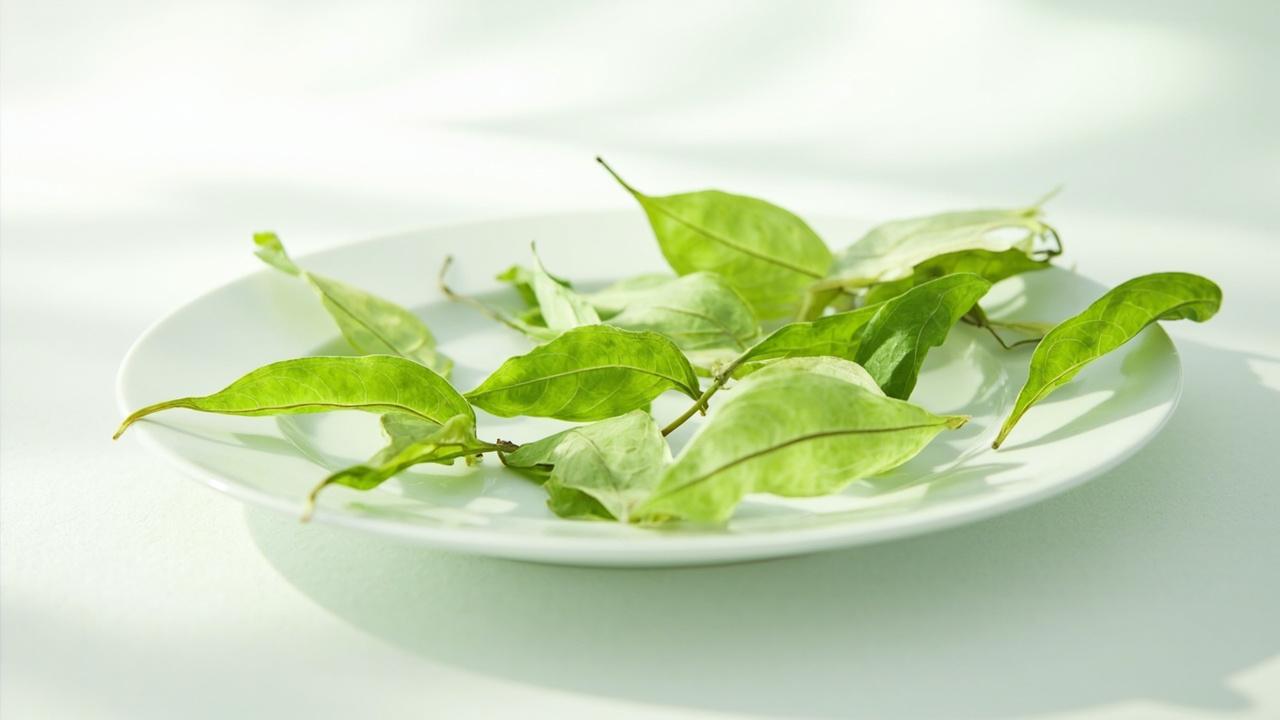
Longjing (龙井, Dragon Well) is a household map: a West Lake place name, a flat pan-fired leaf, and a glass you can watch [1]. Below: where the name is protected, what the dry spear should look like, and when to stop the pour.
Origin
Longjing, Dragon Well, and 龙井 are one tea [1]. Pan-fired in a wok, pressed flat, not steamed into needles. Household shorthand calls out emerald color, chestnut aroma, lingering sweetness, and that flat shape. Not a lab panel.

Protected West Lake Longjing is a named place, not a leaf shape [5]. A Longjing-style lot from another province can copy the press and still miss the lake. Read “West Lake” (西湖龙井) or a village name as the origin cue. Mei Jia Wu (梅家坞) is a village a geographical-indication chapter writes up as terroir, not as a flavor word [2].
Shi Feng (狮峰), Mei Jia Wu, and generic Xihu (西湖) are places on one lake, not synonyms. Shi Feng sits at the mineral-chestnut end. Mei Jia Wu usually drinks brighter. Xihu with no village name is still West Lake, with a wider swing. This leaf sits on the named-leaf hub. No parent-variety page exists.
Cultivar moves the cup when the wok does not. Cultivars used for Longjing differ in amino acids, polyphenols, caffeine, and aroma compounds, and those gaps show up as freshness, bitterness, and aroma [3]. That does not turn a “Longjing 43” tin into Shi Feng. Flavonoids also shift with cultivar, origin, and storage when picking and pan-firing are held consistent [4]. Origin is one of the three, and not the largest.
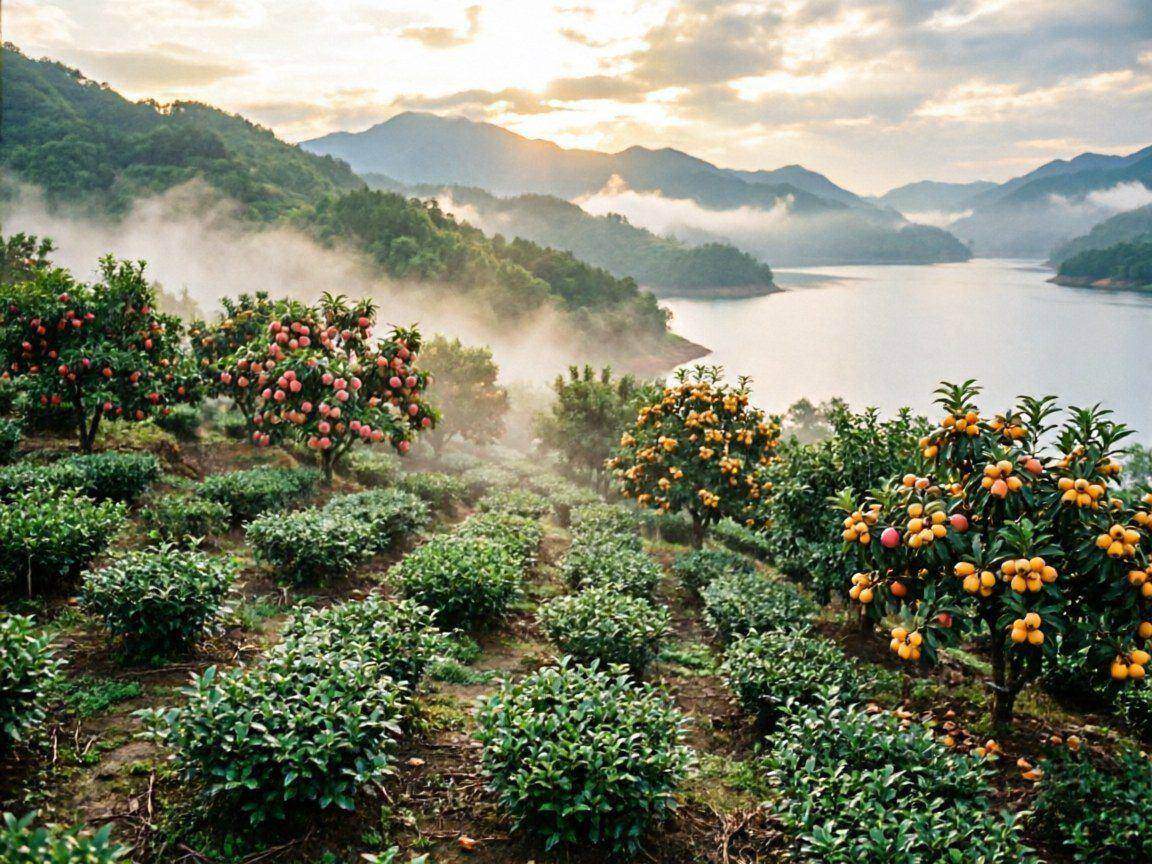
When matters as much as where. Pre-Qing Ming (明前, before early April) is smaller buds and easy to overpay for. Yu Qian (雨前, before Grain Rain) is the next window, still spring. Later leaf can be honest West Lake and still lose chestnut. No paper I found measures that shift, so it stays a buying note.
First-harvest West Lake: West Lake Longjing (Ming Qian) at $19.97. Set JQ Dragon Well at $25.99 beside a Shi Feng claim so the village name has a cup to beat. Yuexi Xihu Longjing, Shifeng Mountain at $23.98 is that named-slope tin. A label that only says Xihu: ChaWuWarmSun, 100 g at $11.99. Hilltop names also sit on this Longjing tea guide.
What the Longjing Standard Says
The standard that names Longjing is GB/T 18650-2008, Product of geographical indication — Longjing tea [5]. That catalogue entry is the gate between the place-protected name and a pan-fired green from somewhere else. It is not a brewing recipe. No gram or minute hangs on it here.
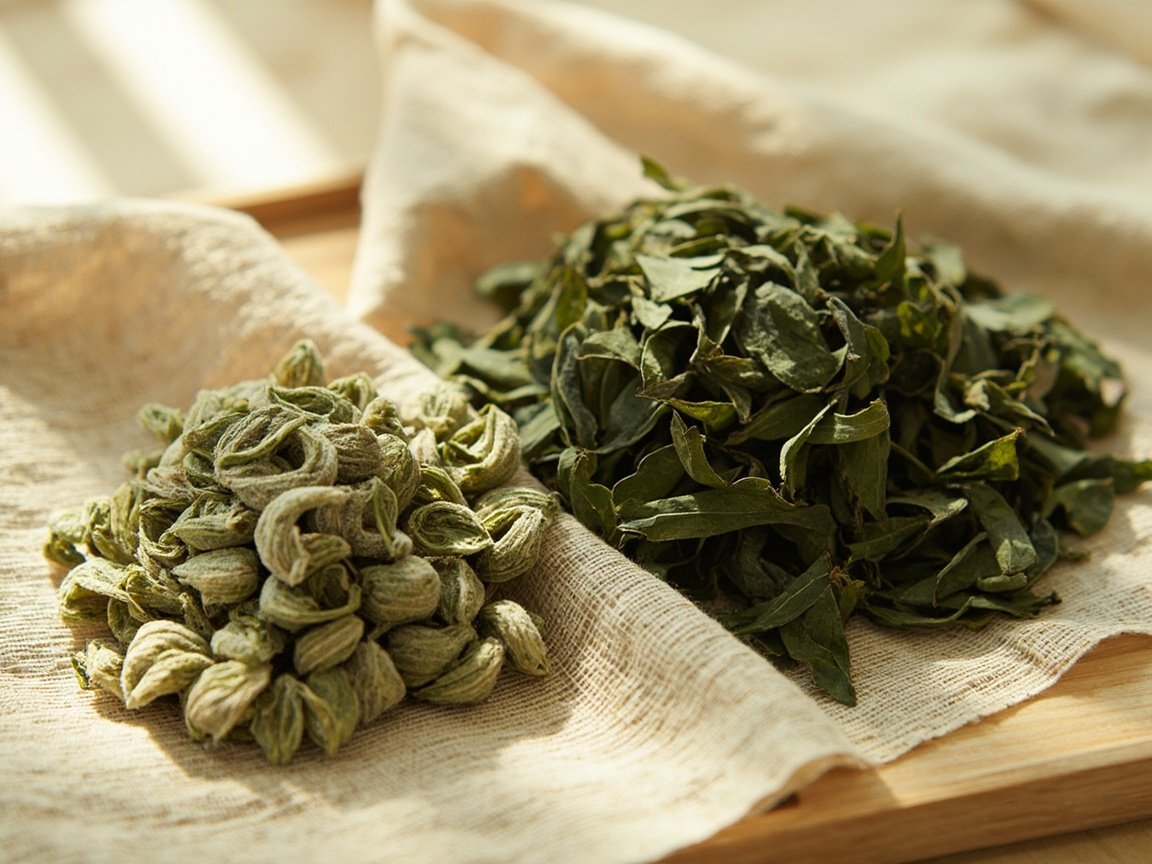
What that paper trail supports, and what it does not:
- The name is a geographical indication [5]. West Lake, Qiantang, Yuezhou, and Jinhua are how the trade splits it. No journal paper in this list enumerates the four, so that split stays trade reading.
- Grade tracks measured data. A neural-net model on instrumental color, aroma, and taste of Longjing followed expert panel scores [7]. Not a sticker added after the pack closed.
- A closed panel can agree. A Japanese closed-panel test of first-flush greens found significant concordance on aroma and taste, stronger among experienced tasters [8]. Method family, not a Longjing panel, and not the Chinese cup protocol.
- 75–80 °C is a taste choice. The official cup method is GB/T 23776, absent from this list. Don’t read [5] as if it held that protocol.
Aroma and taste words trace to GB/T 14456.1-2017, Green tea — Part 1: Basic requirements for tea processing [6]. The URL is an index page. It shows the document exists. It does not quote a word list.
Look
Dry Longjing should be whole flat spears: uniform emerald, glossy, not dust or yellow chips. Broken leaf and muddy color are the first tells.
Grade is not only a dry-leaf story. An electronic nose has separated Longjing grade [9]. A second instrument reading — color, aroma, and taste measured on the leaf — has also been shown to track an expert panel’s grade score [7]. Dry shape is the kitchen check. A lab uses more axes than that.
Watch the wet leaf. A pinch in a Woonsoon glass gaiwan (170 ml) at $17.99 should stand, sink, and open. A glass gaiwan is for that. Dust means fannings, or a crushed leaf. I have not found a paper showing glass changes what dissolves.

Liquor should be pale yellow-green and clear. A brown cup from a “fresh” tin is age or a heavy roast. Browning chemistry is in Reading the Liquor. Stale dry leaf shifts emerald toward yellow; aroma comes later, in Character.
Past a QR sticker: uneven color, shattered spears, no chestnut sheen, a label that only says “Dragon Well.” The package should name West Lake (西湖龙井) or a village, not a dragon drawing [5]. Shape is not terroir. Enantiomer ratios of a few aroma compounds differ by grade and origin, and that paper uses them to separate lots [10]. A phone cannot run that check.
Character
Grade is harvest plus place. Pre-Qing Ming is the first window, Shi Feng the named peak, Mei Jia Wu the other village, generic Xihu still the lake. Other-province Longjing-style borrowed the press.
The cup people want is chestnut, grass, gentle umami, a clean mineral finish. The chestnut half has a paper: GC-MS has measured key Longjing aroma compounds, enantiomer split included, and the ratios differ by grade and origin [10]. Later harvests, in the cup I drink, drop the chestnut. No harvest-date trial backs that, so it stays a buying habit. Grass and bite on steep one means a boil, or style instead of the lake.
In Longjing, storage changes the flavonoid profile more than origin does, and less than cultivar does [4]. A Meixian green-tea study — not Longjing — found volatiles that track storage years, and sensory quality that moves with them [11]. I finish a small Pre-Qing Ming tin before the top note goes quiet. In my kitchen that note holds about a week, then drifts toward hay by week four. The calendar is mine. [11] supports the direction, not the dates.
Start at 50–100 g so a boiled first pot does not waste a Shi Feng budget. A “Dragon Well” tin with no West Lake line is a shape cue.
Next tin: Dragon Well (Yu Qian), 250 g at $37.93. FullChea Dragon Well at $14.99 is the one you can finish. No village line, organic loose leaf: Teavivre Dragon Well, 100 g at $12.99. A comparison, not a West Lake substitute.
Sencha is steamed needles. Longjing is pan-fired and flat. Matcha is milled leaf. Same plant, three jobs. A late grassy cup wants Huang Ya beside it, not a second Longjing.
| Longjing | Sencha | |
|---|---|---|
| Form | Flat spears | Needle-rolled leaf |
| Process | Pan-fired in a wok | Steamed, then rolled |
| Cup | Chestnut, mineral, softer grass | Brighter, more vegetal |
| Vessel default | Glass gaiwan or tall glass | Side-handle kyusu |
Dumplings, steamed fish, a light salad, mochi. Taste a second green on another day.
Ware
Glass first, so you stop the steep by eye. A tall glass works. A glass gaiwan is better with a lid. I found no trial of glass versus porcelain versus clay on what dissolves into Longjing. This page will not claim the material changes the chemistry.
The cup still changes what you think you taste. Lip thickness and glass weight moved ratings of a tea drink poured from glasses that differed only in those two traits [12]. Same liquor, different read. I am not hanging a cup-color result on this page: the study I found used hot chocolate, not tea, and its publisher page did not return a clean fetch from here.
What you’ll need
- Flat-leaf Longjing, not powder
- A lidded glass: a Mozentea glass gaiwan, 150 ml at $14.99, or a YBK crystal gaiwan with saucer and lid at $9.20
- A way to land 75–80 °C: a Cosori gooseneck kettle at $59.49, or the cool-boil method
- A cup to decant into so the leaves don’t stew
A wide porcelain bowl is fine if you own one. Glass versus porcelain is the split; glass wins because you are learning the leaf, not because porcelain strips catechins. Yixing is the oolong rail. A Moyishi glass gaiwan at $9.99 covers the watch if the other two are out.
75–80 °C is a working range, not a published optimum. Temperature moves the cup in the trials below. None crowns 75 °C. No variable kettle? Cool-boil, on the water-temperature page. A kettle guide if you want the tool later.
A fitted tin, a dark pantry, not the fridge. Same direction as [4] and [11].

Ritual
A daily cup, not a 21-step gongfu class. Five beats.
Temperature, time, ratio, and particle size move what a green-tea infusion holds and how a panel scores it [13][14]. That is not proof 75 °C wins. One model put acceptance near 82 °C and 5.7 minutes at a high water-to-leaf ratio [14]. A Turkish green-tea trial peaked at 85 °C for 3 minutes, and went bitter and dark at 30–45 minutes and 85–95 °C [13]. Home Longjing is shorter and cooler than either. 75–80 °C and 60–90 seconds is a household range on the safe side of those long steeps. Neither paper published it.
- Warm the glass. About 80 °C, then discard.
- Add 2–3 g. Spears sit, then sink.
- Pour. 75–80 °C, about 200 ml, 60–90 seconds. Scale at 2–3 g per 100 ml. A 120 g tin covers the learning: XIXICHA Ming Qian at $23.98. Same clock, next grade: FullChea First Grade, 226 g at $26.65.
- Decant. Leaves stay. First steep is the sweet one.
- Re-steep 3–4 times, adding 15–30 seconds. Stop when it goes flat. A week of that fits ChaWuWarmSun, 250 g at $23.90.
Extraction time alone moves chemistry and scores [15]. Longer pulls raised astringency, which is why step 5 adds seconds.
Boiling water is how people decide they “don’t like Dragon Well.” Other greens: green tea brewing parameters. One number here: a short first steep under a boil. Detail sits on water-temperature.
- Boiling water pushes the cup toward the bitter end those long steeps mapped [13].
- Leaf past 3 g per 100 ml. Ratio and particle size had the largest effect in the response-surface work [14].
- A first steep over two minutes. Pull sooner [15].
- The fridge. Storage already moves the leaf [4].
- No West Lake line. You bought a shape [5].
Finish the opened tin. Don’t park wet leaves in the fridge.
Reading the Liquor
Short and under a boil, the liquor should be pale yellow-green and clear enough to see the spear. A hot, long cup is closer to a grading panel. Not the same drink. The 3 g / 150 ml / 4 minute protocol is GB/T 23776, not in this list. [5] names the indication. It does not hold the cup method.
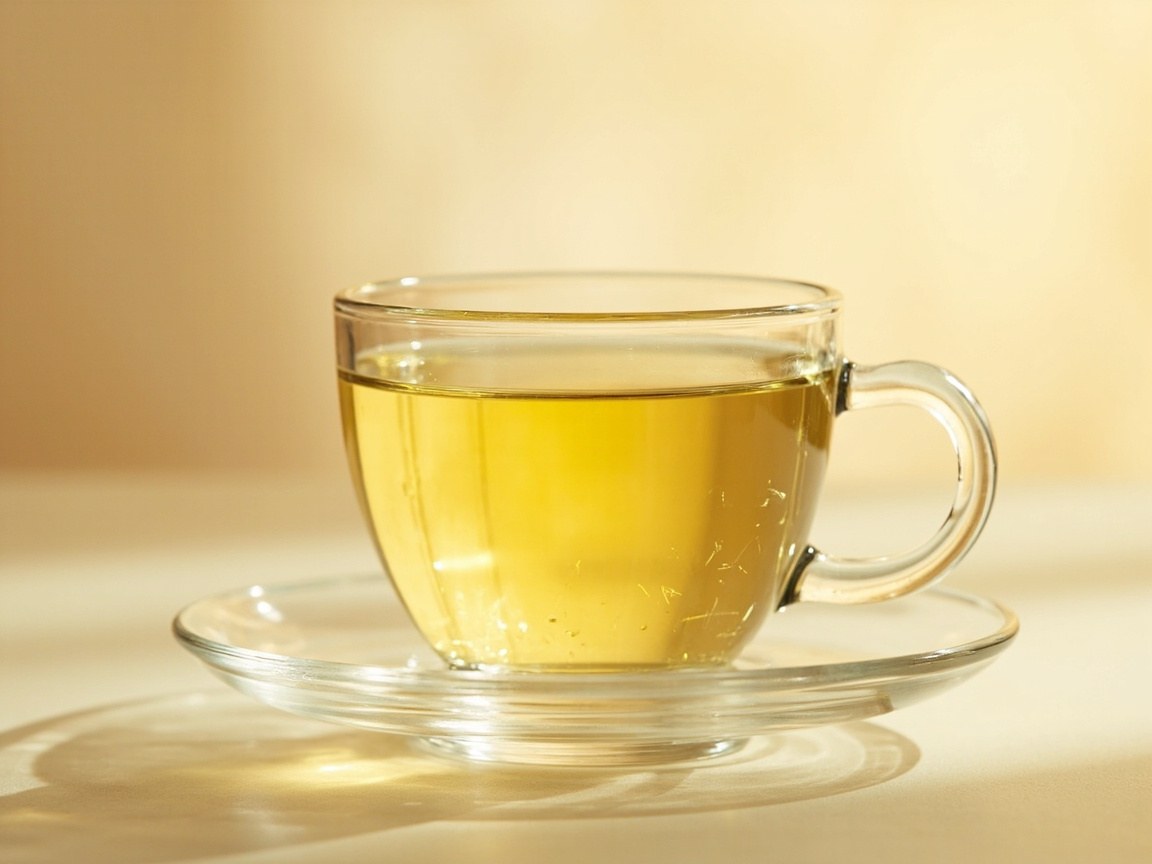
What the liquor papers show is narrower than the folklore.
- Browning has soluble sources. Heated fractions browned most in the ethyl-acetate cut, then the butanol cut; the cationic fraction roughly doubled the ethyl-acetate browning [16]. A brown “fresh” cup is chemistry. Age versus roast is a separate question.
- Time moves the cup. A 2–10 minute pull carried more solids, polyphenols, and amino acids than liquor left standing after a short pull, and astringency rose with time [15].
- Harvest color is not a cited result. I did not find a measured Ming Qian versus Yu Qian liquor comparison, so it is not a claim here.
Read the color in a Woonsoon glass gaiwan at $17.99, against glass rather than a glazed wall. A tinted bowl gets between you and the liquor before the leaf does.
Dust plus mud means the bag was never whole spear. A clear pale cup does not prove the village.
Benefits
Content, not a dosage note. Catechins and L-theanine are in the leaf. That is not a reason to buy the tin as a capsule, and this page does not rank teas by a lab score.
Caffeine moves with fermentation, temperature, time, and bag versus loose leaf [17]. Green-tea infusions in that set sat near 11 ± 2.1 mg per 200 ml, below black and yellow, at 80 °C or 100 °C for 2, 5, or 10 minutes [17]. A home-cup simulation also tracks brew conditions as a caffeine variable [18]. Neither is a Longjing-only dose. About 3 g in 200 ml sits in that green-tea band: low tens of milligrams, not a fixed 25 or 50. The old 25–50 mg line was a range. [17] is the figure I will stand behind. Chart: caffeine by tea type.
Daily caffeine limits are a consumer note, not a tea result [20]. Health-information wording is in the terms [21]. Not a serving instruction.
Flavonoids still move with cultivar, origin, and storage [4]. Finish the tin. A first-grade tin against those numbers: TIAN HU SHAN, 8 oz at $14.99. Same job a week later: ChaWuWarmSun, 250 g at $23.90. Harvest and water move the cup more than a citation [14][17].
The Mind of Longjing
Longjing is a household map, not a museum label. Watch the flat spears open in glass, keep the water under a boil, and trust chestnut over a QR sticker. Shi Feng and Mei Jia Wu name two places on one lake, not two kinds of tea. The chestnut note is a set of measured aroma compounds, not a description [10][19]. Finish the tin while the aroma still answers. The leaf already knows the ritual. You only have to pour.
References
[1] Longjing tea. Wikipedia. https://en.wikipedia.org/wiki/Longjing_tea
[2] Chan SCC. Terroir and Green Tea in China: The Case of Meijiawu Dragon Well (Longjing) Tea. In: Geographical Indications and International Agricultural Trade. Cheltenham: Edward Elgar; 2012. p. 226-238. https://doi.org/10.1057/9781137031907_12
[3] Zhou J, et al. Variation in Quality Traits Among Different Tea Cultivars Used for Longjing Tea. Plant Gene and Trait. 2026. https://doi.org/10.5376/pgt.2026.17.0006
[4] Yu XL, Li J, Yang Y, Zhu J, Yuan H, Jiang Y. Flavonoid metabolites of Longjing tea in different cultivars, geographical origins, and storage time. Heliyon. 2023;9(6):e17305. https://doi.org/10.1016/j.heliyon.2023.e17305 · https://pmc.ncbi.nlm.nih.gov/articles/PMC10329133/
[5] GB/T 18650-2008. Product of geographical indication — Longjing tea (龙井茶). Standardization Administration of China / AQSIQ. Catalogue entry: https://www.chinesestandard.net/PDF/English.aspx/GBT18650-2008
[6] GB/T 14456.1-2017. Green tea — Part 1: Basic requirements for tea processing. Standardization Administration of China. Standards index: https://openstd.samr.gov.cn/bzgk/std/
[7] Predicting Sensory Quality of Longjing Tea on the Basis of Physiochemical Data. Sensors and Materials. 2013;25(3):269-276. https://doi.org/10.18494/sam.2013.831
[8] Ikeda N. Evaluation of the Quality of Green Tea by Sensory Test with Closed Panel. Chagyo Kenkyu Hokoku (Tea Research Journal). 1992;1992(75):13-17. https://doi.org/10.5979/cha.1992.13
[9] Yu H, Wang J. Discrimination of LongJing green-tea grade by electronic nose. Sensors and Actuators B: Chemical. 2007;122(1):134-140. https://doi.org/10.1016/j.snb.2006.05.019
[10] Zhu J, Zhu Y, Wang K, Niu Y. Characterization of key aroma compounds and enantiomer distribution in Longjing tea. Food Chemistry. 2021;361:130096. https://doi.org/10.1016/j.foodchem.2021.130096
[11] Liu H, Zhuang S, Gu Y, Shen Y. Effect of storage time on the volatile compounds and taste quality of Meixian green tea. LWT. 2023;173:114320. https://doi.org/10.1016/j.lwt.2022.114320
[12] Ichimura F, Motoki K, Matsushita K, Ariga A. The tactile thickness of the lip and weight of a glass can modulate sensory perception of tea beverage. Food and Humanity. 2023;1:180-187. https://doi.org/10.1016/j.foohum.2023.05.011
[13] Saklar S, Ertaş E, Ozdemir IB, Karadeniz B. Effects of different brewing conditions on catechin content and sensory acceptance in Turkish green tea infusions. Journal of Food Science and Technology. 2015;52(10):6639-6646. https://doi.org/10.1007/s13197-015-1746-y · https://pmc.ncbi.nlm.nih.gov/articles/PMC4573099/
[14] Liu Y, Luo L, Liao C, Chen L. Effects of brewing conditions on the phytochemical composition, sensory qualities and antioxidant activity of green tea infusion: A study using response surface methodology. Food Chemistry. 2018;269:24-34. https://doi.org/10.1016/j.foodchem.2018.06.130
[15] Hong SJ, Choi SH, Eun JB. Effect of Extraction Time on Physicochemical Properties and Sensory Characteristics of Green Tea Infusion. Journal of the Korean Tea Society. 2017;23(1):30-36. https://doi.org/10.29225/jkts.2017.23.1.30
[16] Tanaka S. Water Soluble Constituents Responsible for the Browning of Green Tea Infusion. Chagyo Kenkyu Hokoku (Tea Research Journal). 1982;1982(55):80-82. https://doi.org/10.5979/cha.1982.80
[17] Ayakdaş G, Ağagündüz D. Determination of L-Theanine and Caffeine Contents in Tea Infusions with Different Fermentation Degrees and Brewing Conditions Using the Chromatographic Method. Foods. 2025;14(13):2313. https://doi.org/10.3390/foods14132313 · https://pmc.ncbi.nlm.nih.gov/articles/PMC12248710/
[18] Musilová A, Kubíčková A. Effect of brewing conditions on caffeine content in tea infusions simulating home-made cup of tea. Monatshefte für Chemie — Chemical Monthly. 2018;149(9):1561-1566. https://doi.org/10.1007/s00706-018-2204-0
[19] Xiao Z, Shen T, Niu Y, Ke Q. Unraveling the characteristic aroma compounds in Longjing tea and their interaction mechanisms with S-curve and broad-spectrum olfactory receptors using molecular docking. Food Bioscience. 2024;60:104423. https://doi.org/10.1016/j.fbio.2024.104423
[20] U.S. Food and Drug Administration. Spilling the Beans: How Much Caffeine is Too Much? Consumer Update. https://www.fda.gov/consumers/consumer-updates/spilling-beans-how-much-caffeine-too-much
[21] TeaWithMind. Wellness and health information. https://www.teawithmind.com/terms/#wellness-health-information