Where to buy
Hand-tested matcha picks with verified Amazon stock (checked 2026-09-24). Prices are at the cart at time of check; ceremonial-grade is a small tin for fresh rotation, not bulk storage.
| Pick | Product | Price | Best for | Buy |
|---|---|---|---|---|
| 🏆 Best Overall | Naoki Matcha Superior Ceremonial 40g | $24.99 | First-time ceremonial usucha, single small tin | Check price |
| 💰 Best Budget | Jade Leaf Matcha Latte Mix 150g | $10.99 | Pre-sweetened latte mix, beginner-friendly | Check price |
| 🎁 Best Kit | Hario Matcha Tea Set (Clear) | $99.00 | Complete matcha kit (bowl + chasen + sifter + scoop) | Check price |
| 🍳 Best Culinary | Jade Leaf Organic Culinary Grade Matcha | $10.99 | Baking, smoothies, and savory dishes | Check price |
| 📦 Best Bulk Value | Matcha DNA Organic 16oz | $25.99 | Daily drinkers who finish a pouch in 4–6 weeks | Check price |
| ⚙️ Optional Upgrade | Breville BKE830XL IQ Kettle | $199.95 | Precise 80 °C temperature without a stopwatch | Check price |
All six picks verified in stock and shipping Prime as of 2026-09-24. For grade language and what the price reflects, see Character below. See the full matcha hub for grades, prices, and brewing protocols.
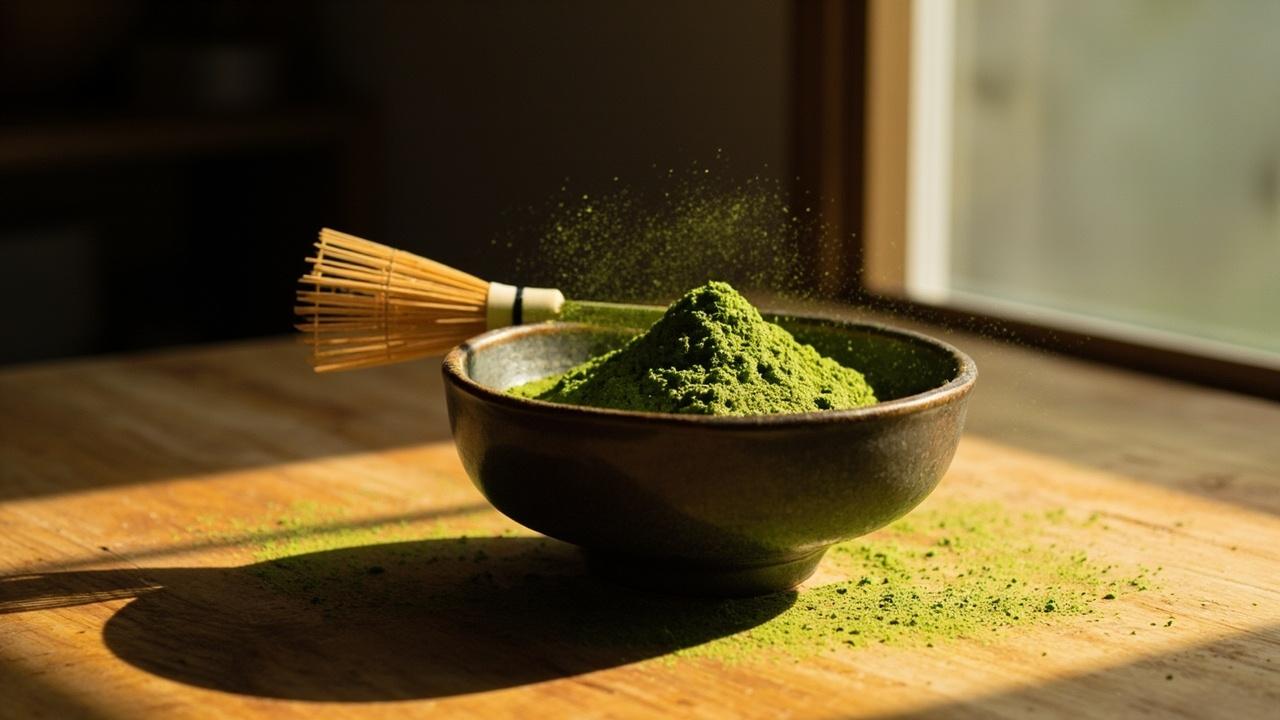
Stone-ground in a slow granite mill for about an hour per 30g, matcha is the whole leaf in the cup — not a steep you throw away. This page is a first-tin map: Uji vs Yame, ceremonial vs culinary vs latte mix, and a weekday bowl at 80 °C / 2g you drink in ten minutes.
Origin
Uji vs Yame is the first-tin question, not a tourism list. Uji, near Kyoto, is the name already printed on most Japanese tins. Yame, in Fukuoka, is the other honest Japanese origin you will actually see on a lid. Read either word as a region cue. Two Uji tins from different mills can disagree more than an Uji tin and a Yame tin from the same week. A blank “Product of …” line with no town is a caution, not a reason to start a country rant.
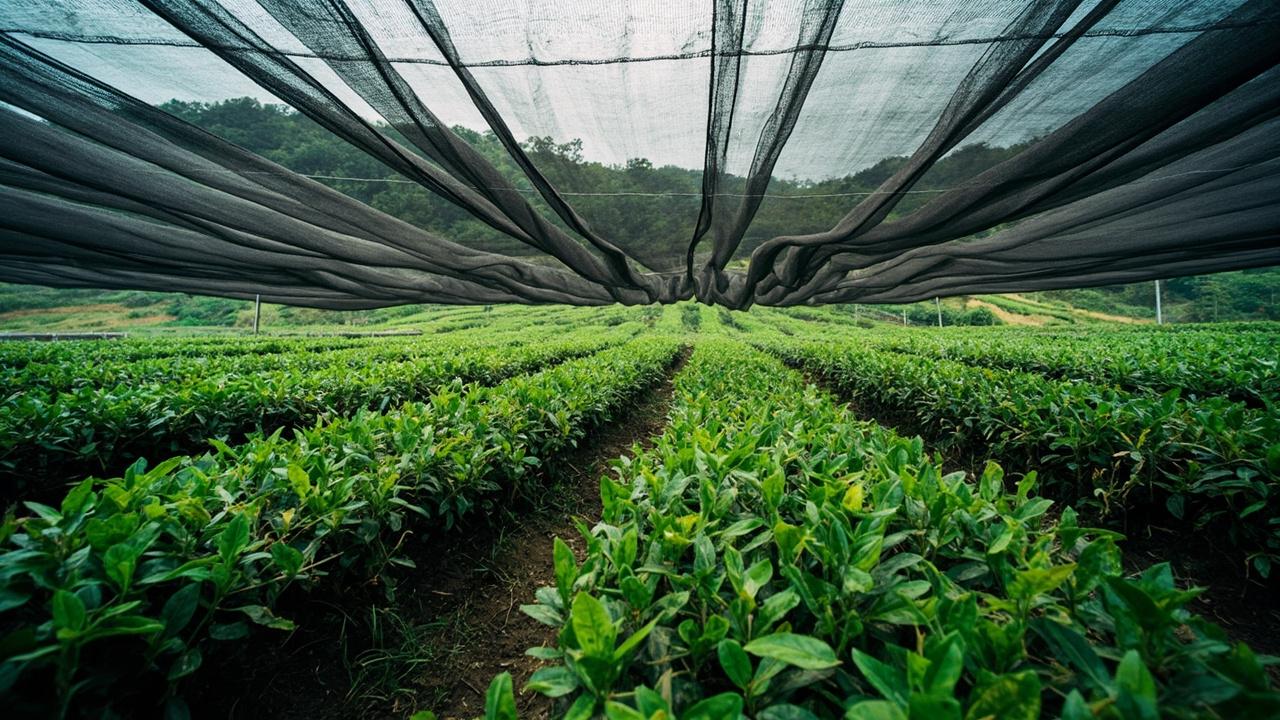
Farmers cover the bushes for two to three weeks before harvest. Shade-grown leaf is the point of tencha: more chlorophyll, more L-theanine, a darker green on the bush [1]. After the pick, the leaf is steamed for 10–20 seconds, dried, then stone-ground. A granite mill takes about an hour to yield 30g. A metal grinder runs hot and the powder goes brown. That slow mill is why a 30g ceremonial tin costs what it costs — you are paying for time, not a slogan.
The monk Eisai brought powdered tea from Song China to Japan around 1191 [1]. Japanese farmers later learned to shade tencha for the bright cup we now call matcha. Chadō and Rikyū are history pointers, not this page’s job. The sequence lives on the matcha ceremony page.
Sun-grown Chinese greens are a different drink. Longjing is pan-fired and brewed; you don’t swallow the leaf. If you’re still choosing a green, start at the varieties hub. Nishio in Aichi shows up on some Japanese tins too — same rule as Uji and Yame: a named town beats a blank country line. Don’t pay a first-harvest premium on a tin dated August.
Look
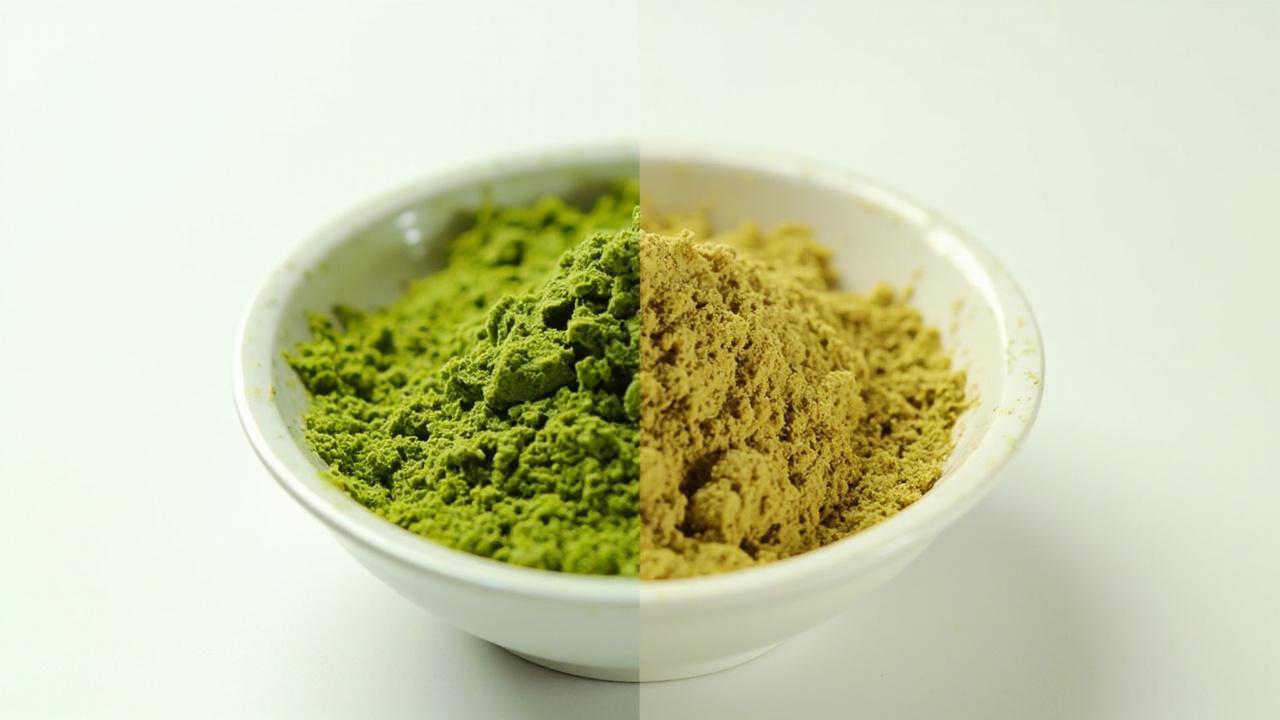
Jade in the tin should still look jade in the chawan. Yellow-brown foam is the household tell that the powder is old or low-grade. Quality grind looks like 5–15 µm dust — if the product photo shows grit, it won’t whisk smooth.
Named origin on the label: Uji, Nishio, or Yame. First-harvest / spring lots sit in the 88-day window; summer and autumn picks are a different cup. A “ceremonial” 30g tin under about $15 is culinary with a nicer word on the lid.
Opened powder dies on a calendar, not a slogan:
- Unopened: 1–2 years in a sealed tin, cool dark pantry
- Opened: fridge, best in 4–6 weeks, max 3 months
- Day 1: bright jade, foam holds
- Week 2: color still fine, foam a little thinner
- Week 3: yellow-green, foam collapses fast
- Week 4: yellow-brown, flat, hay smell
Buy a tin you can finish before week four. Naoki Matcha Superior Ceremonial 40g at $24.99 is a small ceremonial tin that matches that clock. A 16oz pouch only makes sense if you already drink this every morning.
Smell when the tin arrives: grassy, a little seaweed. No smell means old stock. A chemical or fishy note means you send it back. Split a large pouch into 30g jars and freeze the unopened ones if you already bought bulk — once a jar is open, it lives in the fridge, lid tight, and it still has the same four-week clock.
Character
A first-tin buyer faces three SKUs. Grade words on the lid are unregulated, so buy by job.
Ceremonial / usucha — whisk straight, no milk. Bright jade, sweet-umami if the tin is honest. Naoki Superior 40g is the ceremonial cell on this page.
Culinary — bake, smoothie, or a milk drink where nuance gets buried. Bitter is normal. Jade Leaf Organic Culinary Grade Matcha at $10.99 is the culinary cell.
Latte mix — sugar and milk powder sit first on the label. Skip this if you only whisk usucha. Jade Leaf Matcha Latte Mix, Original at $10.99 is the convenience tin, not a tasting tin.
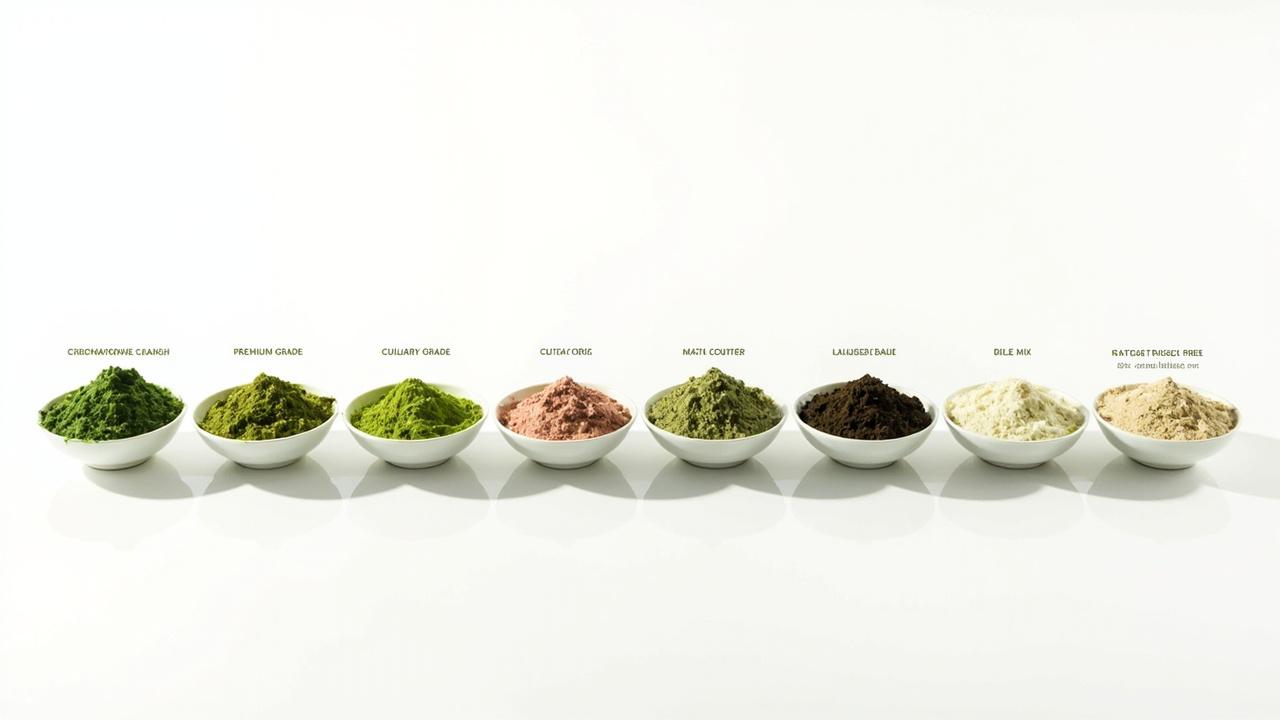
| Grade | What changed | Cup | First-tin note |
|---|---|---|---|
| Ceremonial | First harvest, longer shade, fine grind | Sweet, umami, vegetal | Whisk straight; ~$20–40 / 30g |
| Premium | First or second harvest, shorter shade | Balanced, a little grass | Honest start at ~$20 / 30g |
| Culinary | Later harvest, more bite | Holds milk and sugar | Bake / blend; ~$8–15 / 30g |
Format is separate from grade. A 30g tin of any honest grade is the right starter. Bulk only if you finish in 4–6 weeks — Matcha DNA Organic 16oz at $25.99 is that daily pouch, not a gift tin you open twice.
First tin: buy premium around $20 / 30g, finish it in three weeks, then decide if ceremonial is worth the upgrade. Don’t spend ceremonial money on a recipe that hides the leaf in milk. If sugar sits before matcha on the ingredient list, you bought a mix. Put it back unless convenience is the job.
Skip culinary if you only whisk usucha — the extra bite is a feature for baking, not a cheaper ceremonial. Skip a 16oz pouch if you drink matcha twice a month. The leftover will be hay by week five, and you will decide you “don’t like matcha.”
Same plant, different form:
| Matcha | Sencha | Gyokuro | |
|---|---|---|---|
| Form | Stone-ground; you drink the leaf | Needle leaf; steep and discard | Shade-grown; steeped, not ground |
| Typical cup | 60–80 ml from ~2g | 200–250 ml | Small brewed cup |
| Caffeine (listed) | ~70 mg / 2g [2] | ~30 mg / cup [2] | Shade + brew; not a powder |
Sencha is the everyday steeped Japanese green. Gyokuro shares the shade habit with matcha, then stays a leaf you brew — there is no gyokuro page on this site yet, so it stays in the table.
Flavor, short: umami and grass when the water is 80 °C and the tin is fresh. Hotter water turns it bitter and spinach-like. Stale powder tastes like hay. Milk hides both the good and the bad, which is why culinary exists.
Ware
You need a wide bowl, a bamboo chasen, a sifter, and a scoop. A British mug and a fork will wet the powder. They will not make foam.
What you’ll need
- A chawan wide enough for a W / M whisk path
- A chasen (bamboo whisk) and a fine sieve
- A kettle that can sit at 80 °C, or a thermometer
- One tin you will finish
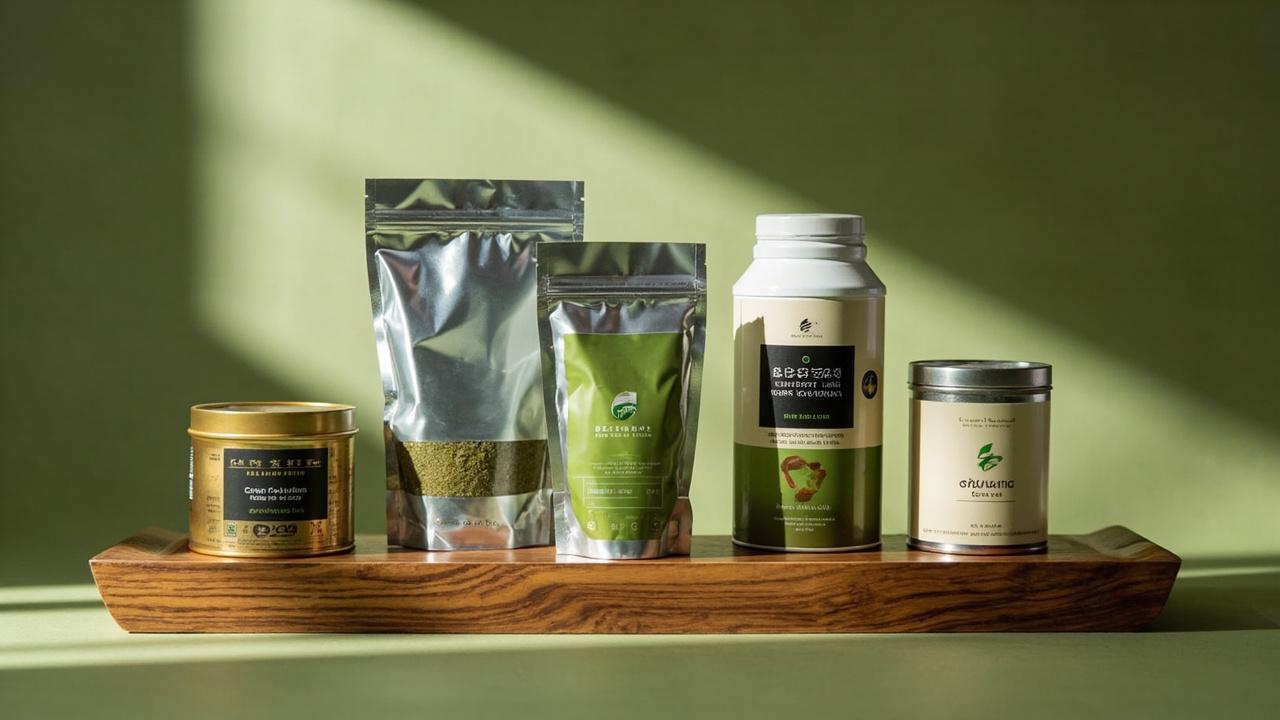
The one-box start is the Hario Matcha Tea Set (Clear) at $99.00 — bowl, chasen, sifter, scoop. If you already own a bowl, don’t buy a second kit; replace the whisk when the tines splay.
A variable kettle is optional. Breville BKE830XL IQ at $199.95 holds 80 °C without a guess. A cheaper thermometer kettle is enough if you only want the number.
Keep the daily pouch beside the bowl only if you actually finish it. Matcha DNA Organic 16oz belongs next to the chasen if this is breakfast, not a guest trick.
Skip the $200 kettle if a $20 thermometer already gets you to 80 °C. Skip a second chawan until the first one is the bowl you actually reach for. Skip a 100-tine ceremonial whisk if you still dump powder into a mug — start with the kit, then upgrade tines after the motion is boring.
Chawan glaze, chasen tine count, and sifter mesh are a vessel essay. That lives on matcha tools.
Ritual
This is a weekday bowl, not a 21-step class. Full latte ratios sit on the matcha latte recipe. The formal sequence sits on the matcha ceremony page.
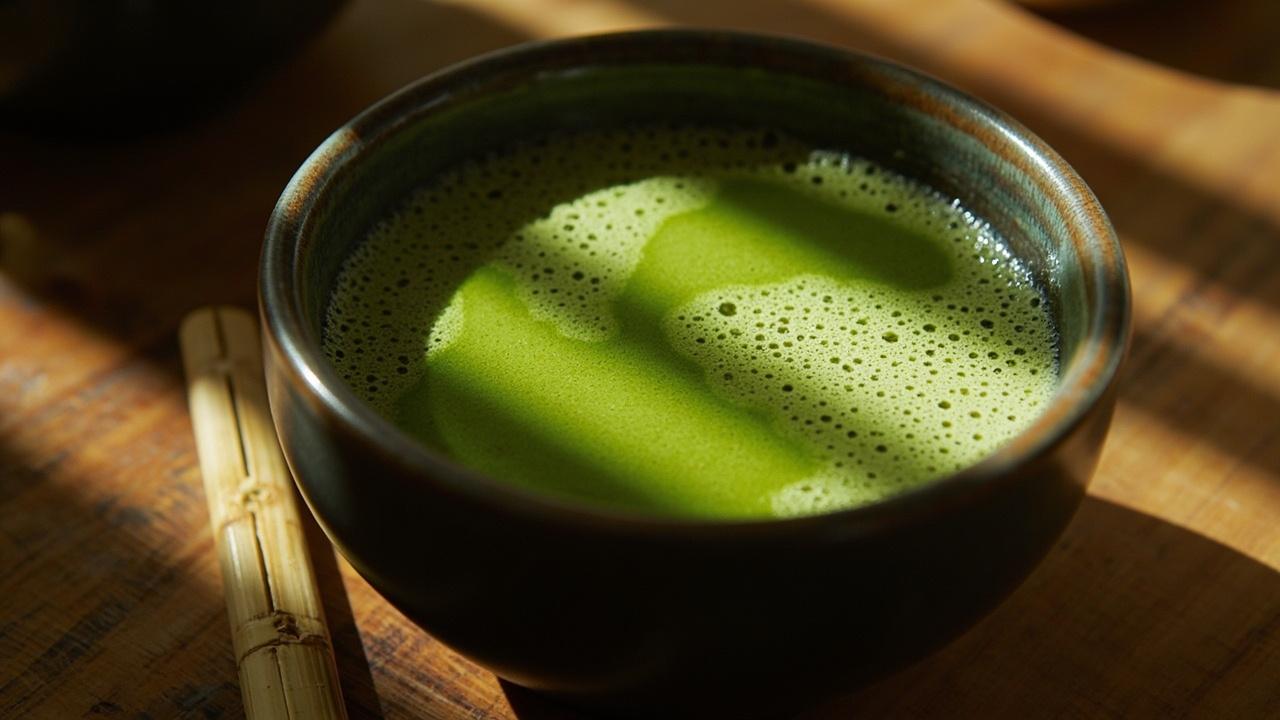
- Sift. 1–2g (about a teaspoon) through a fine sieve into the bowl. Clumps don’t dissolve later.
- Heat. Fresh water to 80 °C (175 °F). Boiling water scorches the powder.
- Pour. 60–80 ml on the sifted powder.
- Whisk. Bamboo chasen, W or M path, 15–20 seconds, until a thin microfoam sits on top.
- Drink. Finish within 10 minutes. The cup goes flat fast.
The same Hario set is the bowl and whisk in that 80 °C / 2g step. If you’re whisking ceremonial, keep the Naoki 40g in the fridge between sessions.
Four ways the cup goes wrong:
- Boiling water — spinach-bitter, no sweetness
- Skip the sift — grit, no foam
- Opened tin on the counter for months — yellow-brown, hay
- “Matcha” that is sencha powder — sun-grown, too coarse to whisk; if the label says sencha and never says tencha, it isn’t matcha
You can’t reuse the powder. Unlike sencha, there is no second steep. Iced is same-day only; overnight whisked matcha oxidizes in 30–60 minutes. If you want it cold, shake it with ice and drink it now. Leave the bowl unrinsed for an hour and the foam ring turns khaki — wash it while the cup is still green.
Pairings stay short: breakfast oats, red-bean anko, skip 85% chocolate. Strong citrus and vinegar dressings shout over the umami. If the cup is only a vehicle for milk and syrup, use culinary or the latte mix and stop pretending it is a tasting bowl.
Benefits
Composition, not a clinic note. Food-composition tables list a 2g matcha serving around 70 mg of caffeine — below most coffee servings (often 95–200 mg) and above a typical steeped-green cup [2]. Leaf amount and water still move the number. Those figures describe the beverage. They are not a serving instruction.
Shade-grown leaf also carries L-theanine [1]. A randomized, placebo-controlled study in Japanese adults aged 50–69 found that a single dose of L-theanine shortened reaction time on an attention task [4]. That trial used L-theanine, not a whisked bowl, and it does not rank tins.
Caffeine’s half-life in most adults is about five to six hours [3]. That is a pharmacokinetics pointer, not a bedtime rule. Ranges across tea forms sit on caffeine by tea type. Site-wide wording on health information sits in the terms.
The Mind of Matcha
Matcha is the only cup that is the leaf: weeks of shade, an hour of stone, then a bowl you finish before the foam dies. Choose the tin by job — whisk, milk, or mix — and read grade names as a job label, not a trophy. One honest 30g, 80 °C, drink it in ten minutes. That is enough attention for a weekday.
References
[1] Matcha. Wikipedia. https://en.wikipedia.org/wiki/Matcha
[2] U.S. Department of Agriculture. FoodData Central. https://fdc.nal.usda.gov/
[3] Fredholm BB, editor. Methylxanthines. Springer; 2011. https://link.springer.com/book/10.1007/978-3-642-13443-2
[4] Baba Y, Inagaki S, Nakagawa S, Kaneko T, Kobayashi M, Takihara T. Effects of l-Theanine on Cognitive Function in Middle-Aged and Older Subjects: A Randomized Placebo-Controlled Study. J Med Food. 2021;24(4):333-341. https://www.ncbi.nlm.nih.gov/pmc/articles/PMC8080935/
Related matcha guides
Seven sister pages — one hub, five core sub-pages, and one iced recipe — keep the cluster connected. Prices, picks, and stock dates are at the front of each page.
| Guide | Topic | Why read it |
|---|---|---|
| Matcha Caffeine | Dose math (per-gram, form split, ceremonial vs culinary at same mass) | Pairs with this hub for gram-aware buyers |
| Matcha Latte Recipe | 1:60 ratio, milk temp, hot and iced methods | Buyers looking for a milk-and-matcha starting point |
| Matcha Ceremony | Six gestures, wa-kei-sei-jaku, home-ceremony setup | Buyers building the ritual side of matcha |
| Matcha Tools | Bowl, chasen, scoop, sifter, storage — what changes the cup | Buyers choosing the physical setup |
| Matcha Brewing Guide | Traditional usucha, W-motion, 80 °C protocol | Buyers following the standard ceremony recipe |
| Matcha Dose Calculator | Live powder/water/milk + caffeine estimator | Buyers who want the math without a scale |
| Iced Matcha | Shaken cold method, summer-ready | Buyers using cold milk or warm-weather prep |
| Ceremonial vs Culinary Matcha | Grade-by-grade buyer’s framework anchored to EGCG / L-theanine chemistry | Buyers deciding between a daily tin and a baking tin |