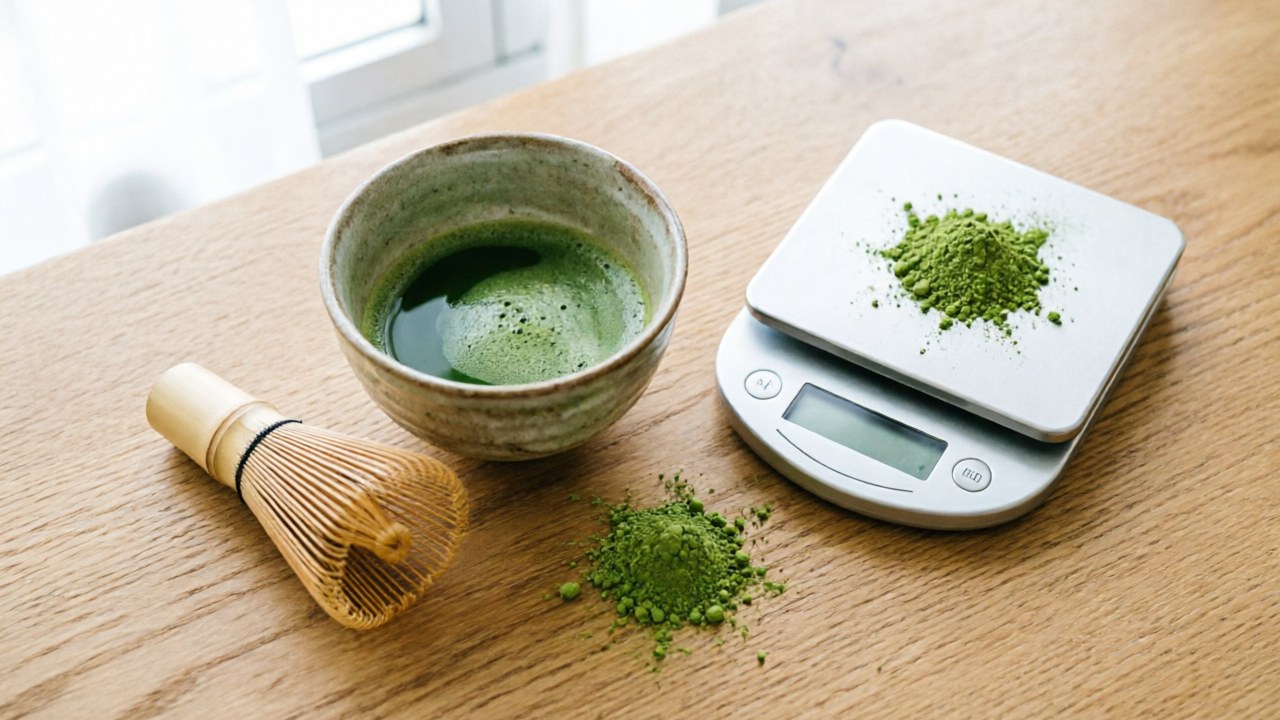
Quick answer: how much caffeine is in matcha
Matcha runs about 19–44 mg of caffeine per gram of powder, so the dose is the gram count, not the cup. A practical mid used throughout this page is ~32 mg per gram. That gives 1 g ≈ 32 mg, 2 g ≈ 64 mg, 3 g ≈ 96 mg, 4 g ≈ 128 mg, 5 g ≈ 160 mg. Using the full published band, those same servings span ~19–44 mg (1 g) up to ~95–220 mg (5 g). Grade and cultivar move the number more than the brewing method does.
Spoons are the trap, because matcha powder is very light. One level teaspoon is roughly 0.5–1 g (≈ 10–44 mg). One heaped tablespoon is roughly 2.5–5 g (≈ 48–220 mg), and a single tablespoon can carry more caffeine than most people expect. Powder density varies by lot and sift, so treat spoon measures as a rough bracket and confirm with a 0.1 g scale if the number matters.
A practical dose ladder. 0.5 g (~16 mg) suits a caffeine-light start, and 1 g (~32 mg) is a standard usucha. A full bowl is 2 g (~64 mg). Reserve 3–4 g (~96–128 mg) for when you have already calibrated your tolerance against the per-gram figure.
Where to buy matcha
Each pick is grouped by the job it does: ceremonial and culinary powders, decaf options, measurement tools, and whisk/sifter accessories. Ordering follows the caffeine math on this page, not a tasting test.
| Tier | Product | Price | Best for | Buy |
|---|---|---|---|---|
| 🏆 Best Overall (Ceremonial) | Naoki Matcha Superior Ceremonial Blend 40g | $24.99 | Measured 1–2 g ceremonial usucha servings | Check price |
| 📦 Best Value (Ceremonial) | Naoki Matcha Superior Ceremonial Blend 100g | $39.99 | Daily drinkers who weigh 2 g servings | Check price |
| 💰 Budget (Culinary) | Jade Leaf Organic Culinary Grade Matcha 30g | $10.99 | Lattes and smaller scoops at lower daily cost | Check price |
| ⚖️ Mid (Bulk Culinary) | Naoki Matcha Organic All Purpose Blend 100g | $24.99 | Bulk culinary latte prep with measured scoops | Check price |
| 🌙 Decaf Option | Caff Off Decaf Matcha Green Tea Powder 30g | $34.99 | Evening cups / caffeine-sensitive dose cut | Check price |
| 🌙 Premium Decaf | TSUJIRI Decaf Matcha Powder 30g | $42.99 | Premium lower-caffeine ceremonial-style evening option | Check price |
| 📏 Measurement (Recommended) | Etekcity 0.1g Food Kitchen Scale | $18.99 | Weigh 1–2 g powder so caffeine math is real | Check price |
| 📏 Measurement (Budget) | YONCON Digital Food Kitchen Scale 0.1g | $9.99 | Budget 0.1 g scale for dose ladder practice | Check price |
| 🥄 Sifter | Naoki Matcha Large Stainless Steel Matcha Sifter | $7.95 | Even powder so each gram extracts consistently | Check price |
| 🎋 Whisk | Clay&Fire Bamboo Matcha Whisk (Chasen) | $5.87 | Usucha whisking for standard 1.5–2 g thin tea | Check price |
| 🎁 Kit | YIBO Matcha Whisk Set With Bowl (5-pc kit) | $19.94 | Consistent home usucha/latte prep kit | Check price |
| 🏭 Bulk | Micro Ingredients Organic Culinary Matcha 1 lb | $28.99 | High-volume latte drinkers tracking scoops by mass | Check price |
Buy ceremonial grade for first-timers: the Naoki 40g is the recommended ceremonial cell on this page. Pair it with a 0.1 g scale so your caffeine math is real, not a guess. See the full matcha hub for grades, prices, and brewing protocols.
Per-Brand Caffeine: What the Data Supports
No mainstream matcha brand publishes a certified caffeine-per-gram figure for a retail tin. Every cell in that column below is empty, and that emptiness is the honest answer. What is published is the composition band — roughly 19–44 mg/g. Four variables move a lot within it: cultivar, shade treatment [8], harvest timing [9], and processing route [10][11]. Two lots of the same brand can sit at opposite ends of the band.
| Brand / lot | What is published | Verified per-gram caffeine |
|---|---|---|
| Naoki (ceremonial, all grades) | serving mass and grade language only | not published |
| Jade Leaf (ceremonial / culinary) | serving mass and grade language only | not published |
| Ippodo Hatsu | serving mass and grade language only | not published |
| Matcha DNA | net weight and organic certification only | not published |
| Any decaf matcha | process method, not residual caffeine | not published |
So the per-brand question collapses into the one you can answer: the mass you weighed. At 2 g you are at 38–88 mg regardless of which tin it came from [1][6]. A light, astringent lot like Ippodo Hatsu 40g and a heavier-bodied tin like Jade Leaf Ceremonial 50g will differ in taste at the same 2 g. Treat any brand-to-brand mg/g number elsewhere as unsourced until the brand prints it.
If cost per weighed serving is what you are actually optimising, Matcha DNA Organic 16oz runs about $0.06/g. A 40 g ceremonial tin runs roughly $0.62/g, so a 2 g serving is about $0.11 versus $1.25. Same mass, same caffeine band, tenfold price difference. That is arithmetic, not a lab result.
Informational ranges only — not medical advice. Full terms: /terms/#wellness-health-information.
Matcha caffeine is real — and it scales with how many grams of powder you drink, not with a vague “cup.” This page is a matcha-only deep-dive. It covers per-gram math, usucha / koicha / latte / culinary form splits, ceremonial vs culinary at the same mass, scoop-vs-scale variance, and a practical dose ladder (0.5 → 1 → 2 → 3–4 g). For the full tea-type spectrum, see Caffeine by Tea Type.
Disclaimer: This article is for informational purposes only and is not medical advice. Consult a qualified healthcare professional before making changes to your diet, especially if you are pregnant, nursing, taking medication, or have a medical condition.
What Matcha Caffeine Actually Is
Matcha is whole-leaf powder of shade-grown green tea (Camellia sinensis). You ingest the leaf, not just an infusion. That is why matcha caffeine numbers often feel higher than many steeped greens: full-leaf intake plus a typical 1.5–2 g serving [1][6].
Chemically, it’s the same caffeine molecule as coffee or other teas. L-theanine is also present in the leaf, and that co-presence is a studied combination in human trials — not a personal medical guarantee [3][15]. The pairing has been tested in narrow populations, such as trained athletes, where combined and isolated caffeine and theanine produced measurable acute performance differences [18]. That is a study result about a specific group, not a claim about what any given cup will do for you.
What lands in the cup is not simply what the tin lists. Processing drives measurable transformations in matcha components before the powder ever reaches water [7], so the powder’s listed composition and the brewed cup are two different measurements. That gap is why every number on this page is framed as a band.
What this page owns vs the sister page:
- This page — matcha-only dose, form, and prep lab
- Sister Caffeine by Tea Type — spectrum across tea types plus brew variables
For leaf background and grade language, start at the Matcha variety guide. For the broader collection stance, see the Wellness hub.
Per-Gram Math — Why “One Cup” Lies
“One cup of matcha” is a weak unit. Caffeine tracks powder mass. Composition literature often lands roughly 19–44 mg caffeine per gram of matcha powder, depending on cultivar, shade, and grade [1][6]. This page uses a practical mid of about 30–35 mg/g (around 32 mg/g in the table) and flags every figure as an estimate — not a lab certificate for your tin.
| Powder mass | Approx caffeine (mid ~32 mg/g) | Approx range (19–44 mg/g) |
|---|---|---|
| 0.5 g | ~16 mg | ~10–22 mg |
| 1.0 g | ~32 mg | ~19–44 mg |
| 1.5 g | ~48 mg | ~29–66 mg |
| 2.0 g | ~64 mg | ~38–88 mg |
| 3.0 g | ~96 mg | ~57–132 mg |
| 4.0 g | ~128 mg | ~76–176 mg |
Common AIO-cited frames sit inside this math: usucha around 50–70 mg at 1.5–2 g, and koicha around 90–140 mg at 3–4 g [1]. The lever is still the gram.
Adult general guidance often cites about 400 mg caffeine/day for healthy adults as a public reference (EFSA / FDA-style language). That is context only — not personal dosing for any reader [2].
If you want the math to be real at home, weigh the powder. The Etekcity 0.1g Food Kitchen Scale is the measurement pick for 1–2 g bowls. Budget alternative: YONCON Digital Food Kitchen Scale 0.1g.
Caffeine Content Comparison — Matcha vs Other Drinks
Matcha doesn’t sit alone in the caffeine world. A 2 g usucha lands near ~64 mg mid, which puts it in the same band as a single espresso shot and below most 8 oz coffee cups. That’s useful orientation — but only if you hold serving size constant. Below is a typical-cup frame for comparison, not a lab match-up.
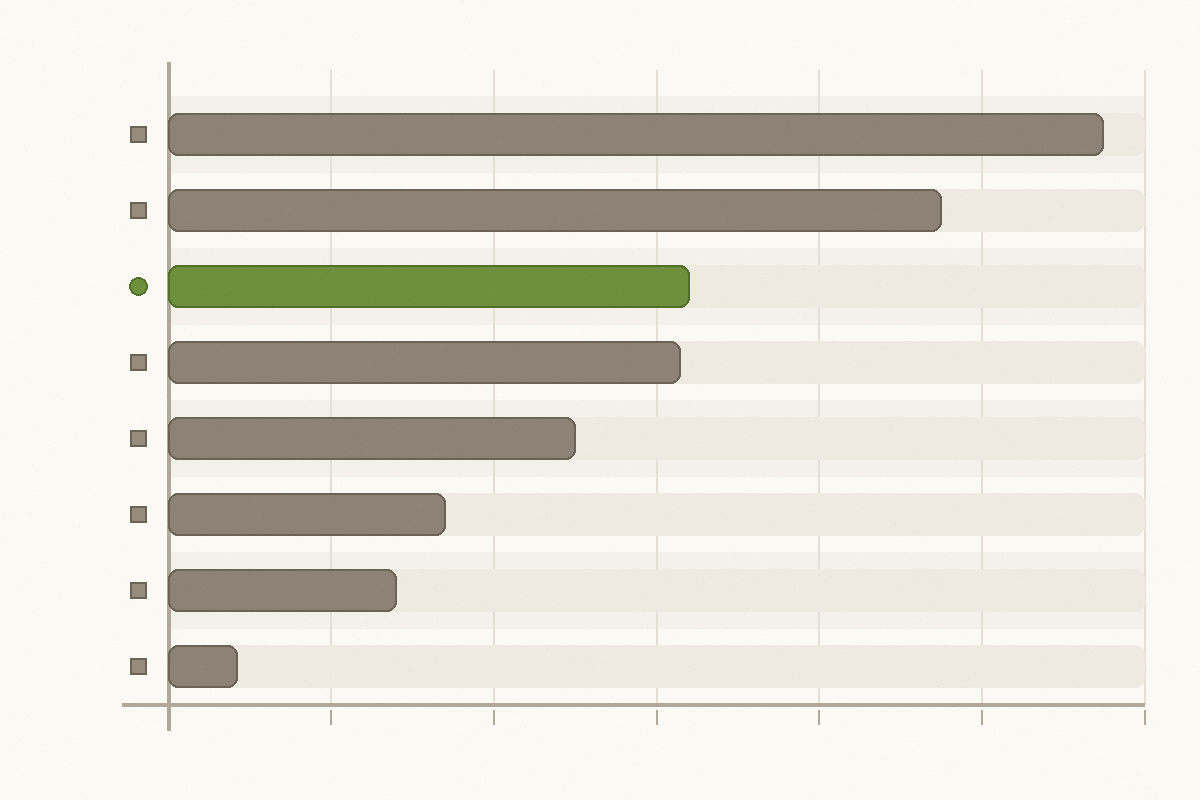 Bars = approximate mid per typical cup, highest to lowest. 8 oz energy drink, 8 oz brewed coffee, 2 g matcha usucha, 1 oz espresso, 8 oz black tea, 12 oz cola, 8 oz green tea, 8 oz decaf coffee. Matcha and decaf carry wide ranges — see the table above; the bars show the mid only.
| Drink (typical cup) | Caffeine | Notes |
|---|---|---|
| 2 g matcha usucha | ~64 mg (range ~38–88 mg) | Mid ~32 mg/g, scales with powder mass |
| 8 oz brewed coffee | ~95 mg | USDA mid; range ~80–120 mg typical |
| 1 oz espresso shot | ~63 mg | Concentrated, smaller liquid volume |
| 8 oz black tea | ~50 mg | Leaf infusion, not powder |
| 8 oz green tea | ~28 mg | Steeped, lower-extraction frame |
| 8 oz energy drink | ~80–150 mg | Variable; often added guarana |
| 12 oz cola | ~34 mg | Mild baseline reference |
| 8 oz decaf coffee | ~2–15 mg | After processing; mostly flavor |
Two takeaways:
- Mass decides. Espresso and 2 g matcha share a ~63–64 mg band, but the two drinks are built differently. Espresso weighs ~18 g of grounds with water mass of ~30 ml; matcha weighs 2 g powder in ~70 ml water. The caffeine math looks similar; the volume and ritual don’t.
- Matcha is not “the most caffeinated.” A 16 oz coffee is closer to ~190 mg, which is roughly three standard 2 g matcha servings. Big volume wins the total, not the label.
For some readers, the bigger surprise is the cola line. A 12 oz can sits near 34 mg — roughly half a 2 g matcha serving. People who track sodas in their caffeine budget often miss how the small cans stack across a day. If you’re switching off coffee to matcha, count both sides of the budget; cola, chocolate, and pre-workout powders all add mg you can’t taste.
If you’re scaling down from coffee, start the ladder at 1 g usucha (~32 mg) and step up by mass, not by adding a second cup. The 8 oz coffee frame above is the bench — not the goal.
Form Split — Usucha, Koicha, Latte, Culinary Scoop
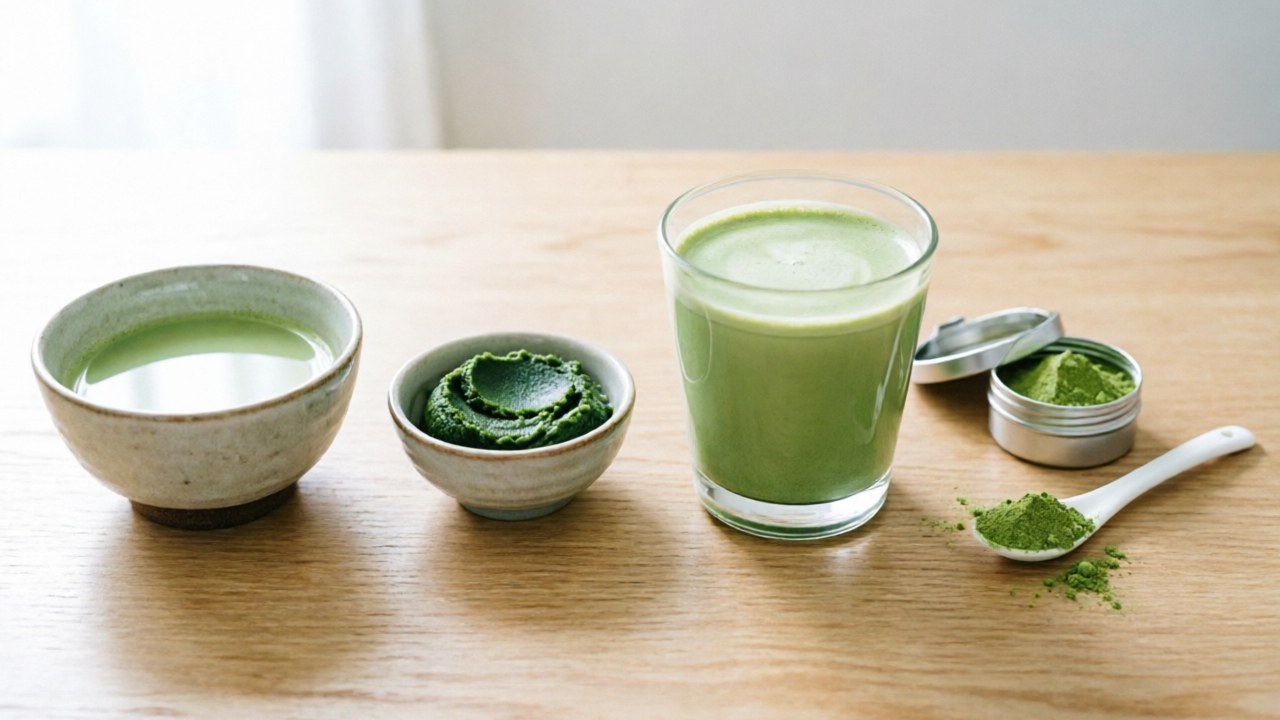
Four prep forms, each with a typical powder mass and caffeine implication. Milk and water change taste and volume; they don’t erase the caffeine already in the powder [1].
| Form | Typical powder | Typical liquid | Caffeine implication | Product path |
|---|---|---|---|---|
| Usucha (thin) | 1.5–2 g | ~60–80 ml water | Standard daily ceremonial cup ~50–70 mg mid | Naoki Matcha Superior Ceremonial Blend 40g · Clay&Fire Bamboo Matcha Whisk (Chasen) |
| Koicha (thick) | 3–4 g | ~30–40 ml water | High end ~90–140 mg — treat mass carefully | Naoki Matcha Superior Ceremonial Blend 100g |
| Latte | 1–2 g | milk + water | Often 40–70 mg; milk dilutes taste, not caffeine mass | Jade Leaf Organic Culinary Grade Matcha 30g · Naoki Matcha Organic All Purpose Blend Matcha 100g |
| Culinary scoop | 0.5–2 g variable | baking / smoothie | Scoop variance is the silent dose creep | Micro Ingredients Organic Culinary Matcha 1 lb |
For consistent home usucha or latte prep, the YIBO Matcha Whisk Set With Bowl (5-pc kit) keeps bowl and whisk in one workflow. A Naoki Matcha Large Stainless Steel Matcha Sifter spreads powder so each gram behaves the same in the bowl.
Latte technique detail lives on the matcha latte recipe. Tool depth (whisk, sifter, scale, bowl) lives on Matcha tools.
A Scoop Is Not a Measurement — What 0.1 g Changes
A bamboo scoop (chashaku) or brand scoop is a volume tool. Weigh yours against a kitchen teaspoon once — a two-pack of brown bamboo chashaku makes that one-time check easy — and “one scoop” stops being a number you have to trust. Powder density and packing change the mass. At home, one “scoop” can swing 0.5–1.5 g depending on scoop size and how hard you pack. That is enough to move caffeine by roughly 15–50+ mg without a label change. I keep a 0.1 g kitchen scale next to the tin so every bowl starts as a weighed mass, not a packed scoop.
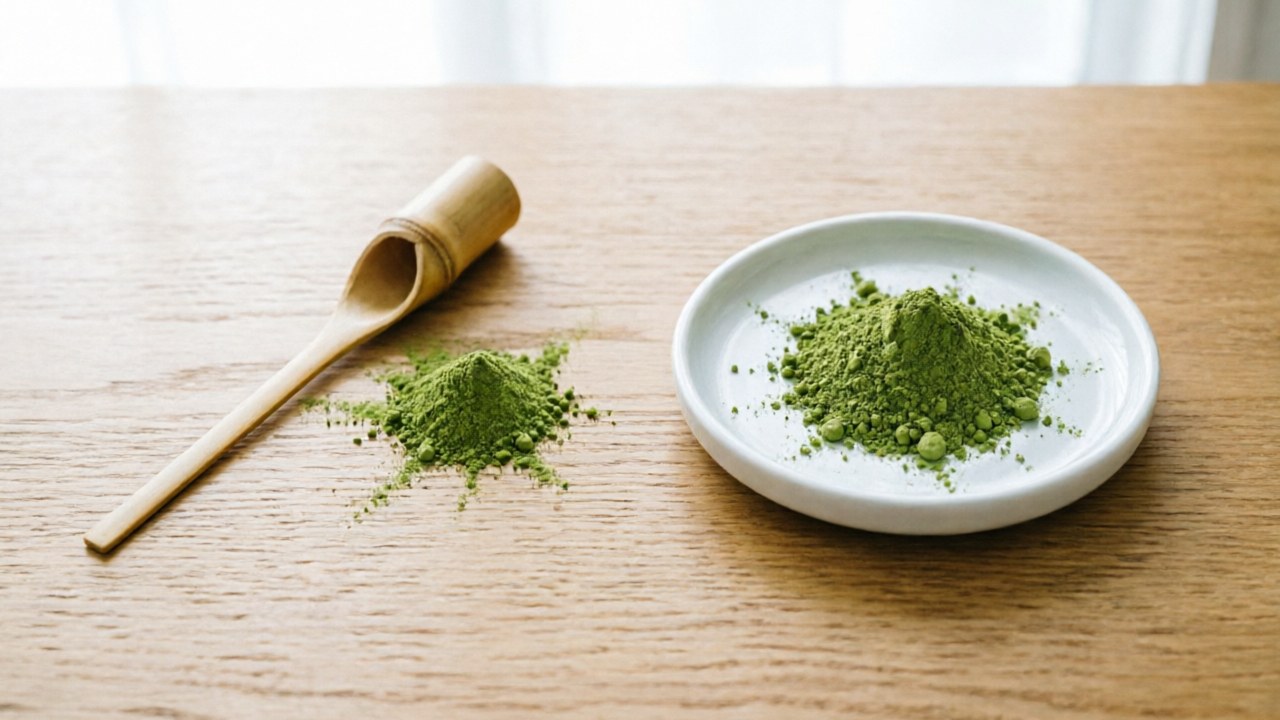
Three-step protocol:
- Place the bowl on a 0.1 g scale and tare.
- Sift powder into the bowl to the target mass — Naoki Matcha Large Stainless Steel Matcha Sifter.
- Whisk — Clay&Fire Bamboo Matcha Whisk (Chasen) or the full YIBO Matcha Whisk Set With Bowl (5-pc kit). A spare chasen matters more than it sounds. A chasen with a split tine will not suspend powder evenly, and uneven suspension is uneven extraction from a dose you already weighed correctly. A wide matte-glazed bowl gives you room to read the target mass off the scale.
Recommended first scale: Etekcity 0.1g Food Kitchen Scale. Budget alt: YONCON Digital Food Kitchen Scale 0.1g. If you ever steep rather than whisk, a WEIGHTMAN Espresso Scale with Timer puts the timer and the 0.1 g mass on one device; for plain whisking the two above are enough.
Water temperature is a real variable here, not a preference. Extraction temperature measurably shifts polyphenols and sensory outcomes in matcha [12], and matcha extraction yield responds to process parameters generally [13]. So a 60 °C cup and an 80 °C cup are not the same cup, even at an identical 2 g. Two honest caveats on those studies. The temperature work used a berry-enhanced matcha system rather than plain ceremonial powder [12], and the yield work is a laboratory green-solvent extraction rather than home whisking [13]. Both support “extraction is a variable”; neither gives you a home brewing spec to copy. For general brew method on any tea, see How to brew tea.
For more vessel and tool context, see Matcha tools. For the calm first-cup measurement mindset (any tea), see How to brew tea.
Dose Ladder — 0.5 g · 1 g · 2 g · 3–4 g
This ladder is informational only. It is not medical dosing for any population. Change one variable at a time — mass first, then form.
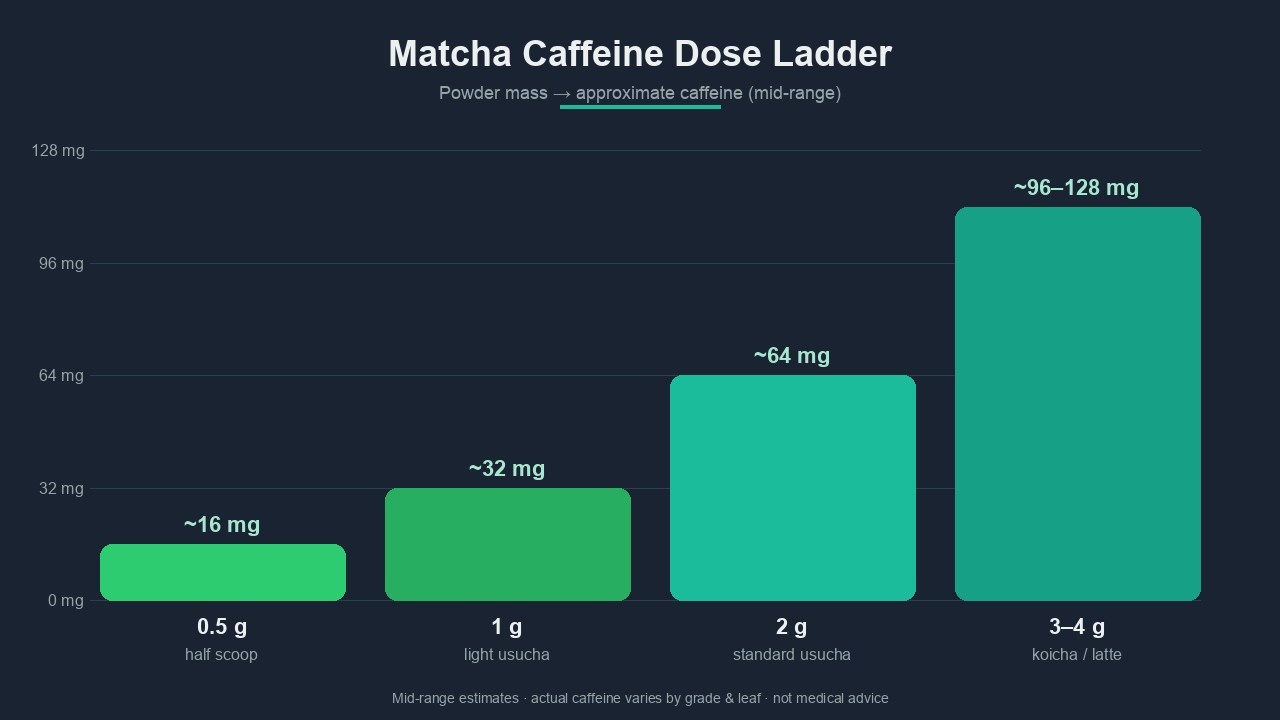 Columns = approximate mid per dose, lowest to highest: 0.5 g ≈ 16 mg · 1 g ≈ 32 mg · 2 g ≈ 64 mg · 3–4 g ≈ 96–128 mg. The 3–4 g step is stated as a range in the table above, so its column is drawn to the lower bound. Informational only, not medical dosing.
| Step | Mass | Approx mid caffeine | Typical use | Product path |
|---|---|---|---|---|
| Micro | 0.5 g | ~16 mg | taste test / sensitive start | Jade Leaf Organic Culinary Grade Matcha 30g small scoop |
| Light | 1.0 g | ~32 mg | gentle morning / half-usucha | Naoki Matcha Superior Ceremonial Blend 40g weighed |
| Standard | 2.0 g | ~64 mg | classic usucha / solid latte | Naoki Matcha Superior Ceremonial Blend 40g or Naoki Matcha Superior Ceremonial Blend 100g + Etekcity 0.1g Food Kitchen Scale |
| Strong | 3–4 g | ~96–128 mg | koicha territory | Naoki Matcha Superior Ceremonial Blend 100g only if you intend thick tea |
Mid values use ~32 mg/g; full composition bands still apply [1][6]. Green brewing context for leaf (not powder) cups lives on How to brew green tea.
Brief Tea-Type Context → Full Spectrum Sister
Short orientation only — the full spectrum is not rewritten here.
| Type (context) | Typical cup frame | Where to go deeper |
|---|---|---|
| Matcha (this page) | scales with grams of powder | you are here |
| Steeped green / black / oolong / white / pu-erh | leaf mass × temp × time | Caffeine by Tea Type |
One-sentence coffee note: many 8 oz coffee cups sit near ~95 mg; a 2 g matcha mid often lands lower — but mass decides the comparison [2][4]. A dedicated tea-vs-coffee compare page is planned (slug tea-vs-coffee-caffeine); until it ships, keep coffee as a one-line benchmark only.
Safe Limits — Who Should Treat the Numbers Carefully
A public adult reference level is about 400 mg caffeine/day for healthy adults — context, not a target [2]. EFSA set it as a population reference and listed pregnancy, lactation, and children separately rather than applying the adult number to them.
Treat these numbers carefully if you are pregnant, nursing, on medication, caffeine-sensitive, or managing a medical condition. Bring the gram count to a clinician. This page does not dose for those groups.
The wider research, stated as research. L-theanine has human trial evidence across cognition, mood, and sleep [15], including the acute theanine–caffeine–EGCG combination [3]. Tea consumption shows a population-level association with hypertension outcomes [16], and a GRADE-assessed meta-analysis rates green tea supplementation evidence for adult blood pressure as uneven in certainty [17]. Combined caffeine and theanine have been tested for acute performance in competitive athletes [18] — a narrow group, not a general claim.
None of that turns a 2 g bowl into a treatment. For the cross tea-type ceiling, shade-grown gyokuro leaf is brewed in far smaller leaf masses. Practical levers: a portion-capped single-serve format removes the weighing step, and an airtight tin keeps opened powder out of humidity.
Informational ranges only — not medical advice. Full terms: /terms/#wellness-health-information.
The Mind of Matcha Caffeine
Matcha caffeine isn’t a mood to guess. It’s a mass you can weigh. One honest gram, sifted and whisked, teaches more than a dozen vague “cups.” Prefer the scale over the scoop, the ladder over the leap, and the form that fits the hour — thin usucha, milk latte, or a quieter evening tin. Attention to the gram is respect for the leaf and for your own day.
References
[1] Koláčková, T., et al. (2020). Matcha Tea: Analysis of Nutritional Composition, Phenolics and Antioxidant Activities. Plant Foods for Human Nutrition, 75(1), 48–60. DOI: 10.1007/s11130-019-00777-z · PMID 31832980 · https://doi.org/10.1007/s11130-019-00777-z · Verified 2026-10-05 via Europe PMC + NCBI ESummary. Corrected 2026-10-05: this entry previously carried DOI 10.1007/s11130-020-00822-8, which returns 404 on CrossRef.
[2] EFSA Panel on Dietetic Products, Nutrition and Allergies (NDA). (2015). Scientific Opinion on the safety of caffeine. EFSA Journal, 13(5), 4102. DOI: 10.2903/j.efsa.2015.4102 · https://doi.org/10.2903/j.efsa.2015.4102 · Verified 2026-10-05 via CrossRef.
[3] Camfield, D. A., Stough, C., Farrimond, J., & Scholey, A. B. (2014). Acute effects of tea constituents L-theanine, caffeine, and epigallocatechin gallate on cognitive function and mood: a systematic review. Nutrition Reviews, 72(8), 507–522. DOI: 10.1111/nure.12120 · https://doi.org/10.1111/nure.12120 · Verified 2026-10-05 via CrossRef.
[4] Rocha, P. L. A., Lima, A. L. C., Saunders, B., & Reis, C. E. G. (2022). Development of a Caffeine Content Table for Foods, Drinks, Medications and Supplements Typically Consumed by the Brazilian Population. Nutrients, 14(20), 4417. DOI: 10.3390/nu14204417 · PMID 36297100 · PMC9608580 · https://pmc.ncbi.nlm.nih.gov/articles/PMC9608580/ · Verified 2026-10-05 via Europe PMC + NCBI ESummary. Replaces the USDA FoodData Central listing previously used here; it standardises mg per 100 g or 100 mL across coffees, teas, soft drinks, and energy drinks.
[5] Astill, C., Birch, M. R., Dacombe, C., Humphrey, P. G., & Martin, P. T. (2001). Factors Affecting the Caffeine and Polyphenol Contents of Black and Green Tea Infusions. Journal of Agricultural and Food Chemistry, 49(11), 5340–5347. DOI: 10.1021/jf010759+ · PMID 11714326 · https://doi.org/10.1021/jf010759%2B · https://pubmed.ncbi.nlm.nih.gov/11714326/ · Verified 2026-10-05 via CrossRef + Europe PMC.
[6] Unno, K., Kameoka, Y., & Nakamura, Y. (2026). Compositional Diversity and Functional Interactions of Bioactive Compounds in Japanese Green Tea: Focus on Matcha, Sencha, and Gyokuro. Molecules, 31(16), 2934. DOI: 10.3390/molecules31162934 · PMID 42654013 · PMC13515311 · https://pmc.ncbi.nlm.nih.gov/articles/PMC13515311/ · Verified 2026-10-05 via Europe PMC + NCBI ESummary.
[7] Önder, A., Warda, M., Yılmaz, O., Bae, J., & Abd El-Aty, A. M. (2026). Beyond Composition: Processing-Driven Transformations and Functional Trade-Offs of Matcha Tea in Foods. Foods, 15(16), 2782. DOI: 10.3390/foods15162782 · PMID 42650476 · PMC13512456 · https://pmc.ncbi.nlm.nih.gov/articles/PMC13512456/ · Verified 2026-10-05 via Europe PMC + NCBI ESummary.
[8] Lee, L. S., Choi, J. H., Son, N., Kim, S. H., Park, J. D., Jang, D. J., et al. (2013). Metabolomic analysis of the effect of shade treatment on the nutritional and sensory qualities of green tea. Journal of Agricultural and Food Chemistry, 61(2), 332–338. DOI: 10.1021/jf304161y · PMID 23256790 · https://doi.org/10.1021/jf304161y · https://pubmed.ncbi.nlm.nih.gov/23256790/ · Verified 2026-10-05 via Europe PMC + NCBI ESummary.
[9] Liu, C., Wang, C., Wei, M., Ning, M., Xu, Z., Chen, S., Cui, J., et al. (2026). Influence of leaf tenderness on the aroma and taste characteristics of green tea from Camellia sinensis cv. Chuancha No. 2. Food Chemistry: X, 35, 103754. DOI: 10.1016/j.fochx.2026.103754 · PMID 41867397 · PMC13000715 · https://pmc.ncbi.nlm.nih.gov/articles/PMC13000715/ · Verified 2026-10-05 via Europe PMC + NCBI ESummary.
[10] Toniolo, C., Patriarca, A., De Vita, D., Santi, L., Sciubba, F., et al. (2025). A Comparative Multianalytical Approach to the Characterization of Different Grades of Matcha Tea (Camellia sinensis (L.) Kuntze). Plants, 14(11), 1631. DOI: 10.3390/plants14111631 · PMID 40508306 · PMC12157965 · https://pmc.ncbi.nlm.nih.gov/articles/PMC12157965/ · Verified 2026-10-05 via Europe PMC + NCBI ESummary.
[11] Sławińska, P., & Raczkowska, E. (2026). Matcha as a Source of Bioactive Compounds: A Review of Health-Promoting Properties and Potential Applications. Nutrients, 18(10), 1613. DOI: 10.3390/nu18101613 · PMID 42197072 · PMC13209849 · https://pmc.ncbi.nlm.nih.gov/articles/PMC13209849/ · Verified 2026-10-05 via Europe PMC + NCBI ESummary.
[12] Ali, R. F. M., Alhomaid, R. M., Aleid, N. A. M., et al. (2026). In Vitro Bioactivity, Polyphenols, Antioxidant Properties, and Sensory Quality of Al-Qassim Berry-Enhanced Matcha Tea as a Function of Extraction Temperature. Foods, 15(13), 2323. DOI: 10.3390/foods15132323 · PMID 42450441 · PMC13360794 · https://pmc.ncbi.nlm.nih.gov/articles/PMC13360794/ · Verified 2026-10-05 via Europe PMC + NCBI ESummary. Caveat: berry-enhanced matcha system, not plain ceremonial powder.
[13] Gaweł-Bęben, K., Szczepanik, M., Szczeblewski, P., et al. (2026). Cosmeceutical Potential of Matcha (Camellia sinensis) and Yerba Mate (Ilex paraguayensis) Extracts Obtained with Green Solvents. Molecules, 31(16), 2742. DOI: 10.3390/molecules31162742 · PMID 42653825 · PMC13515746 · https://pmc.ncbi.nlm.nih.gov/articles/PMC13515746/ · Verified 2026-10-05 via Europe PMC + NCBI ESummary. Caveat: laboratory green-solvent extraction, not home whisking.
[14] Zheng, M., Tian, L., Mei, W., Li, X., Li, D., Jie, W., Chen, X., et al. (2026). Digital Sensing for Comprehensive Tea Quality Evaluation: From Dry Tea to Tea Infusion and Infused Leaves. Comprehensive Reviews in Food Science and Food Safety, 25(5), e70615. DOI: 10.1111/1541-4337.70615 · PMID 42634132 · PMC13500874 · https://pmc.ncbi.nlm.nih.gov/articles/PMC13500874/ · Verified 2026-10-05 via Europe PMC + NCBI ESummary.
[15] Cotter, J., & Kilpatrick, H. E. (2026). Effects of L-theanine on cognition, mood and sleep: evidence from human trials. Frontiers in Nutrition, 13, 1922819. DOI: 10.3389/fnut.2026.1922819 · PMID 42761839 · PMC13587617 · https://pmc.ncbi.nlm.nih.gov/articles/PMC13587617/ · Verified 2026-10-05 via Europe PMC + NCBI ESummary.
[16] Jiang, R., Chen, J., Lin, H., Wang, Q., Hu, Y., et al. (2026). The association between tea consumption and hypertension: a systematic review and meta-analysis. Frontiers in Nutrition, 13, 1883708. DOI: 10.3389/fnut.2026.1883708 · PMID 42694065 · PMC13537974 · https://pmc.ncbi.nlm.nih.gov/articles/PMC13537974/ · Verified 2026-10-05 via Europe PMC + NCBI ESummary. Population-level association, not an individual effect claim.
[17] Rezaei, M., Akhavan, N., Fathi, F., Alavi, S. M., Fadaii, M., et al. (2025). Effect of green tea supplementation on blood pressure in adults: a GRADE-assessed systematic review and dose-response meta-analysis. Blood Pressure, 34(1), 2517122. DOI: 10.1080/08037051.2025.2517122 · PMID 40497293 · https://doi.org/10.1080/08037051.2025.2517122 · https://pubmed.ncbi.nlm.nih.gov/40497293/ · Verified 2026-10-05 via Europe PMC + NCBI ESummary.
[18] Tuncer, S. Y., Ozdenk, S., Yildirim, U. C., Erkan, D., & Sari, C. (2025). Acute effects of combined and isolated caffeine and theanine supplementation on physical and cognitive performance in competitive athletes. Frontiers in Nutrition, 12, 1751673. DOI: 10.3389/fnut.2025.1751673 · PMID 41668720 · PMC12884062 · https://pmc.ncbi.nlm.nih.gov/articles/PMC12884062/ · Verified 2026-10-05 via Europe PMC + NCBI ESummary. Caveat: tested population is competitive athletes; not generalisable to a general reader.