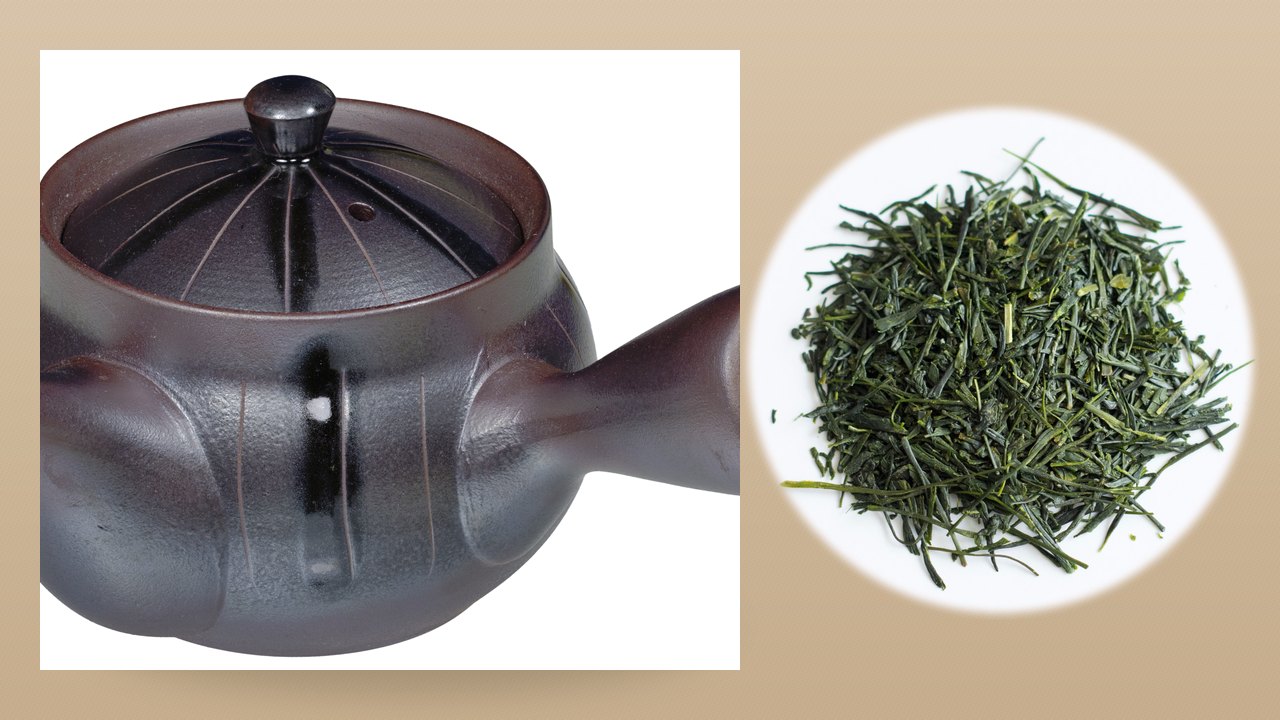
Fukamushi versus asamushi, and shincha (first flush) versus later leaf, change a sencha cup more than any slogan. Start with a side-handle kyusu and needle-rolled leaf — not a powder tin. This page maps grades, regions, ware, and a daily steep.
Origin
Uji in Kyoto, Shizuoka, and Kagoshima are the working map for Japanese sencha, not a tourism list. Uji lots often drink refined and a little sweet. Shizuoka is the volume belt — a lot of the fukamushi you will actually brew comes from here. Kagoshima, farther south, pushes earlier harvests and brighter greens, often on Saemidori rather than the workhorse Yabukita [1].
Yabukita is the default cultivar: grassy, reliable, a little tight if you over-steep. Saemidori is sweeter and greener in the cup. Neither wins. They just brew differently, and you should buy the one that matches how you already steep.
Shincha is first-flush sencha — the spring pick, sold as a short window, not as a moral upgrade. Later-season sencha is the daily tin. Same plant, different calendar. If a bag says “first harvest” in August, read the lot date before you pay a spring premium.
Steam-then-roll is the factory assumption on this page. If you want the Chinese pan-fired cousin with a chestnut note, that is Longjing, not a detour here. The Japanese and Chinese leaf index is the hub if you are still choosing a green.
For Uji sencha you can drink without hunting a specialty shop, YAMASAN KYOTO UJI Organic Sencha (2.82 oz) at $20.73 is a clean daily start. If you want a slightly larger organic pack from the same region, TOMOSAN Organic Sencha (100g) at $18.99 covers more cups without jumping cultivars.
“Uji” on a label is a region cue, not a terroir lecture. Taste the steam depth next. A spring Uji lot and a deep-steamed Shizuoka lot from the same week can disagree in the cup more than two Uji tins from different factories.
Look
Sencha is a needle-rolled whole leaf. It is not matcha powder. If the bag looks like dust, you bought a different product. Sencha vs matcha is a form split: you infuse needles and discard them; you whisk powder and drink it.
Dry leaf runs dark-to-bright green. Asamushi lots keep more intact needles. Fukamushi lots look broken on purpose — the long steam ruptures the leaf, so the dry tea can look like coarse crumbs. That is not a packing defect.
Wet leaf after a proper steep should still read as leaf. Needles open. You should not be staring at sludge. If the cup is only dust, the bag was either fannings or you crushed it in a basket infuser that is too tight.
Liquor splits on steam depth. Asamushi sencha pours yellow-green and clear. Fukamushi sencha pours a deeper, cloudier green because more solids wash out. Cloud is the point of deep steam, not a fail.
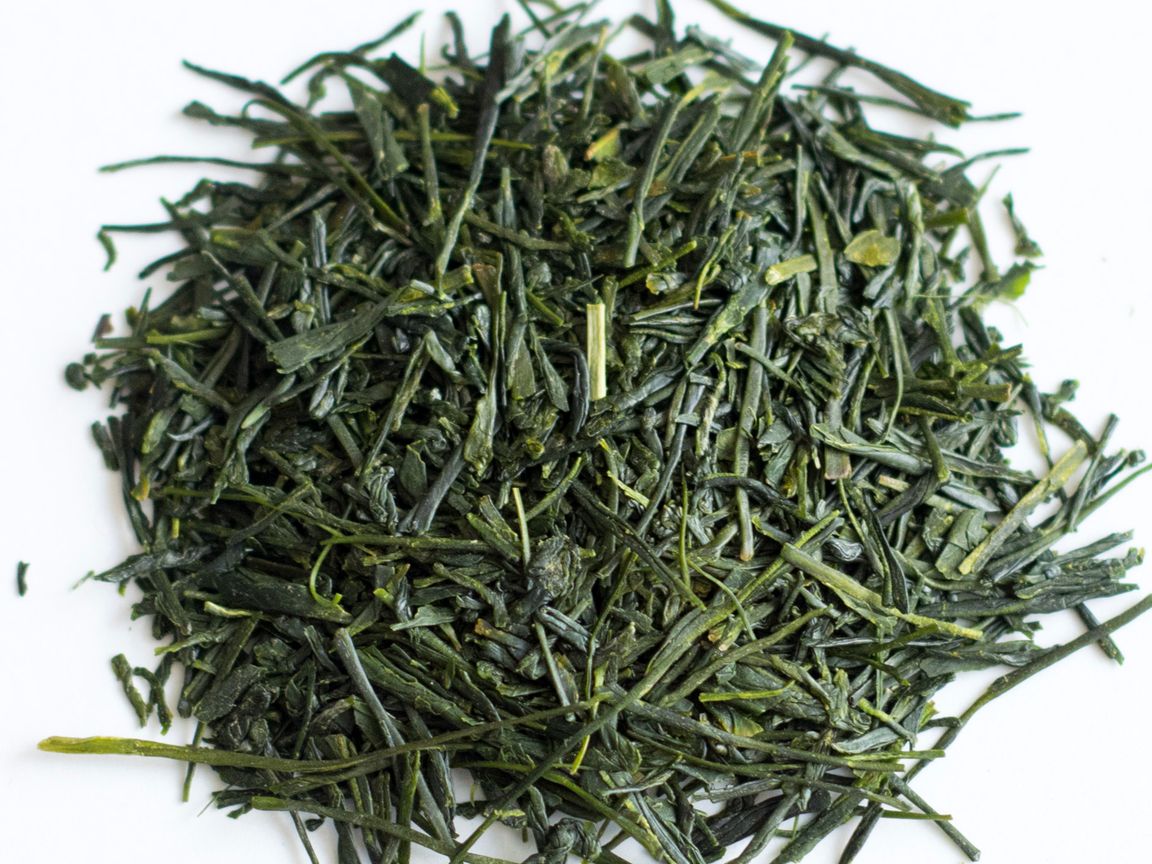
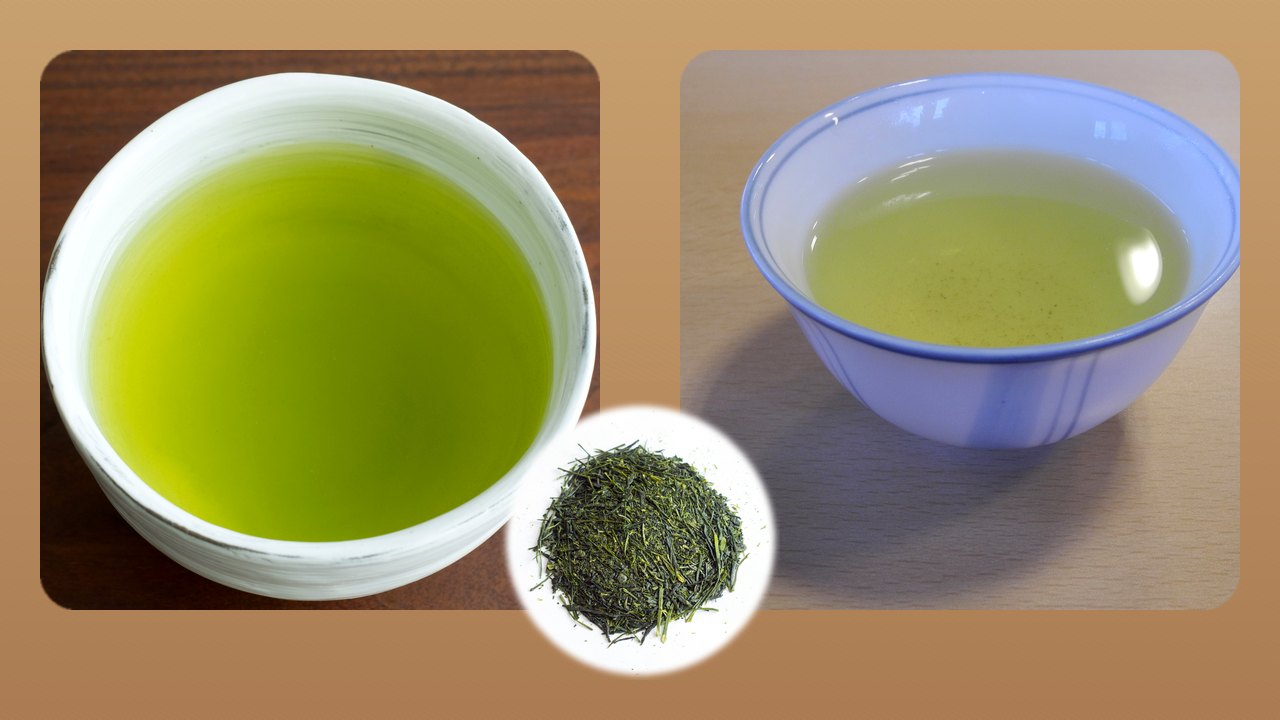
A cheap way to see the cloudy cup: TOMOSAN Deep Steamed Sencha from Shizuoka (80g) at $12.99. Small pack, fukamushi, useful as a look-and-taste sample.
Character
The flavor spine is umami, grass, and a slight oceanic edge. Steam depth moves body more than cultivar slogans. Buy steam depth first, cultivar second.
Asamushi (light steam): clearer cup, sharper green, more needle integrity. It can taste thinner if you expected broth. Cooler water and a short first steep keep it from going stemmy.
Fukamushi (deep steam): cloudy cup, rounder, broken leaf is normal. It fills the mouth faster and turns stew-y if liquor sits on the mesh. Pour out completely.
Shincha: first-harvest brightness — greener, sweeter, less of the later-season hay. It is a calendar tea, not a permanent grade. YAMASAN 100% First-Harvest Sencha (2.8 oz) at $19.49 is the character sample for that window.
Taste fukamushi against asamushi on consecutive days, same kyusu, same water. The TOMOSAN Shizuoka deep-steamed pack is the cloudy side of that pair.
Boundary, not a compare essay: Longjing is pan-fired and chestnut. Sencha is steamed needles. Matcha is shade-grown leaf stone-milled to powder — you ingest the leaf. Don’t turn this page into sencha-versus-gyokuro either; that is a different article.
| Grade | What changed | Cup | Leaf in the pot |
|---|---|---|---|
| Asamushi sencha | Light steam | Clear yellow-green, sharper | More intact needles |
| Fukamushi sencha | Deep steam | Cloudy, rounder | More broken |
| Shincha | First flush | Brighter, sweeter | Seasonal lot |
If a vendor only says “premium green” with no steam depth and no harvest, you are guessing. Ask for fukamushi, asamushi, or shincha, then brew. One weekday cup of each, same water, is enough. You don’t need a tasting wheel to hear the difference.
Ware
You need a side-handle kyusu, not a British pot and not a gaiwan-first setup. Volume for one or two cups — about 300–420 ml. Filter: sasame (clay mesh) or stainless. Cups: yunomi, small enough to hold. Pour the liquor out fully; don’t leave the leaves sitting in a puddle on the mesh.
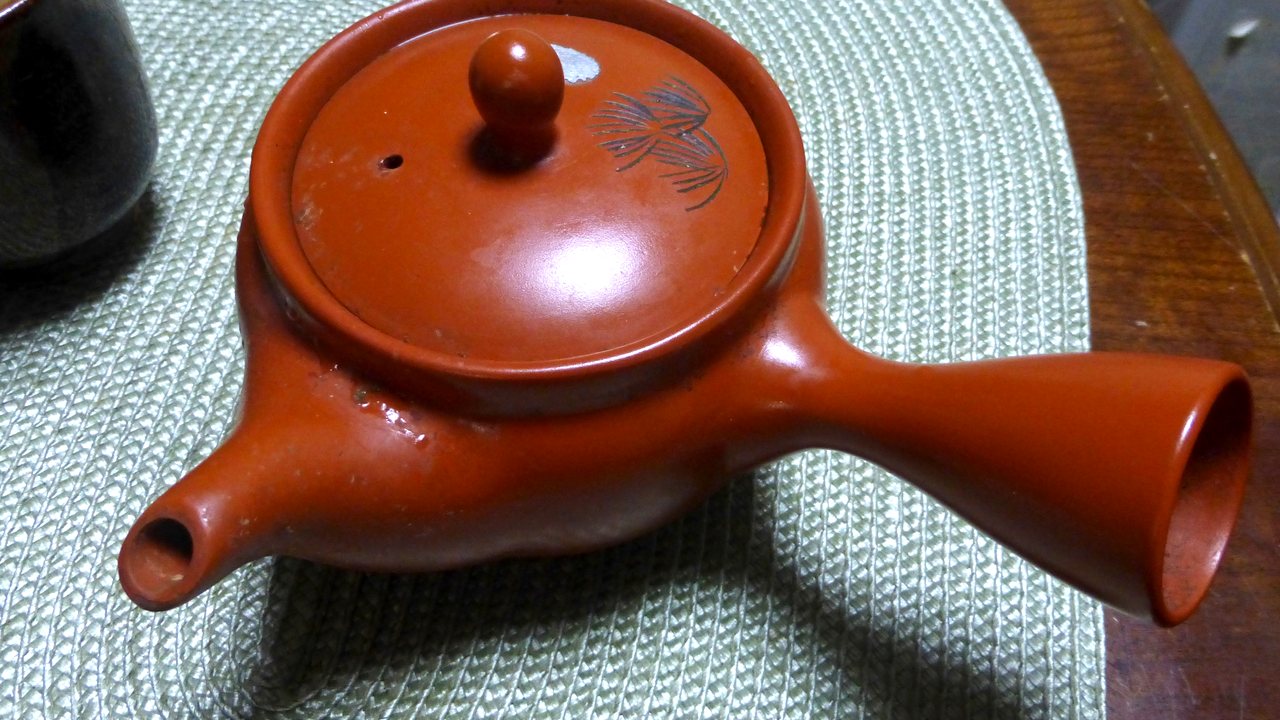
What you’ll need
- Needle leaf (not powder)
- A kyusu you can empty in one pass
- A kettle that can sit in the 70–80 °C band
- One or two yunomi
Clay that seasons: Tokoname or Banko. KIMIKURA Tokoname kyusu, 420 ml at $59.90 is a daily size that doesn’t feel tiny. Hisamuratouki Banko kyusu, 380 ml at $34.77 is the other clay path if you want a slightly smaller pot. Tokoname Youhen Fusen, 11.8 fl oz at $44.61 if you prefer a compact clay pour.
Glazed, no seasoning: ceramic kyusu with infuser, 400 ml at $29.00. Fine first pot. Skip clay until you want the pot to remember one tea.
Heat: Chefman temperature-control kettle at $29.99 holds the 70–80 °C band without a thermometer dance.
Glass kyusu is nice for watching needles unfurl. The old B00 glass listing is out; use clay or glazed ceramic until you actually care about the show.
Full vessel filters — mesh, volume, clay vs glaze — live in how to choose a kyusu. This page only names the daily kit.
Ritual
Daily cup, not a 21-step senchadō class. Senchadō exists as a cultural outline. This page is parameters.
How to brew sencha: water around 70–80 °C, short first steep, two or three infusions. Leaf in the kyusu. Rinse is optional. Pour the liquor out completely so the leaves do not stew on the mesh, then resteep.
A working starting point: 3–5 g per 150–200 ml, first steep 30–60 seconds, then a little longer. If the cup bites, drop temperature before you drop leaf weight. Boiling water on Japanese sencha is the usual way people decide they “don’t like green tea.”
I keep the kit boring on purpose. YAMASAN Uji organic sencha in the KIMIKURA 420 ml kyusu is enough for a weekday. Same two objects, every morning, until I can taste steam depth without a tasting wheel.
Classroom tables for all greens — not just this variety — live in the green-tea brewing guide. Use that page when you want a parameter chart. Use this page when you want the leaf. If you only remember one number, remember 70–80 °C and a short first steep.
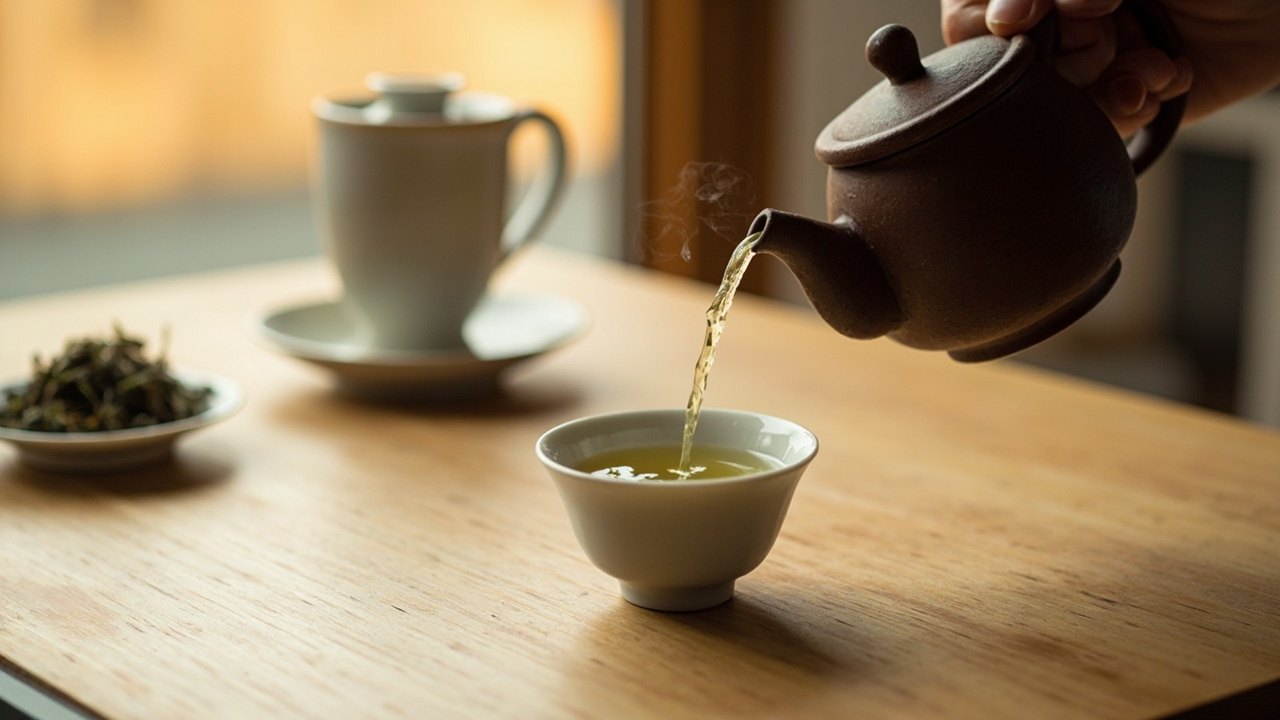
Don’t park wet leaves in the pot between sips. Empty, lid ajar to cool, next water in. That one habit does more for the second cup than any extra tool. If the second infusion tastes dull, you probably left liquor on the mesh, not that the leaf “died.”
Benefits
Composition, not a clinic note. A typical 12-fl oz green-tea serving is listed around 37 mg of caffeine — well below most brewed-coffee servings on the same table [2]. Leaf amount, temperature, and time still move the cup. Those figures describe the beverage. They are not a serving instruction.
Green tea leaves also carry catechins, including EGCG [3]. That is a chemistry line about the leaf, not a reason to buy sencha as a capsule. This variety page is not a wellness list, and it does not rank teas by lab score.
If you want a plain steamed leaf to taste against those numbers, TOMOSAN Organic Uji sencha (100g) is still just tea. Steam depth and harvest will still move the cup more than any citation.
Site-wide wording on health information sits in the terms. Read that if you arrived here from a search that wanted a supplement page. Then go back to the kyusu.
The Mind of Sencha
Sencha rewards a small pot and a short clock. Steam depth and harvest decide the cup more than slogans about Japan’s most popular green. Watch the needles, pour the liquor out, and taste asamushi against fukamushi on consecutive days. The leaf is already the ritual — kyusu in hand, water just off the boil, attention on the steam.
References
[1] Sencha. Wikipedia. https://en.wikipedia.org/wiki/Sencha
[2] U.S. Food and Drug Administration. Spilling the Beans: How Much Caffeine is Too Much? Consumer Update. https://www.fda.gov/consumers/consumer-updates/spilling-beans-how-much-caffeine-too-much
[3] Chacko SM, Thambi PT, Kuttan R, Nishigaki I. Beneficial effects of green tea: a literature review. Chinese Medicine. 2010;5:13. https://pmc.ncbi.nlm.nih.gov/articles/PMC2855614/