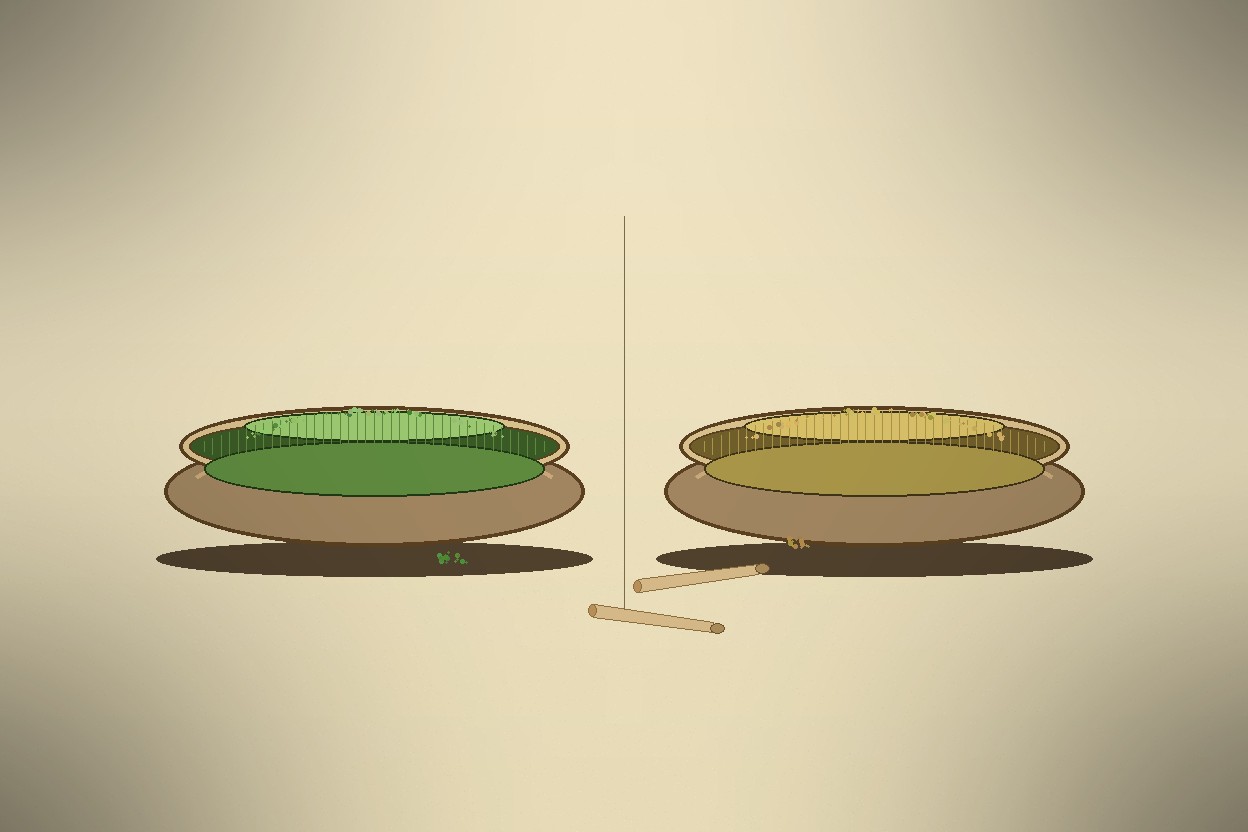
Two grades, one leaf — and four questions that decide which tin to buy. This page is the buyer’s-decision framework: use-case, frequency, purity, budget per gram. Six modules walk the chemistry from farm to cup (cultivation, harvesting, processing, brewing, and the EGCG/L-theanine health differential), with peer-reviewed sources for every claim. Skip the buyer’s-guide style recaps elsewhere — this article stays anchored to grade chemistry.
Introduction
Matcha is not a flavor category. It is a preparation category: shaded tea leaves, dried whole as tencha, then stone-ground into a powder you whisk into hot water or steam into milk. The names ceremonial and culinary are grade labels applied downstream of one plant species, Camellia sinensis [1][4]. The same leaf, picked on the same afternoon, can land in either tin depending on shading duration, harvest timing, leaf selection, and mill choice.
Japanese tea vendors have used ceremonial, premium, and culinary grade designations for at least a century, with roots in the chanoyu tradition that Eisai brought from Song-dynasty China into Japan in 1191 [2]. US-marketed tins overlay that taxonomy with marketing language: most US “ceremonial” tins are a tier of premium-grade leaf processed by stone mill, while most “culinary” tins are later-harvest leaf processed faster. The overlap is large and not standardized — which is why buying by label alone tends to disappoint.
The buyer’s-decision framework in this article is four questions, in order: use-case (whisk straight / latte / bake), frequency (daily / weekly / occasional), purity (no milk vs milk), budget per gram (sensitive vs willing-to-pay-for-time). Each answer maps to ceremonial, premium, or culinary [1][4]. The rest of the article walks the chemistry behind those four answers in six modules: cultivation, harvesting, processing, brewing, and the EGCG/L-theanine health differential. This is a decision article, not a brand-vs-brand ranking and not a recipe roundup — pick your grade by intent, not by price.
Cultivation
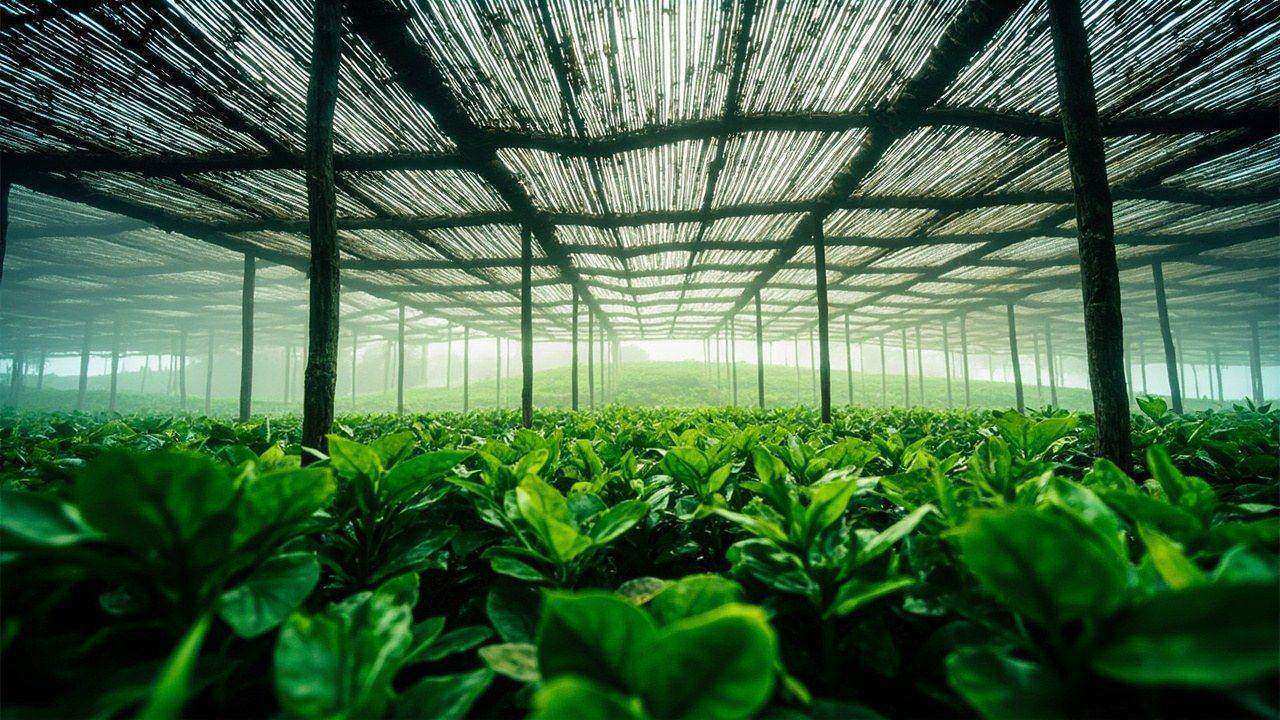
The agronomic driver behind ceremonial-grade matcha is Tana shading: woven shade-cloth canopies erected 14–21 days before harvest, which reduces photosynthetically active radiation by 60–90% depending on cloth density [3][4]. Under shade, Camellia sinensis cannot photosynthesize at full rate. Two things happen: L-theanine (the umami-promoting amino acid) accumulates because theanine is not being converted to catechins, and chlorophyll stays high because degradation depends on light exposure [3]. The leaf becomes greener, sweeter, and lower in the bitter catechins that define sun-grown green tea.
Cultivar does not drive grade. Yabukita, Okumidori, Saemidori, and Samidori all yield ceremonial-grade leaf if shaded and plucked correctly. The agronomic treatment, not the cultivar, is the lever [3]. Region does drive availability: Uji (Kyoto) and Yame (Fukuoka) historically shade longer (around 21 days) for ceremonial grade, while Kagoshima and Nishio shade shorter for culinary-grade volume [4]. The shading duration is the dose-response: a 14-day shade pulls leaf partway into shaded chemistry, a 21-day shade pulls it all the way in. That dose-response is the agronomic gate that splits ceremonial from culinary before any other decision is made [3][4].
A practical consequence for buyers: a ceremonial tin with no shading claim on the label is a red flag. Most reputable producers publish shade duration in days — that number is the closest proxy you can read off the tin for “is this Tana-shaded first-flush leaf or a late-harvest blended grade.”
For a buyer walking into a Uji retail floor, the cultivar and origin happen for them — the ceremonial Naoki 40g tin and the Ippodo Ummon tin both publish 20–21 day shading on the label; that is the buyer-facing shortcut for “Tana-shaded leaf from Japan.”
Harvesting
After shade, the next lever is when the leaf is plucked. Ichibancha — first flush, plucked between late April and mid-May in Uji — is the bud and first leaf, harvested mostly by hand, and yields the brightest-green leaf with the most amino acids [5][6]. Theanine density peaks at this flush; catechin density stays low; the cup tastes umami-dominant.
Nibancha (second flush, June to July) yields second and third leaves, comes off the bush with a larger harvest, and shifts the chemistry toward catechins and away from theanine [5]. This flush is the typical source for culinary-grade matcha, but it is also the flush that produces most sencha — the same leaf plucked at a different season makes a different tea. Sanbancha (late summer / autumn flush) is coarser leaf with more astringency and is rarely exported as ceremonial at all [5].
Leaf position at pluck is the cheapest predictor of grade chemistry. Bud and first leaf carry the highest theanine-to-catechin ratio; mature leaves tip the other way [5][6]. Hand plucking is still standard for ceremonial-grade leaf because machine harvesters cannot reliably select buds, while culinary-grade is often machine harvested. That selection cost is real and shows up in the tin price, but the chemistry it preserves is the reason a 2 g ceremonial usucha tastes different from a 2 g culinary latte — not marketing, leaf position.
Processing
Plucked leaves are steamed (kill-green, the same first step as sencha), dried without rolling, and arrive at the mill as tencha [5][7]. The leaf chemistry can be preserved or ruined in the next ten minutes depending on the mill. Stone-granite mills (called ishi-usu in Japanese) turn at roughly 30 RPM and keep the leaf cool through friction; a single millstone processes only about 30–40 g of tencha per hour [7][8]. The output is 10–30 micron particles with chlorophyll and EGCG intact. That slow, cool process is the manufacturing lever that compounds with shading and harvest to produce ceremonial-grade matcha.
The faster alternative is a blade or hammer mill, which can exceed 50–60 °C at the cutting edge [5][7]. Heat oxidizes chlorophyll (green turns brown) and accelerates EGCG epimerization toward less-bioactive forms. A third option is the air-classified pulverizer, which cools the powder by air separation but produces a wider particle-size distribution than stone milling — it is the modern compromise used by most US-marketed tins [5]. A 2016 Molecules study using ceramic mills confirmed that powdering method materially changes both catechin extraction yield and downstream antioxidant activity, which is why “milled by stone” is a real claim worth reading on the tin [7][8].
A simple at-home color check reads most of the chemistry: bright-green powder signals intact chlorophyll (cool milling or cold chain), dull yellow-green or brown signals oxidation at some point in the supply chain [5]. If your ceremonial tin reads grayish-brown out of the bag, it was either milled hot or stored badly before you opened it, and the cup will taste flat regardless of label.
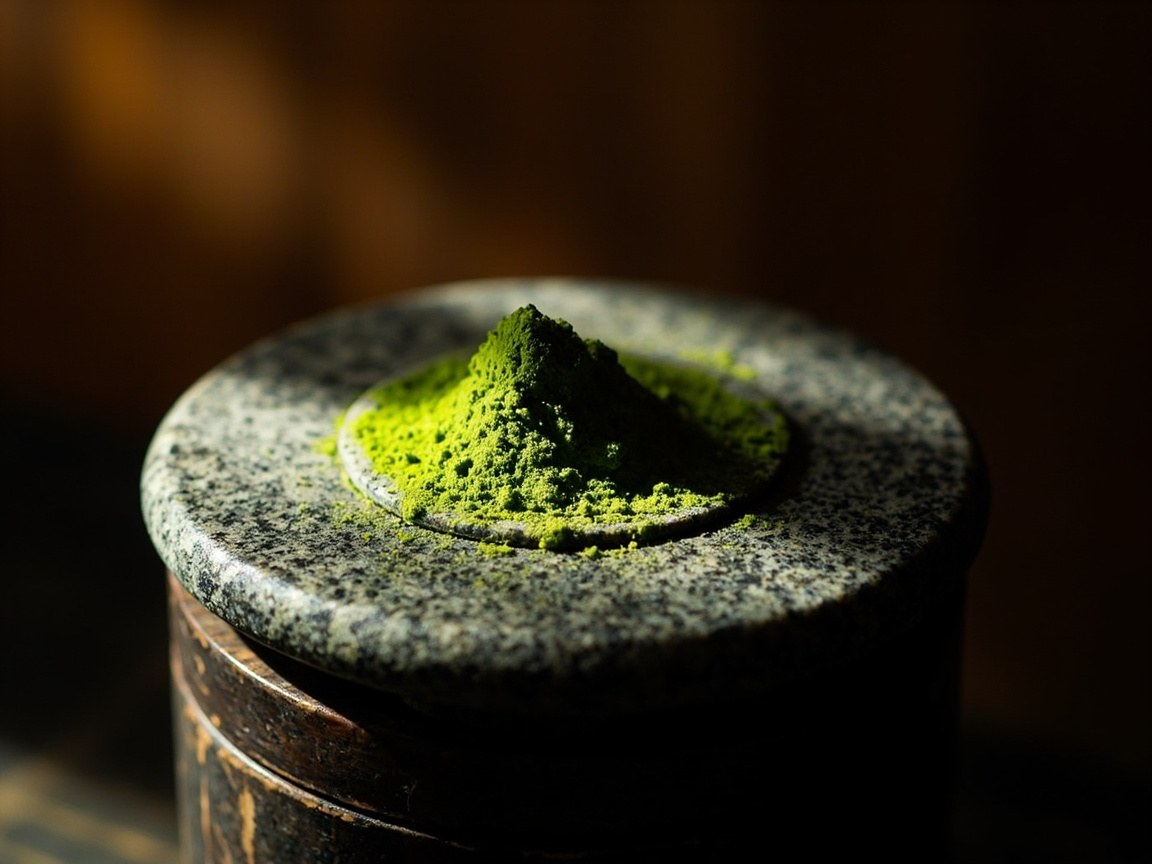
A side-effect of slow stone milling is the smell test: a fresh stone-ground tin has a grass-and-seaweed aroma that lingers on the spoon. If the tin has no aroma when you crack the seal, the milling was either fast or the powder has aged past its window [5][7].
Brewing
Brewing temperature and dose-per-gram matter more for the cup outcome than the grade label. The three preparations you actually meet are:
- Usucha (thin ceremonial, ~60 ml) — 2 g matcha, 80 °C water, 15-second W-whisk with an 80-prong chasen. Microfoam on top is the signature.
- Koicha (thick ceremonial, ~30 ml) — 4 g matcha, 70 °C water, kneaded with the chasen (no whisking). Sweetness without bitterness — what ceremonial grade is really for.
- Latte (culinary) — 1 g matcha, 60–70 °C water whisked, then steamed milk added. Ceremonial grade is wasted here because milk dominates the flavor.
A 2026 brewing-chemistry study on matcha extracted under different temperatures found that aqueous-extraction yield of catechins, vitamin C, and antioxidant activity peaks near 70–80 °C and drops sharply above 85 °C [9]. Boiling water oxidizes chlorophyll and creates the “cooked spinach” off-note that even the best stone-milled tin cannot rescue. L-theanine is heat-stable below 90 °C — boiling degrades it, which is why ceremonial matcha should never be hit with fully boiling water [10][12]. A separate in-vitro analysis of Al-Qassim matcha confirmed the same temperature-curve pattern, with sensory-quality scores tracking antioxidant activity rather than absolute catechin number [10].
The dose-per-gram point matters more than most buyers expect. Per gram, ceremonial and culinary cluster in the same band (19–44 mg/g caffeine, similar EGCG ratios), so the cup-to-cup gap you feel comes from how many grams you use, not the label [11]. Two scoops of ceremonial at 80 °C is not the same as one scoop of ceremonial + one scoop of culinary at 80 °C — but one scoop of ceremonial vs one scoop of culinary is much closer than the labels suggest. For buyers who want the full usucha / koicha / latte breakdown, the matcha brewing guide covers the W-motion and 80 °C protocol, the matcha latte recipe is the latte boundary (stop at culinary), and iced matcha is the cold-brew path for hot afternoons.
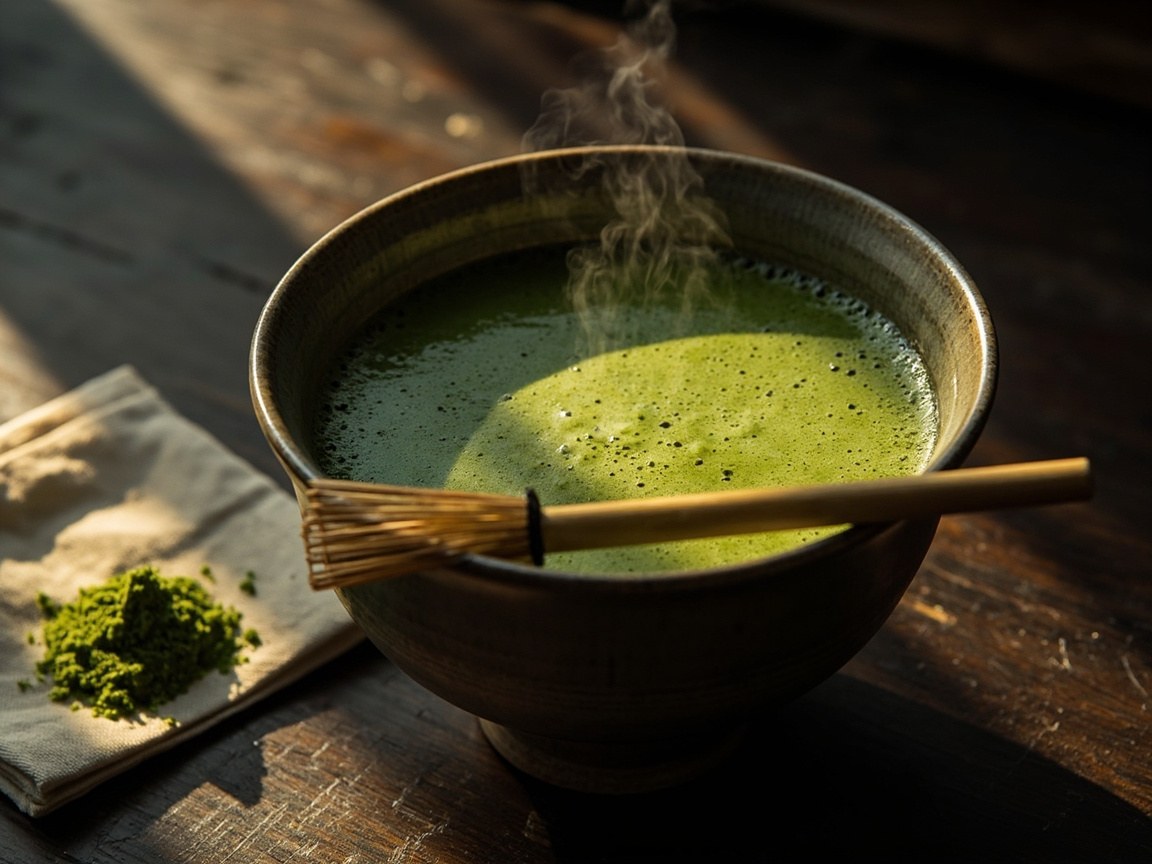
The tools that change the cup are listed below. For ceremonial usucha the Hario matcha starter kit bundles bowl + chasen + sifter, and the 80-prong bamboo chasen is the W-motion tool that produces the microfoam signature. For temperature control the variable-temp gooseneck kettle holds the 80 °C preset without guessing. For latte cooking the electric handheld frother and culinary-grade tin are the boundary set. The pre-sweetened matcha latte mix is the very-lazy end — sugar and matcha already blended, but it is not a route back to tasting the leaf. For first buyers who have not yet chosen a bowl, the Naoki bowl + chasen starter kit is a wide chawan under $15 that fits an 80-prong chasen properly.
Health Benefits
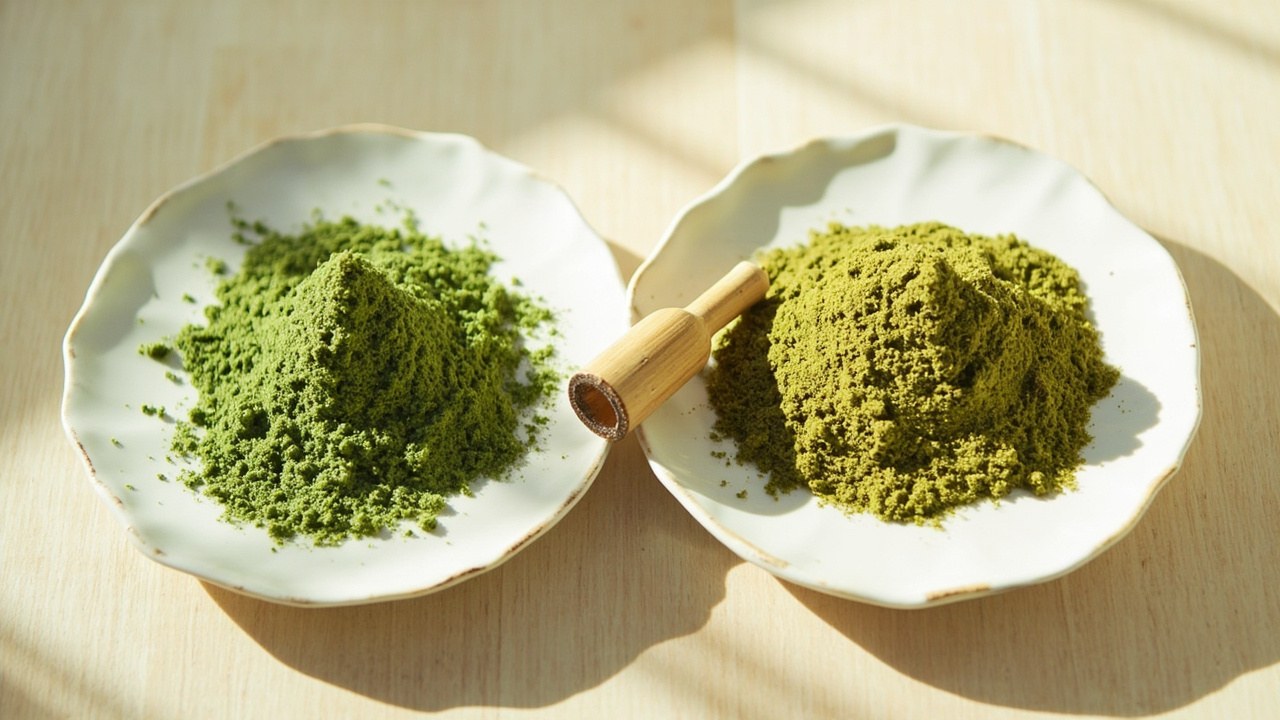
The measurable gap between grades is in EGCG (the dominant green-tea catechin) and L-theanine. Shaded, first-flush, stone-ground matcha lands EGCG in the roughly 5–7% dry-weight band; culinary-grade (later harvest, less shading, blade milling) lands near 2–4% [5][11][13]. That differential is the largest single chemical difference between the two grades — larger than caffeine, larger than aroma. The same shading that drives the ceremonial-culinary gap also drives L-theanine density, which is why ceremonial grade is the better vehicle for the L-theanine + caffeine “calm focus” framing rather than caffeine alone [3][12].
Caffeine-per-gram is essentially parity: both grades cluster in the 19–44 mg/g band, and the cup-to-cup gap is dose, not grade [11]. A 2 g ceremonial usucha lands near 60–70 mg caffeine; a 1 g culinary latte scoop lands near 30–40 mg. For the full per-gram dose ladder, the matcha caffeine page already does the math by form and gram. The point this article adds is that the grade label is a poor proxy for caffeine — it tracks leaf selection and shading, not alkaloid concentration.
Antioxidant assays (ORAC, FRAP, DPPH) consistently rank ceremonial above culinary in the studies, but the absolute numbers depend on extraction protocol [5][9][13]. A 2025 in-vitro study of matcha antioxidant activity confirmed the activity-tracking-with-grade pattern, while a 2023 review (Phuah & Chang) noted that the absolute antioxidant gap depends heavily on brewing temperature and solvent more than on leaf quality alone [1][13]. The honest framing: ceremonial grade carries more antioxidant mass per gram; culinary grade is still a green-tea antioxidant source, just at a different point on the same curve.
A 2026 systematic review of matcha bioactives in endocrine stress regulation synthesizes the latest published work on the EGCG/L-theanine pairing, and a 2026 human-trial review of L-theanine alone confirms the calming-attention effect at typical matcha doses [11][12]. Both reviews note that the same composition numbers do not automatically translate into a clinical outcome — matcha is a food, not a supplement, and the 70 mg caffeine in a 2 g cup is well within adult daily caffeine guidance for non-pregnant adults [11]. Read this section as composition ranges, not as a reason to brew extra cups. The TWM site-wide framing sits in the wellness index and the terms; this article does not extend past the published composition literature.
Disclaimer: This article is for informational purposes only and is not medical advice. Consult a qualified healthcare professional before making changes to your diet, especially if you are pregnant, nursing, taking medication, or have a medical condition.
The Mind of the Grade
Two grades, one leaf. The ceremonial tin asks you to slow down: Tana shade, hand pluck, granite mill, eighty-degree water, an eighty-prong whisk. The culinary tin asks you to play: it stands up to milk, sugar, heat, and batter without disappearing. Choosing the right grade is not about spending more. It is about choosing which way you want to pay attention to the leaf — quietly, or with company.
References
[1] Phuah YQ, Chang SK. A review on matcha: Chemical composition, health benefits, with insights on its quality composites. Food Res Int. 2023 Aug;169:113007. https://doi.org/10.1016/j.foodres.2023.113007
[2] Weiss AS. Guinomi. Gastronomica. 2010;10(1):136. https://doi.org/10.1525/gfc.2010.10.1.136
[3] Unno K, Kameoka Y, Nakamura Y, et al. Compositional Diversity and Functional Interactions of Bioactive Compounds in Japanese Green Tea: Focus on Matcha, Sencha, and Gyokuro. Molecules. 2026;31(16):2934. https://doi.org/10.3390/molecules31162934
[4] Sławińska P, Raczkowska E, et al. Matcha as a Source of Bioactive Compounds: A Review of Health-Promoting Properties and Potential Applications. Nutrients. 2026;18(10):1613. https://doi.org/10.3390/nu18101613
[5] Onder A, Warda M, et al. Beyond Composition: Processing-Driven Transformations and Functional Trade-Offs of Matcha Tea in Foods. Foods. 2026;15(16):2782. https://doi.org/10.3390/foods15162782
[6] Kosik-Bogacka DI, Piotrowska K, et al. Influence of Matcha and Tea Catechins on the Progression of Metabolic Dysfunction-Associated Steatotic Liver Disease (MASLD) — A Review of Patient Trials and Animal Studies. Nutrients. 2025;17(15):2532. https://doi.org/10.3390/nu17152532
[7] Fujioka K, Iwamoto T, Shono H, et al. The Powdering Process with a Set of Ceramic Mills for Green Tea Promoted Catechin Extraction and the ROS Inhibition Effect. Molecules. 2016;21(4):474. https://doi.org/10.3390/molecules21040474 — https://pmc.ncbi.nlm.nih.gov/articles/PMC6273883/
[8] Toniolo C, Patriarca A, et al. A Comparative Multianalytical Approach to the Characterization of Different Grades of Matcha. Plants (Basel). 2025;14(11):1631. https://doi.org/10.3390/plants14111631 — https://pmc.ncbi.nlm.nih.gov/articles/PMC12157965/
[9] Aleid NAM, Alhomaid RM, et al. Synergistic enhancement of matcha tea with strawberry (Qassim region) aqueous extracts: influence of extraction temperature on phytochemicals, vitamin C, and bioactivities. Front Nutr. 2026. https://doi.org/10.3389/fnut.2026.1824862 — https://pmc.ncbi.nlm.nih.gov/articles/PMC13199766/
[10] Ali RFM, Alhomaid RM, et al. In Vitro Bioactivity, Polyphenols, Antioxidant Properties, and Sensory Quality of Al-Qassim Matcha. Foods. 2026;15(13):2323. https://doi.org/10.3390/foods15132323 — https://pmc.ncbi.nlm.nih.gov/articles/PMC13360794/
[11] Alanazi A, Alanzi R. A CE/TA-stratified systematic review and evidence map of matcha and green tea bioactives in endocrine stress regulation: testosterone, cortisol, and the T:C ratio. Front Nutr. 2026. https://doi.org/10.3389/fnut.2026.1925871 — https://pmc.ncbi.nlm.nih.gov/articles/PMC13595566/
[12] Cotter J, Kilpatrick HE, et al. Effects of L-theanine on cognition, mood and sleep: evidence from human trials. Front Nutr. 2026. https://doi.org/10.3389/fnut.2026.1922819 — https://pmc.ncbi.nlm.nih.gov/articles/PMC13587617/
[13] Pannucci E, Della Posta S, Sbrocca I, et al. Evaluation of the antiglycative and antioxidant activities of matcha tea. Nat Prod Res. 2025 Nov. https://doi.org/10.1080/14786419.2024.2375758
Related matcha guides
This page is the compare sibling of the matcha hub — links for the rest of the cluster live below. Prices and stock dates are at the front of each page; pick grade by intent, not by label.
| Guide | Topic | Why read it |
|---|---|---|
| Matcha Hub | Grades, color and aroma evaluation, origin (Uji vs Yame) | Pairs with this page for grade-agnostic matcha buying |
| Matcha Caffeine | Dose math per gram, form split, ceremonial vs culinary at same mass | Reinforces “grams used matter more than grade” |
| Matcha L-Theanine | L-theanine by tea form and shade | Positions ceremonial grade as the high end |
| Matcha Brewing Guide | Usucha / koicha / W-motion / 80 °C protocol | Buyers following the standard ceremonial recipe |
| Matcha Latte Recipe | 1:60 ratio, milk temp, hot and iced methods | Buyers looking for a milk-and-matcha starting point |
| Iced Matcha | Shaken cold method, summer-ready | Buyers using cold milk or warm-weather prep |
| Matcha Tools | Bowl, chasen, scoop, sifter, storage | Buyers choosing the physical setup that changes the cup |