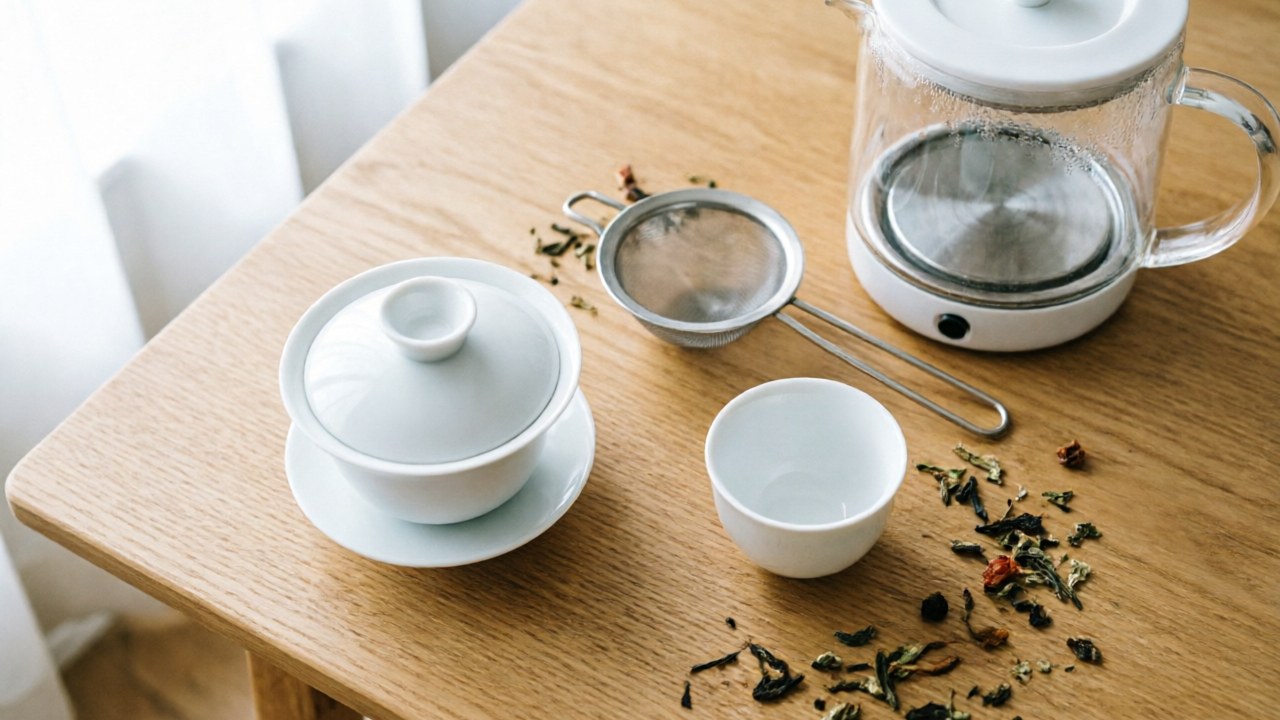
This isn’t another “best 10 tea sets” list. It’s a component-by-component decision system: what to buy first, at which price tier, what to skip entirely, and which teas forgive your first brewing mistakes — so you spend $17–200 on the right things, not $200 on the wrong ones.
What This Article Is (and Is Not)
This is a buyer guide for a complete starter kit bundle — you leave knowing which 3–5 items to put in your cart together.
This is NOT the teaware for beginners path article, which explains WHAT vessels exist and in what order to explore them. This is NOT the how to choose a gaiwan deep dive, which covers size, material, and lid fit for one vessel type.
This IS: “I have $30, $60, or $150 — what exactly do I buy, and what do I skip?”
Practice-first principle: buy only what you need now. Every piece should earn its place before you add the next. If you’ve never brewed loose leaf before, you don’t need a $90 kettle or a 14-piece ceremony set — you need a vessel, a cup, and some decent leaf.
The Five Components — What to Buy First
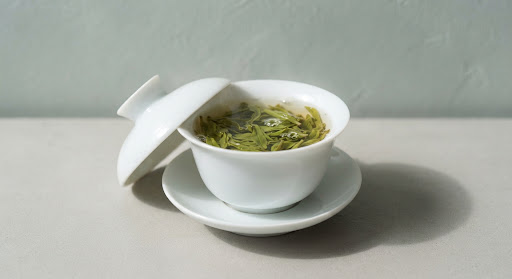
Every gongfu-style tea starter kit breaks down into five components. Some you need on day one; others can wait weeks.
| Component | Role in your kit | Buy when… | Budget entry |
|---|---|---|---|
| Vessel (gaiwan or pot) | Brews the leaf, controls the pour | Day one — this is the core | Coolpei portable gaiwan ($17) → how to choose a gaiwan |
| Cup | Sip, assess liquor color | Day one — you need something to drink from | Included in most starter sets |
| Strainer | Catches fine leaf fragments | When you use a gaiwan and pour through it | Yoassi fine-mesh strainer ($9) |
| Kettle | Heats water to the right temperature | When ready for green tea precision | Chefman 5-preset ($30) or standard kettle + cool-down |
| Practice tea | Forgiving leaf for first brews | Alongside vessel — you need something to brew | Tiesta 7-variety sampler ($26) |
Optional, but not day-one: fairness pitcher (cha-hai), tea tray, scale, tea pet. These show up in the mid and premium tiers below.
Price-Tier Bundles — Budget / Mid / Premium
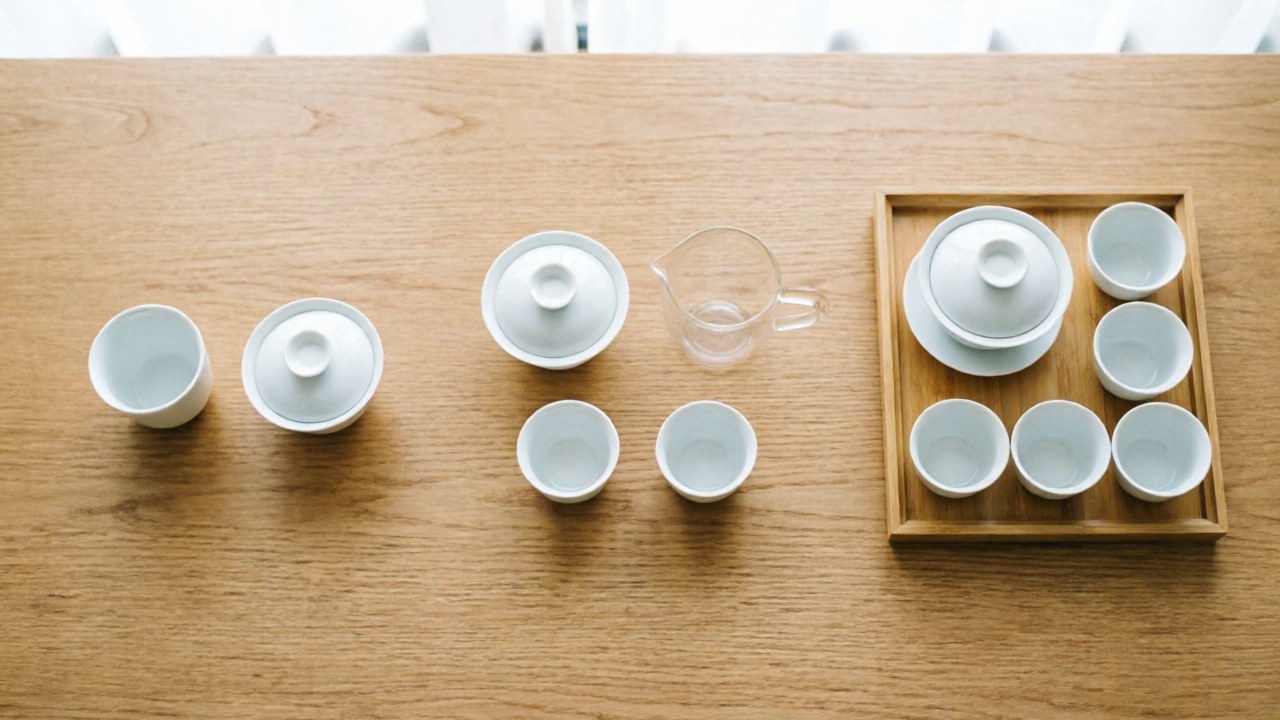
Budget Path ($17–35) — First Attempt
The goal: one vessel, one cup, one strainer, and enough tea to practice for two weeks.
- Ultra-minimal: Coolpei portable gaiwan + cup ($17) + Yoassi strainer ($9) + Tiesta sampler ($26) = ~$52
- All-in-one alternative: Casa Brava travel tea set ($30) — teapot + 4 cups + bamboo tray + strainer + travel case. Good if you want everything in one box and aren’t sure about gaiwan technique yet.
What to skip at this tier: temperature-controlled kettle (use a standard kettle and wait 2 minutes after boiling), fairness cup, tea tray.
Mid Path ($50–100) — Gongfu Upgrade
You’ve brewed 20+ cups and want better control. Add a proper gongfu set and temperature precision.
- REOWONU gaiwan set with 6 cups ($48) — upgrades your vessel and adds cups for sharing
- Chefman variable-temp kettle ($30) — 5 presets for green, white, oolong, and black
- Hermit Life glass fairness cup ($10) — evens out pours when serving others
- Tiesta sampler ($26) — still the best practice leaf at any tier
Total: ~$114. Mix and match — if you already have a kettle you like, drop it and save $30. The fairness cup won’t change your tea, but it will change your pours: instead of one strong cup and one weak cup, everyone gets the same strength.
Premium Path ($100–200) — Complete Gongfu Set
You’re committed to gongfu-style brewing and want a cohesive set that lasts.
- ICHAG 14-piece jade porcelain gongfu set ($60) — gaiwan + 6 cups + resin tray + tea pet + tools
- Cuisinart PerfecTemp kettle ($90) — 6 presets + 30-minute keep warm
- YONCON 0.1g scale ($10) — precision leaf-to-water ratio for repeatable brewing
Total: ~$160. This is the path where a scale earns its place — once you want to reproduce a great cup, 0.1g precision matters. You’ll also appreciate the Cuisinart’s keep-warm function during longer gongfu sessions with friends.
What NOT to Buy First
Four categories of gear that beginners buy too early and regret:
-
Full ceremony sets (21-piece gongfu kits with wooden tray, tea pet, tongs, cloth, scoop, needle). Beautiful but overwhelming — you use 3 pieces, the rest gathers dust. Start with vessel + cup; add ceremony accessories at the mid or premium tier.
-
Expensive Yixing teapot ($100+ unglazed zisha). Yixing needs seasoning, dedication to one tea family, careful maintenance, and pouring skill you haven’t built yet. The clay absorbs and releases flavor over months — that’s a feature after you’ve found your tea, not before. See how to choose a Yixing teapot for why clay is a later upgrade, not a first vessel.
-
Cast iron tetsubin ($60–200). Heavy, slow to heat, poor for green and white teas that need 75–80 °C. Versatile only for black and pu-erh — too narrow for a first vessel.
-
Matcha starter kit (chawan + chasen + scoop + sifter). This is a parallel path, not an upgrade. If your interest is matcha, see matcha tools for a separate kit. Most beginners should pick leaf tea OR matcha for the first month, not both.
Practice Tea Pairing — Which Teas Forgive Mistakes
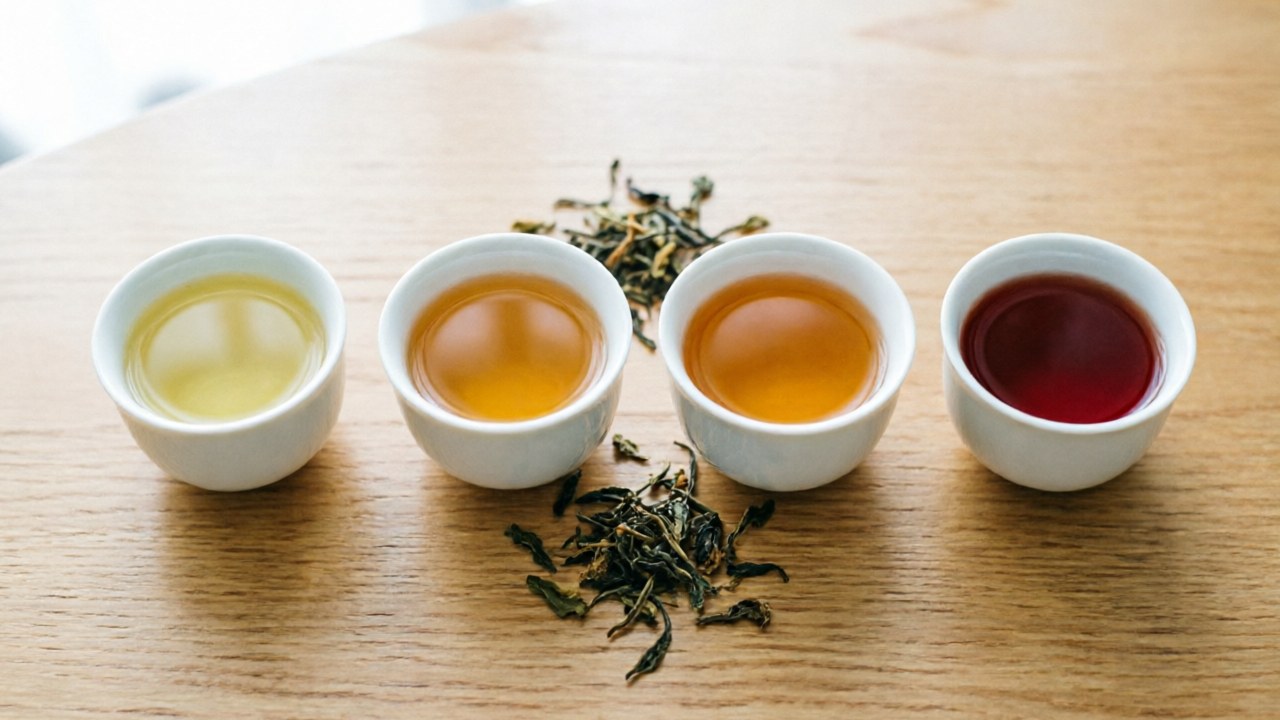
The right practice tea makes every mistake visible but not catastrophic. Choose forgiving teas for your first two weeks:
| Tea type | Why it forgives | Water temp | Where to start |
|---|---|---|---|
| Green (Longjing-style) | Cool water + short steep = clear flavor even if timing is off | 75–80 °C [1] | Tiesta sampler includes green |
| White (Silver Needle) | Hard to oversteep at low temps; mild even after 5 min | 80–85 °C | Tiesta sampler includes white |
| Black (Keemun-style) | Bold flavor survives longer steeps and hotter water | 90–95 °C [2] | Tiesta sampler includes black |
| Oolong (light) | Multiple re-steeps forgive first-pour mistakes | 85–90 °C | Tiesta sampler includes oolong |
Avoid for the first week: raw pu-erh (needs rinse technique and heat management), heavily roasted oolongs like Da Hong Pao (needs 95 °C+ and precise timing to open), and yellow tea (rare and expensive — save it for when you can taste the difference).
The Tiesta 7-variety sampler ($26) is the single best practice investment: it covers green, white, black, and oolong so you can discover which type you like before committing to a full-size bag.
Path Rails — Where This Article Sits
This starter kit guide sits in the By need lane of the teaware hub. After your kit arrives:
- Learn what each vessel does → teaware for beginners (the WHAT path)
- Deep-dive your gaiwan → how to choose a gaiwan
- Brew your first cup → how to brew tea
- Care for your new gear → teaware care
- When you’re ready to expand → build your teaware system
Budget Tiers: $30 / $60 / $120
Three kit tiers depending on budget. Each tier gives you everything you need to start brewing — the difference is materials and longevity.
| Tier | Vessel | Cup | Kettle | Leaf | Total |
|---|---|---|---|---|---|
| $30 starter | Basic porcelain gaiwan (150ml) | 1 small cup | Stovetop kettle you already own | Sample green or black (10g) | ~$30 |
| $60 solid | Jingdezhen porcelain gaiwan (150ml) + fairness cup | 2 cups | Budget temp-control kettle | 2 varieties (20g each) | ~$60 |
| $120 serious | Porcelain gaiwan + glass gaiwan (for watching leaf) + cha-hai | 4 cups | Gooseneck temp-control kettle | 4 varieties (20g each) + storage tin | ~$120 |
Don’t skip the fairness cup at the $60 tier — it’s the $10 piece that makes your second cup taste as good as your first. The JIUMEI Glass Cha Hai is the standard pick. For a complete gaiwan set with cups included, the Cididu 3-Set Porcelain Gaiwan ($16.99) covers the vessel and cup in one buy.
Tea Leaf Starter Pack: 3-5 Varieties
Don’t buy one tin and drink it for a month. Buy small amounts of 3-5 different teas and taste them side by side. Here’s a forgiving starter selection:
- Green tea (Longjing-style or jasmine) — teaches you the 80°C temperature rule. HANDPICK Green Tea ($11.99, 255g) gives you volume to practice with.
- Black tea (English Breakfast or Keemun) — teaches you the boiling-water rule. Familiar, forgiving, milk-compatible.
- Oolong (Tieguanyin or Da Hong Pao) — teaches you re-steeping. One serving yields 5-8 cups with different flavor profiles.
- White tea (Silver Needle or Bai Mu Dan) — teaches you patience. Long steeps, low temperature, subtle flavor.
- Rooibos (caffeine-free) — teaches you that not all tea comes from Camellia sinensis. Good for evening sessions.
For a sampler approach, the Tiesta Tea Discovery Set gives you 8 varieties in one purchase. See our green tea brewing guide and how to brew black tea for the specific parameters.
References
[1] UK Tea & Infusions Association — recommended water temperatures by tea type (green 70–80 °C, white 80–85 °C). https://www.tea.co.uk/
[2] ISO 3103 — standard method for preparation of tea for sensory analysis (boiling water for black tea extraction). https://www.iso.org/standard/7328.html
The Mind of the Starter Kit
The first kit is not about owning — it is about beginning. A gaiwan, a cup, and a few grams of forgiving leaf are enough to taste what tea can be. You are not assembling a collection; you are building a habit. Buy less than you think you need. Let each piece earn its place on the tray. When the first vessel feels natural, the next decision will be obvious.