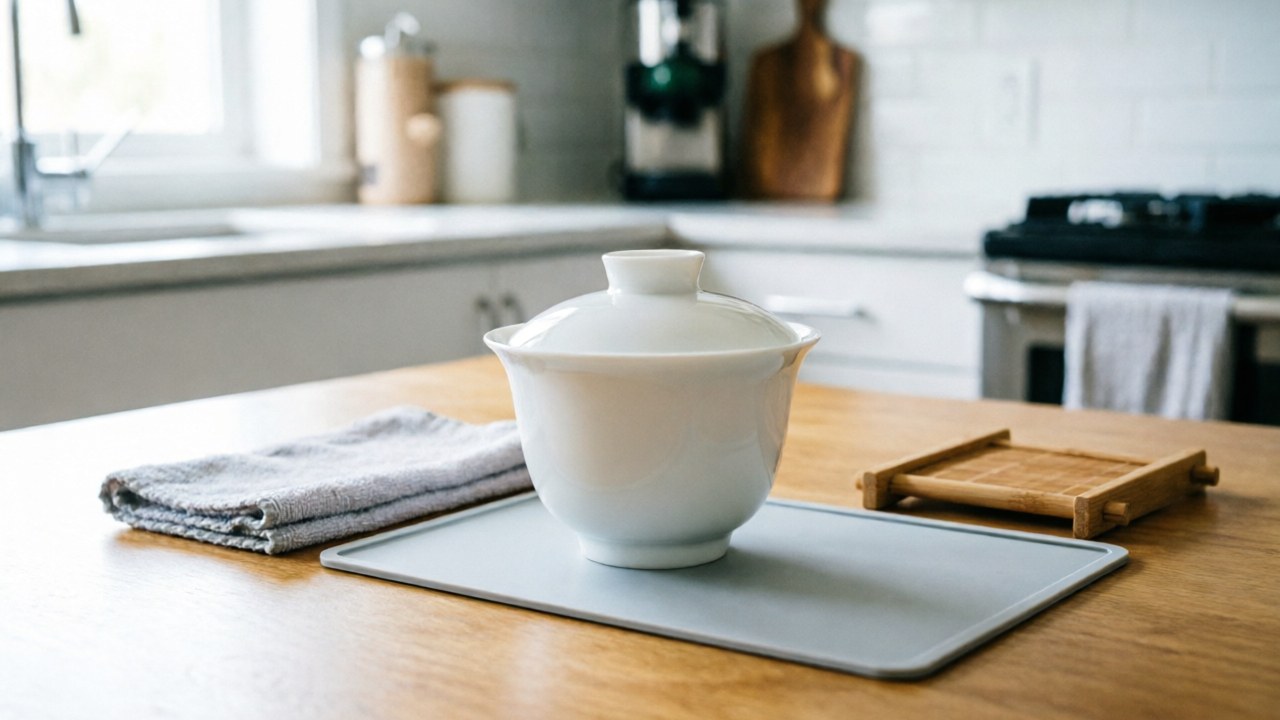
Caring for teaware is not one generic wash. I keep four care roles on the table — daily rinse, weekly deep-clean, storage, and first-use seasoning — then apply a material decision tree (when soap is OK vs never). Finish with a lid-off dry protocol, honest clay seasoning language (no sterilize claims), and a small care kit: soft cloth, drying mat, rinse tray, tongs, and leaf caddy.
This guide is a home care decision system for the Care lane on the teaware hub. It is not a medical sterilize protocol, not a Gongfu stage script, and not a rewrite of how to choose a gaiwan.
Care Roles Map — Four Jobs, Not One Wash
Do not open with a flat “clean every pot the same way” list. Name the four roles first, then pick the right one for the vessel in your hand.
Four care roles
- Daily rinse — after each session: empty the leaf, flush with hot water, soft wipe if the material allows, leave an air path
- Weekly deep-clean — only for materials that allow mild soap or a safe stain lift (porcelain, glass, glazed ceramic)
- Storage — fully dry, climate-safe shelf, lids off until dry, cups nested only when dry
- First-use seasoning — unglazed clay only; rinse plus hot-water cycles; not a medical step
Each later section answers which role applies before how. A beginner three-piece set lives mostly in daily rinse plus dry; a tasting tray session adds rinse load; a dedicated clay pot adds seasoning. Soft start: teaware for beginners.
Material Decision Tree — When Soap Is OK vs Never
Generic care lists stop at clay-no-soap and porcelain-mild-soap. The useful upgrade is a when rule plus honesty about stain versus patina.
| Material | Daily rinse | Soap? | Stain / patina | Deep-clean |
|---|---|---|---|---|
| Unglazed clay (Yixing-style) | Hot water only | Never | Darkening = seasoning patina, not “dirt” | No detergent; dedicated leaf only |
| Porcelain / glazed ceramic | Hot water + soft cloth | Mild soap OK | Stains may lift gently | Soft cloth + mild soap; no abrasive pads |
| Glass | Hot water | Mild soap OK | Film from hard water | Soft cloth; avoid metal scrub |
| Cast iron (enameled interior typical retail) | Hot water | Exterior wipe only; follow maker | Rust risk if wet-stored | Never dishwasher; dry immediately |
| Bamboo tools (chasen / tongs) | Rinse, shape, air-dry | Rarely / light only | Mold risk if sealed wet | Soft note on matcha tools for whisk care |
Porcelain stain vs clay patina
- A brown ring inside a porcelain cup or gaiwan is often tannin film. Mild soap and a soft cloth are fine.
- Darkening on unglazed clay is expected patina from leaf oils. Scrubbing “back to new” fights the point of dedicated clay [1].
- This guide does not claim hospital-grade disinfection. Home rinse and dry only.
For porcelain and glass, wipe with a soft microfiber pack such as the MR.SIGA Microfiber Cleaning Cloth Pack. Prefer a lint-free budget pack like the HYER KITCHEN Microfiber Dish Towels for trays and larger surfaces. If you are still choosing porcelain first, stay on how to choose a gaiwan for purchase filters — this article stays on care.
Daily Rinse Protocol
Post-session care at a home table, not ceremony theater.
- Empty spent leaf. Bamboo tongs keep finger oils off a clay rim — a compact tube set like the YXHUPOT Chadao Bamboo GongFu Tea Tools handles hot lids and spent leaves.
- Flush the vessel two to three times with hot water over a rinse tray so waste water does not soak the counter. A reservoir tray such as the Lyty Mini Bamboo Chinese Tea Tray works on small tables; a drawer-drainage option like the RORA Bamboo Tea Tray stores rinse water between pours.
- Soft interior wipe only if the material allows soap or a dry wipe — porcelain and glass with the MR.SIGA cloth pack or HYER towels. Clay: hot water only.
- Invert or leave the lid off on a drying mat. Never seal a wet lid on a wet bowl.
- Cups get the same rinse. Stack only when fully dry.
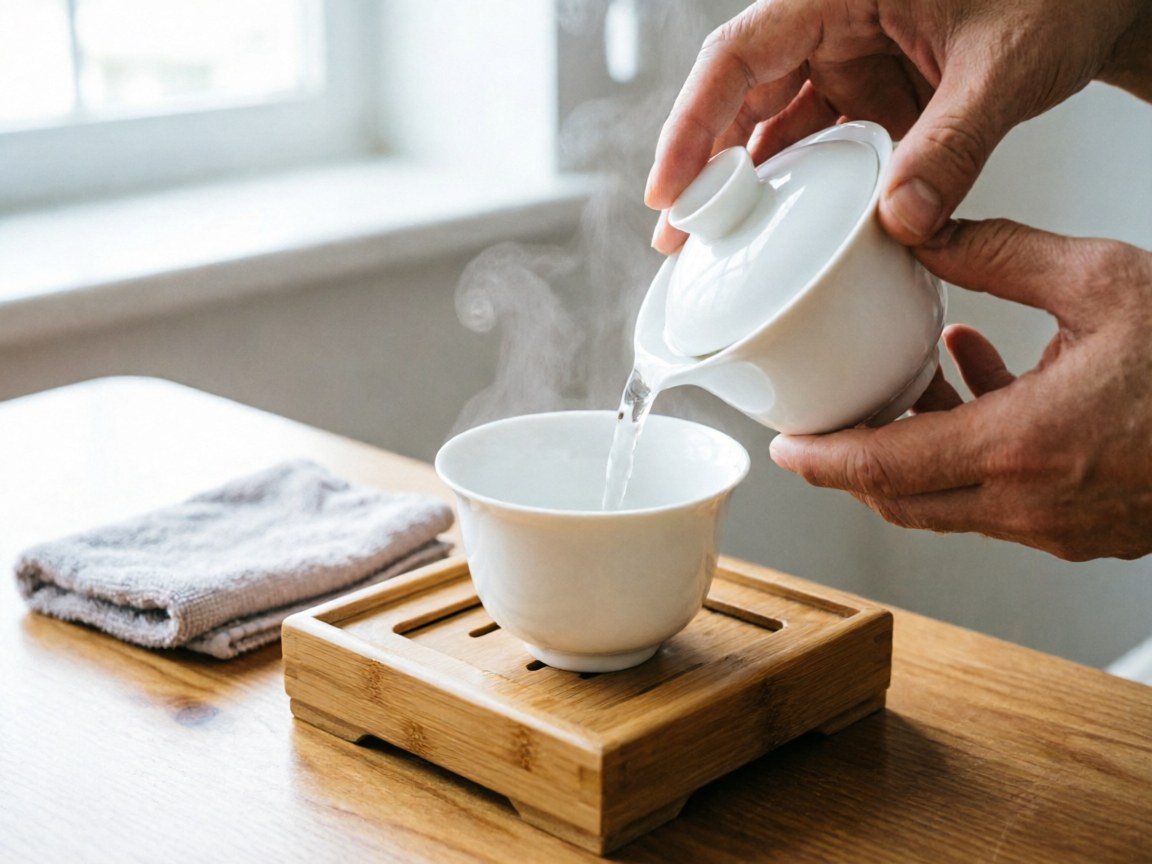
This is care after the pour, not a leaf brewing classroom. If you still need a first-cup system, exit to how to brew tea.
Lid-Off Dry + Storage Climate
Dry before store
- Lid off (or ajar) until the interior is fully dry
- Vessel on a drying mat with airflow — not a sealed bag while damp
- No wet nest of cups in a closed cabinet
- Cast iron / metal: dry immediately; no overnight water
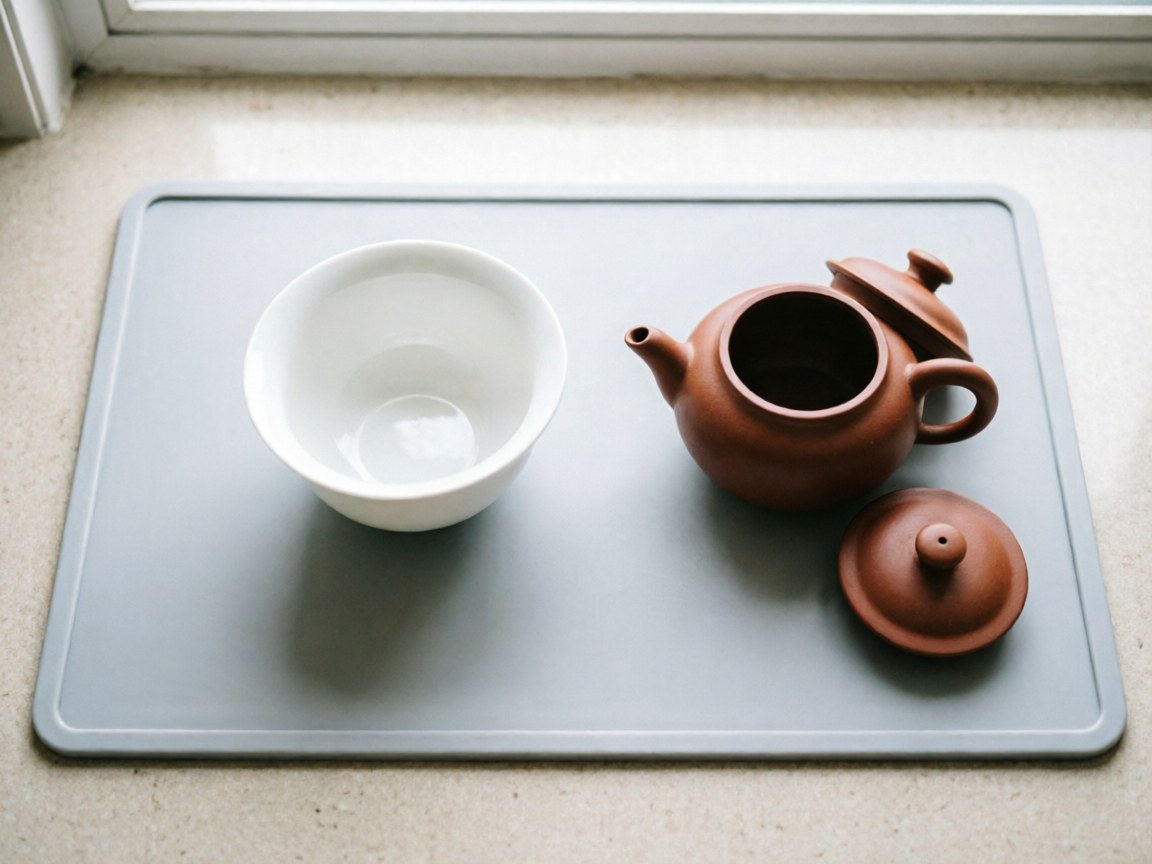
A mid silicone mat such as the TIKNIK Silicone Dish Drying Mat makes a steady lid-off station. For a tight counter or travel bag, the budget MODENGKONGJIAN Silicone Dish Drying Mat is enough.
Climate notes (home, practical)
- Cool, dry shelf away from strong spices and dish-soap fumes (clay absorbs odors)
- Avoid damp under-sink cabinets for unglazed clay
- Travel or display: pad porcelain; do not ship clay still wet from a last rinse
- Leaf storage is separate from vessel storage — an airtight tin keeps sessions cleaner so vessels stay freer of stray leaf dust
For leaf companions, an enamel option like the Bicuzat Enamel Ceramic Tea Caddy or a budget tin such as the jessie Loose Tea Tin Caddy keeps leaf dry between sessions. Where care sits inside a small permanent kit, see the personal teaware system.
Clay Seasoning Honesty
What first-use seasoning does (home practice language only):
- Rinse dust from new unglazed clay
- Hot-water cycles open pores and start a thin leaf film over many sessions [2]
- A dedicated pot for one leaf family reduces flavor cross-talk over time
What seasoning does not claim:
- Not medical sterilization, an antibacterial “cure,” or hospital-grade disinfection
- Not a magic flavor machine on day one
- Not an excuse to use dish soap “just once” on unglazed clay
Optional tongs for a hot lid during rinse cycles: the YXHUPOT bamboo tools tube. Clay purchase deep-dives (how to choose Yixing, Yixing vs gaiwan) are planned later — this section stays care-only.
Care Kit Companions
Care is a system of small tools, not UV gadgets.
| Role | Why | Pick |
|---|---|---|
| Soft cloth | Daily wipe porcelain/glass; no abrasive | MR.SIGA Microfiber Pack (kit pick) |
| Lint-free towels | Dry-down trays + larger surfaces | HYER KITCHEN towels |
| Drying mat | Lid-off dry station | TIKNIK mat / MODENGKONGJIAN mat |
| Rinse tray | Catch flush water | Lyty reservoir tray / RORA drawer tray |
| Bamboo tongs | Hot lid + spent leaf; less oil on clay | YXHUPOT tools tube |
| Leaf caddy | Dry leaf between sessions | Bicuzat enamel caddy / jessie tin |
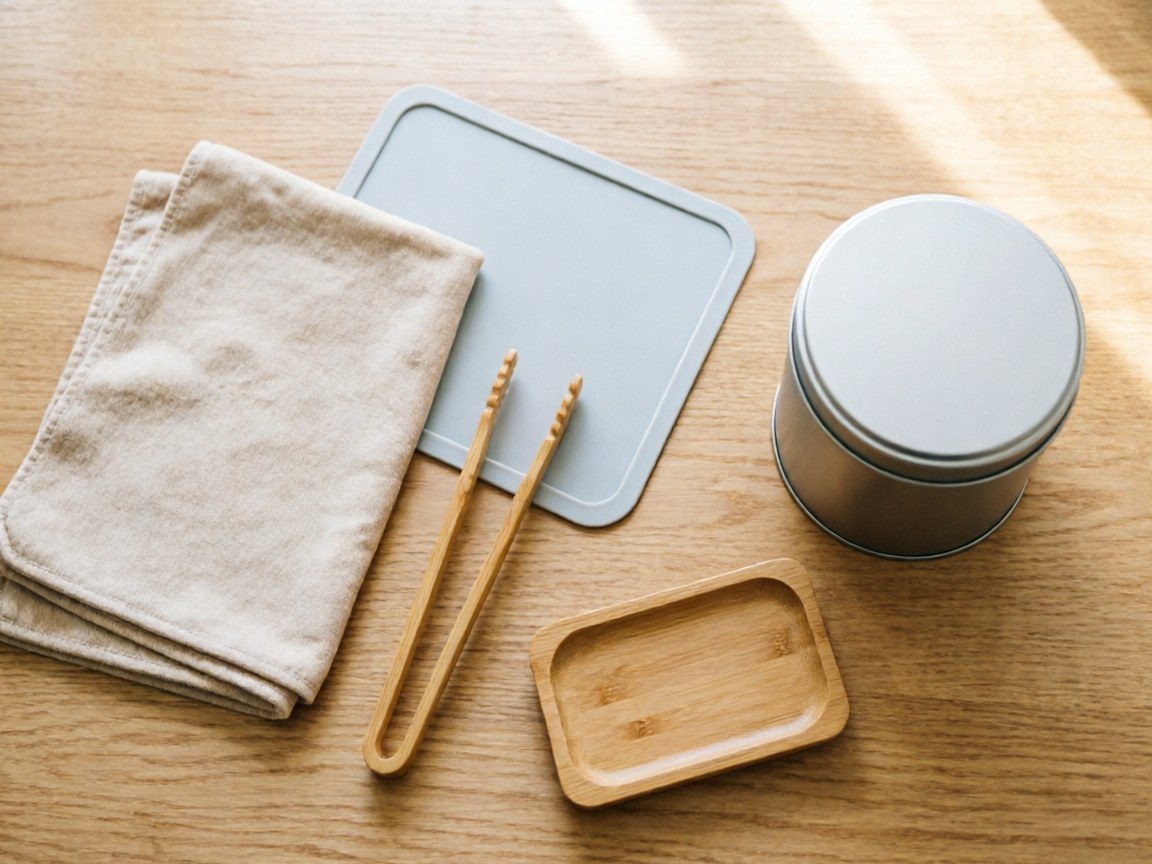
Beginners can start with cloth plus mat only on the teaware for beginners path. Tasting tray load (more flushes, more waste water) lives on teaware for tasting.
Common Mistakes
- Soap on unglazed clay — ruins the intended patina path. Hot water only; handle with bamboo tongs.
- Sealing a wet lid on a wet bowl — musty odor and slow dry. Lid-off on a silicone drying mat.
- Dishwasher for fine porcelain sets — chip and thermal-shock risk. Hand soft cloth with the MR.SIGA pack.
- Storing vessels under the sink damp zone — odor and mold risk on bamboo. Dry shelf; keep leaf in a caddy.
- Treating clay patina as dirt and scrubbing hard — abrades the surface. Soft cloth only on glazed pieces; clay = rinse.
- Skipping a rinse tray — counter water mess. Use a reservoir tray or drawer tray.
- Buying sterilizer or UV gadgets for “tea hygiene” — out of scope here. Home rinse and dry are enough for this guide.
Path Rails — Where Care Fits
Soft-link only (do not rewrite sister bodies):
- Beginner three-piece set care starts simple → teaware for beginners
- Tasting / tray sessions mean higher rinse load → teaware for tasting
- Personal system (few tools, deep care habit) → personal teaware system
- Vessel purchase (size, material, lid fit) → how to choose a gaiwan
- Matcha bamboo whisk dry note only → matcha tools
- Hub Care lane → teaware hub and Care section
- Brewing leaf classroom → how to brew tea
Recommended Care Kit
Short recap. You do not need every row on day one.
- Soft cloth daily: MR.SIGA Microfiber Pack (alt HYER towels)
- Dry station: TIKNIK mat (budget MODENGKONGJIAN mat)
- Rinse tray: Lyty tray (drawer alt RORA tray)
- Tongs: YXHUPOT tools tube
- Leaf caddy: Bicuzat enamel caddy (budget jessie tin)
The Mind of Care
Care is a quiet decision after the pour: rinse what you used, dry what you will keep, store what must wait. Soap has a place on porcelain and none on open clay. Seasoning is patience, not a sterilizing claim. A cloth, a mat, a tray — small tools that protect the vessels that teach attention. Keep the table honest, and the pot will meet you clean tomorrow.
References
[1] Wikipedia contributors. “Yixing clay.” Wikipedia. https://en.wikipedia.org/wiki/Yixing_clay — porous unglazed clay absorbs oils and aromas; traditional practice avoids soap and detergent on dedicated pots.
[2] Wikipedia contributors. “Yixing ware.” Wikipedia. https://en.wikipedia.org/wiki/Yixing_ware — teapot seasoning and leaf dedication as craft practice notes (home rinse and repeated hot-water use; not medical sterilization).