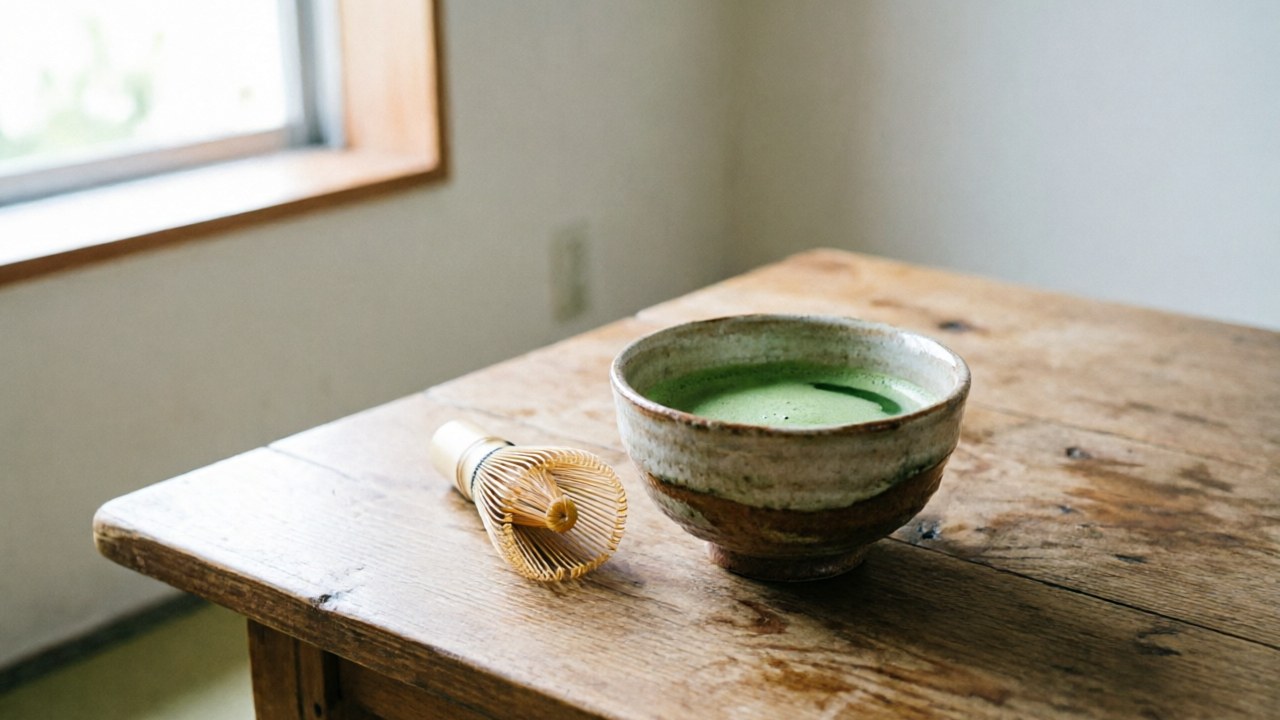
Chado (the Way of Tea) is a Japanese cultural system — schools, tearoom roles, and a lineage frame — not a single whisk recipe. This page maps which school you might study, why the room is shaped the way it is, and how the system relates to a home Practice sequence you can run today. Deep whisk steps soft-link to matcha ceremony Practice; peer Chinese skill tradition soft-links to Gongfu.
What Chado Is (and Is Not)
Names cluster around Chadō, Sadō, Chanoyu, and “Japanese tea ceremony.” At tourist depth they point to the same powdered-matcha path under Japanese lineage — not multi-steep leaf Gongfu [1][5]. The living frame is a system: schools, tearoom host–guest grammar, and a cultural door into attention [1][8].
It is a system map — schools, room roles, lineage, and how a short home Practice sits inside the Way. It is not:
- A home Practice sequence of six usucha gestures. That path lives on matcha ceremony Practice — soft-link only; I don’t rewrite those steps here.
- Chinese Gongfu skill tradition — multi-steep leaf, different vessels. Soft-link: Gongfu Cha.
- A brewing parameter classroom. Export to how to brew tea and green tea brewing.
- An occasion hosting playbook — that sits in brewing occasion articles, not on this Traditions map.
- A wellness or medical frame. Fukusa is a purity gesture in front of a guest, not a sterilize claim [1].
Culture door: tea ceremony for beginners. This page sits on the Ceremony Traditions shelf.
Schools Map — Choosing a Class, Not a Curriculum Dump
If you’re booking a first class or watching a public demo, you don’t need rank charts or license ladders. You need a high-level map of the houses you’re most likely to meet — and you’ll usually find one of the three Sen houses first [1][2][3][4].
| School (high-level) | Reader cue | What differs for a first visitor |
|---|---|---|
| Urasenke | Most visible internationally; many overseas branches | Often the first class a traveler finds; still one school among the three Sen houses |
| Omotesenke | Parallel Sen house; quieter public footprint in some cities | Forms and teaching emphasis differ — don’t treat it as “wrong Urasenke” |
| Mushanokōjisenke | Third of the San-Senke | Smaller public brand; same Rikyū-lineage frame at tourist depth |
The San-Senke are three main Sen houses from Sen no Rikyū’s line [2][3][4]. Other lineages exist; this page stays high-level so it doesn’t re-copy an encyclopedia block AIO already owns [1][11].
Choose a class by location, teacher fit, and whether you want later thick-tea (koicha) exposure — not a ranking of “best school.” For the four-word door (Wa · Kei · Sei · Jaku), open the Principles shelf.
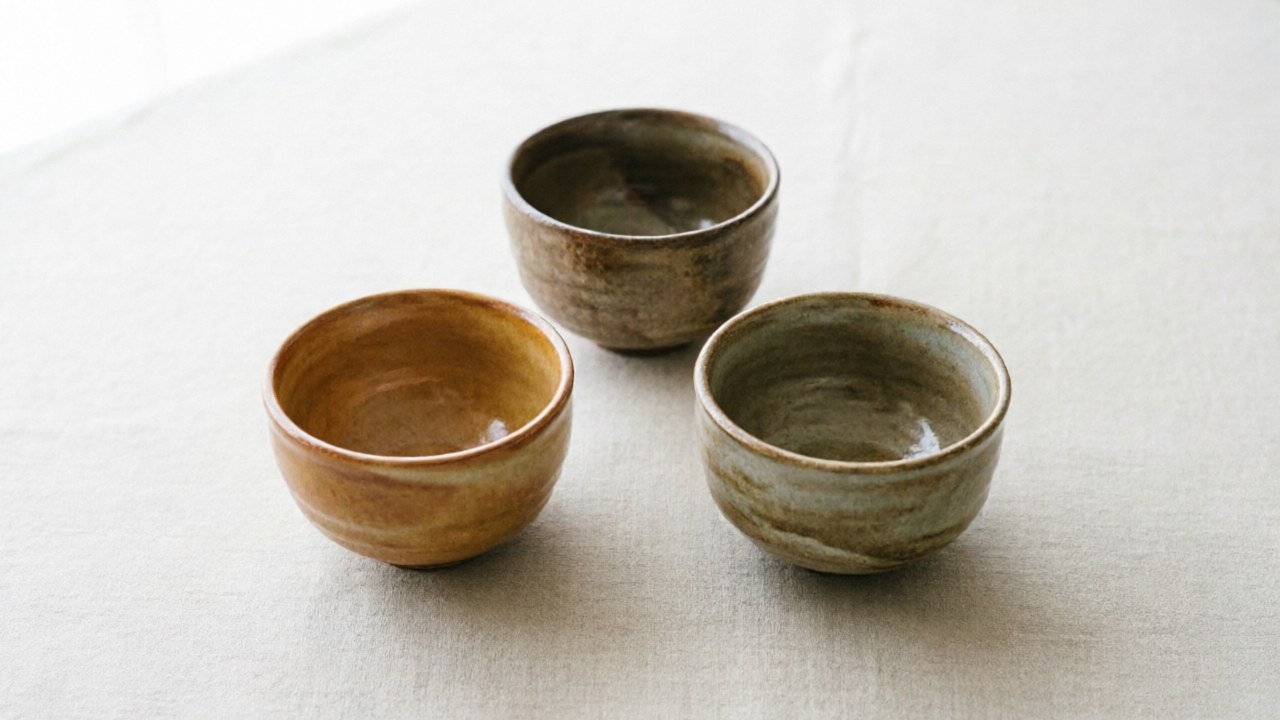
Tearoom Role Map — Chashitsu, Tokonoma, Nijiriguchi, Host vs Guest
Formal rooms are shaped for a reason — lineage grammar, not a tourist floorplan, and not a building requirement for a first home bowl [1][6].
| Role / place | Job in the system | Tool / SKU when home-scaled |
|---|---|---|
| Chashitsu (tearoom) | Dedicated (or dedicated-feeling) stage for host–guest attention | Home: clear table + soft light — no tatami required |
| Tokonoma | Seasonal scroll or flower focus — sets the “one moment” of the gathering | Home: one simple seasonal cue; not a shopping dump |
| Nijiriguchi | Low crawl entrance — humility / equalizing gesture in formal rooms | Home: metaphorical “leave status at the door” (no product) |
| Host (teishu) | Prepares, offers, owns the sequence grammar | Kit roles below |
| Guest (kyaku) | Receives, turns the bowl, returns attention | Soft practice of both hands on the bowl |
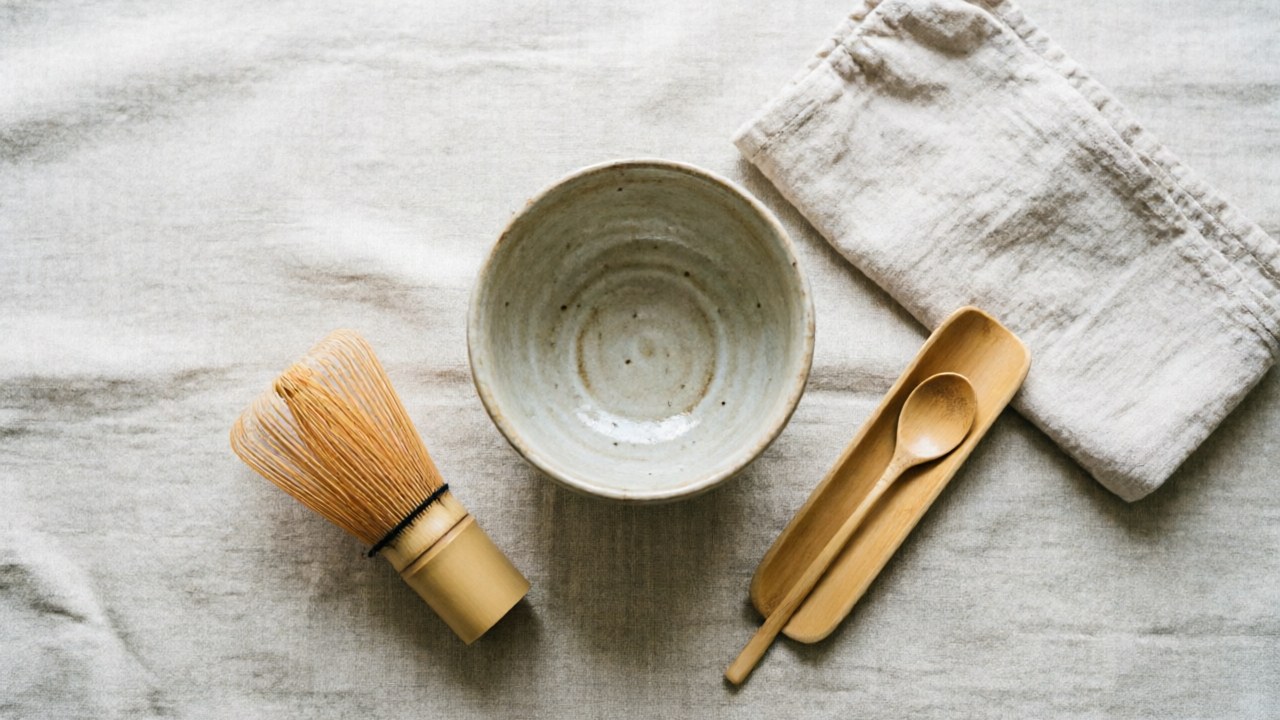
| Chawan | Guest-facing bowl | Handcrafted Mino chawan · budget everyday bowl |
| Chasen | Whisk / foam + purity-of-bowl gesture | Bamboo chasen |
| Chashaku | Measured scoop as lineage gesture (not a kitchen spoon) | Bamboo scoop pair |
| Natsume | Thin-tea caddy as system object (not a generic tin) | Oshima Kabuki natsume |
| Fukusa | Purification cloth gesture in front of guest — cultural, not sterilize | Silk fukusa |
| Kusenaoshi | Holds and reshapes the chasen between sessions | Ceramic whisk holder |
| Kettle | Repeatable heat for matcha (system utility) | Temp-control gooseneck kettle |
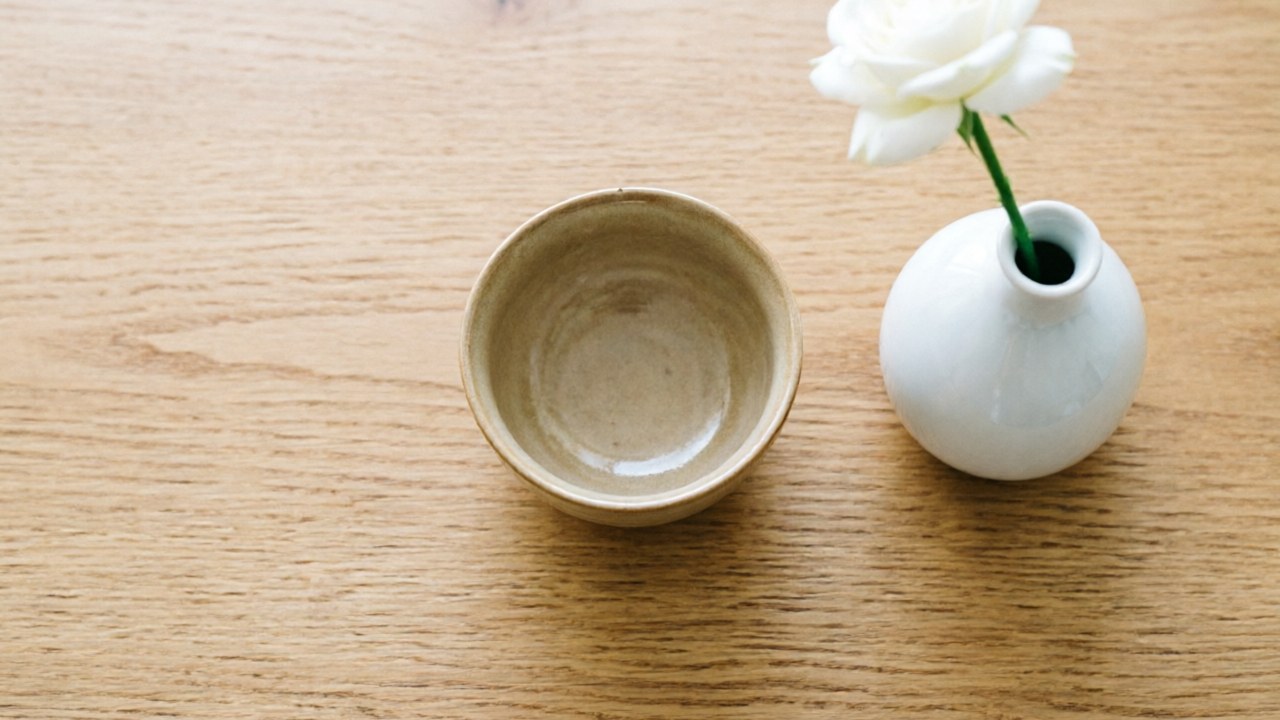
Vessel depth soft-exports to matcha tools. Starter path: teaware for beginners. Rinse / dry / store (no sterilize claims): teaware care.
Practice vs System — Where Matcha Ceremony Sits
System (this page) = schools, room, lineage, kit roles, and when formal Chado is too much.
Practice (live sister) = a six-gesture home usucha sequence on a clean table → matcha ceremony Practice.
That sister already answers “How is this different from Chado?” with a soft-link back here. Reciprocal rule: I point to Practice; I don’t paste or rewrite wipe / warm / sift / whisk / offer steps.
When weekly habit is ready, a ZENSO ten-piece kit or lean Artcome starter set plus ceremonial matcha is enough system support. Culture entry: tea for beginners.
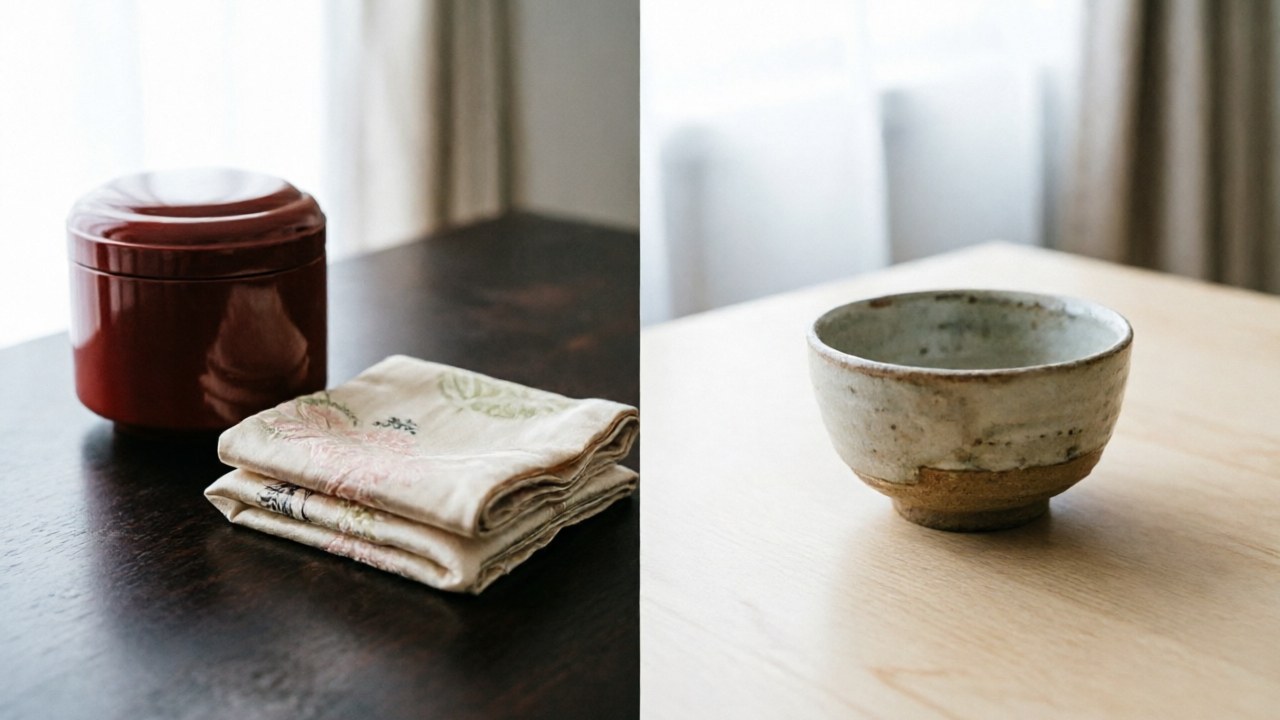
Peer Tradition — Gongfu Soft-Link
Chado is Japanese powdered matcha with bowl, school, and tearoom grammar [1]. Gongfu is a Chinese multi-steep leaf skill tradition with vessel roles and a tray stage — mapped at Gongfu Cha.
They share the Ceremony Traditions shelf as peers. They don’t merge into one “Asian tea ceremony” mush. Both can sit on a home table without theater; each keeps its own lineage, vessels, and leaf path. I’ve kept them on separate maps so the grammar stays clear.
When Not to Force Full Formal Chado
A full formal gathering is skill and hospitality — it’s not a daily obligation.
- Solo focus bowl — short Practice on a clean table beats costume without attention → matcha ceremony Practice.
- No formal room — tatami isn’t required. Clear surface + one seasonal cue is enough.
- Guest is rushed — one honest bowl beats a half-finished formal performance.
- Still learning heat — a temperature-control kettle often helps more than buying silk fukusa first.
- Budget path — budget chawan + bamboo chasen before a formal natsume.
When the map feels too large, reset at tea for beginners or how to brew tea.
Export Paths — Parameters to Brewing · Vessels to Teaware · Reading
Keep boundaries clean so this system map doesn’t cannibalize Practice, brewing classrooms, or vessel guides [13][14].
| Need | Go here | Status |
|---|---|---|
| 6-gesture home usucha sequence | Matcha ceremony Practice | Live Practice |
| Peer Chinese tradition map | Gongfu Cha | Live Traditions |
| First-cup / general brew system | How to brew tea | Live |
| Green leaf classroom | Brewing green tea | Live |
| Matcha tools how-to-choose | Matcha tools | Live |
| Starter / tasting / personal / care rails | Teaware path rails below | Live |
| Wa · Kei · Sei · Jaku / Ichigo ichie / Cha qi | Principles | Cards; longforms Planned |
| Soft cultural reading | The Way of Tea (Tuttle) | Kit soft path (not medical) |
A Cultural Kit Without Theater
Build by role, not by a ranked set list. Overlap with Practice on bowl, kettle, and matcha is fine — shared utility, different page intent [12][15].
| Role | Pick | Why |
|---|---|---|
| Starter set | Artcome 9-piece matcha set | Bowl + whisk + scoop + caddy + holder |
| Fuller weekly kit | ZENSO 10-piece ceremony kit | Canister + cloth when practice is weekly |
| Handcrafted chawan | Mino Ware Yuki Shino bowl | Guest-facing vessel |
| Budget chawan | CAMATET bowl with spout | Everyday bowl while learning host gestures |
| Chasen | TURIMON 100-prong chasen | Foam + purity gesture |
| Chashaku | HelloBio bamboo scoop | Measured scoop as lineage gesture |
| Natsume | Oshima Kabuki natsume | Thin-tea caddy as system object |
| Fukusa | Silk fukusa (red) | Cloth gesture — cultural, not sterilize |
| Kusenaoshi | ECOLEMON whisk holder | Reshape / dry chasen between sessions |
| Heat | Cosori gooseneck kettle | Repeatable heat without scorched powder |
| Ceremonial matcha | Naoki Superior 40g | Thin-tea powder once the path is clear |
| Lineage reading | The Way of Tea (Tuttle) | Soft cultural reading beyond this map |
Buy order: set or bowl + chasen + chashaku → kettle → matcha tin → fukusa / natsume when hosting matters. Soft vessel paths: matcha tools · teaware for beginners.
Path Rails — Where Chado Sits on the Site
- Hub: Ceremony · Traditions (this page unblocks the Chado card)
- Practice rail only: matcha ceremony
- Peer tradition: Gongfu
- Culture door: tea for beginners
- Vessel decision: matcha tools
- Path rails: beginners · tasting · personal system · care
- Brewing: how to brew tea · green tea
- Ideas: Principles
One principle: presence in the system — schools, room, and host–guest as an attention frame, not costume. Try today: wipe the bowl as a purity gesture before the guest (cultural, not sterilize). That bridges Practice without rewriting its steps.
The Mind of Chado
Chado is not a costume and not a single whisk trick. It is a system of attention: which school you study, how the room greets a guest, and how a host offers a bowl without hurry. Learn the map first, then run a short Practice sequence on a clean table. When the day is thin, one honest bowl is enough. The Way is knowing what the system is for — and when a simple cup still honors it.
References
[1] Wikipedia — Japanese tea ceremony. Chanoyu / Sadō / Chadō; schools; equipment; venues.
[2] Wikipedia — Sen no Rikyū. San-Senke lineage frame.
[3] Wikipedia — Urasenke. School footprint for the schools map.
[4] Wikipedia — Omotesenke. Second Sen house (orientation, not curriculum).
[5] Wikipedia — Chanoyu. Naming cluster (chado / chanoyu / sadō).
[6] Wikipedia — Chawan. Bowl role language for the tool map.
[7] Wikipedia — Wabi-cha. Aesthetic lineage cue.
[8] Urasenke — An Introduction to Chado. School voice; not curriculum dump.
[9] Japan Guide — Tea Ceremony. Tourist-thin structure reference.
[10] Met Museum / cultural essays (SERP cluster). Historical cue; avoid auction language.
[11] Google AI Overview for japanese tea ceremony / chado the way of tea (2026-07-17). Diff via SYSTEM MAP.
[12] Amazon Creators API search fills (T01). Kit viability only; no star ratings stored.
[13] TeaWithMind IA §14.9 R22 / R22b — Chado = Traditions; Practice = matcha-ceremony only.
[14] Writer guide v2 + content.config.ts — type=ceremony-guide; subType=tradition; 5-param teawithmind-20.
[15] Live sisters — matcha ceremony Practice · Gongfu. Soft-link only.