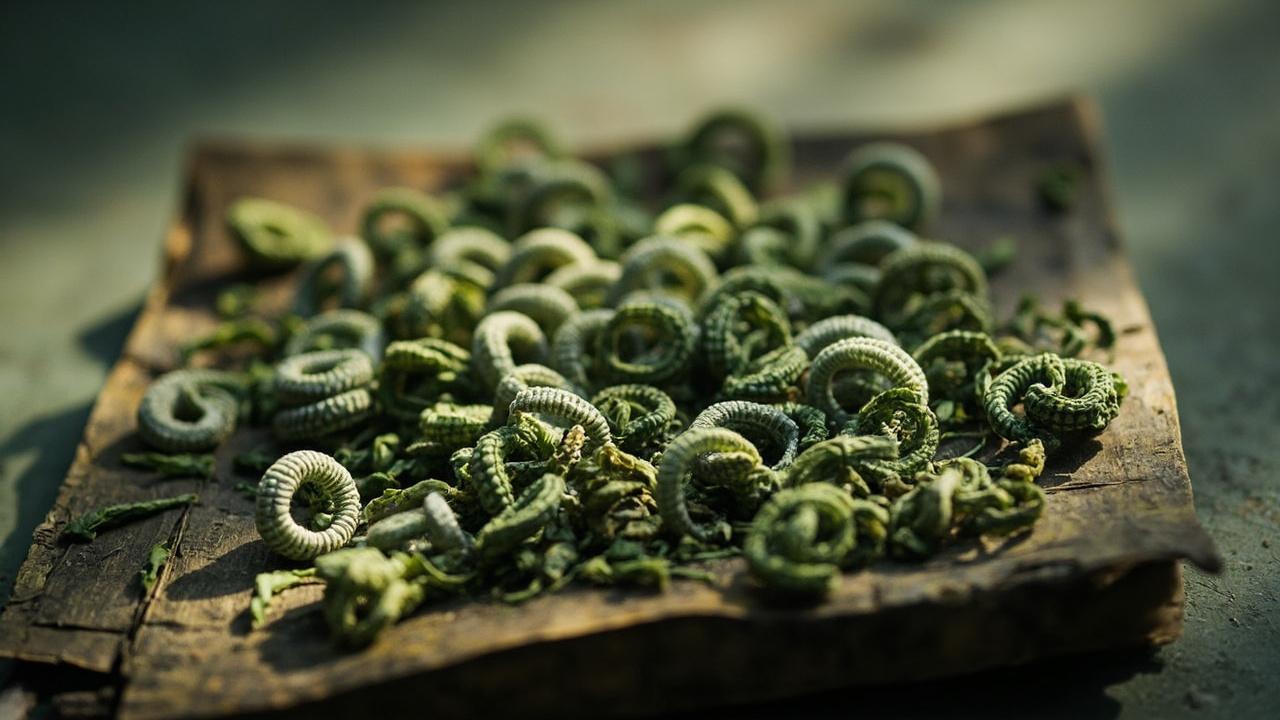
Biluochun (碧螺春, “Green Snail Spring”) is a hand-rolled Chinese green tea from Dongting Mountain beside Lake Tai in Suzhou, grown for centuries between fruit trees and rolled into tight spirals. The table below packs the grades, brewing numbers, and the Longjing contrast.
| Fact | Detail |
|---|---|
| Origin | Dongting mountains at Lake Tai, Suzhou — GI-protected under GB/T 18957-2008 |
| Shape | Tender buds hand-rolled into tight spirals, covered in white down |
| Aroma | Orchard-floral (linalool and geraniol) over light fruit |
| Grades | Five national tiers: 特级一等 / 特级二等 / 一级 / 二级 / 三级 |
| Water | 75–80 °C (167–176 °F), never boiling |
| Leaf amount | 3–4 g per 200 ml (about 1:50) |
| First steep | 60–90 seconds, Shangtou top-pour |
| Re-steeps | 3–4, adding 15–30 seconds each |
Origin
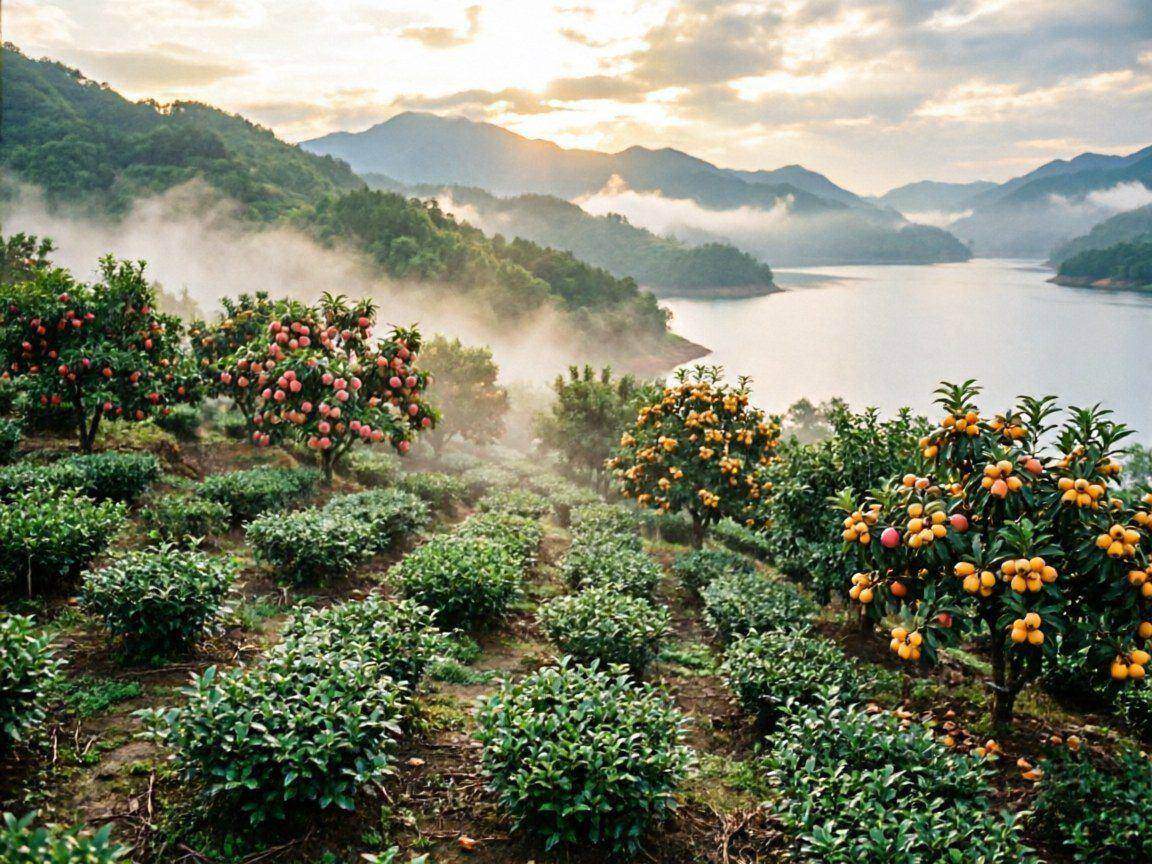
Biluochun comes from the Dongting Mountains — East and West — beside Lake Tai in Suzhou, Jiangsu Province [2]. The national standard draws the boundary tightly: protected tea must come from the Dongting (mountain) area, cultivated among fruit trees [1].
The standard itself names the orchard species — ginkgo, loquat, bayberry, chestnut, citrus, peach, plum, pomegranate — and describes forest coverage above 80% [1]. Recent agronomy research backs the pattern: intercropping fruit trees improves soil properties and the formation of tea quality compounds [3].
The name is a story: local accounts say the tea was once called Xia Sha Ren Xiang — roughly “Scary Fragrance” — until Emperor Kangxi reportedly renamed it Biluochun in the 17th century: bi for green, luo for the snail spiral, chun for spring [2].
Genuine Biluochun carries that protected status. If you know Longjing from West Lake, think of Biluochun as its cousin from a different garden: same green-tea family, entirely different personality.
Look
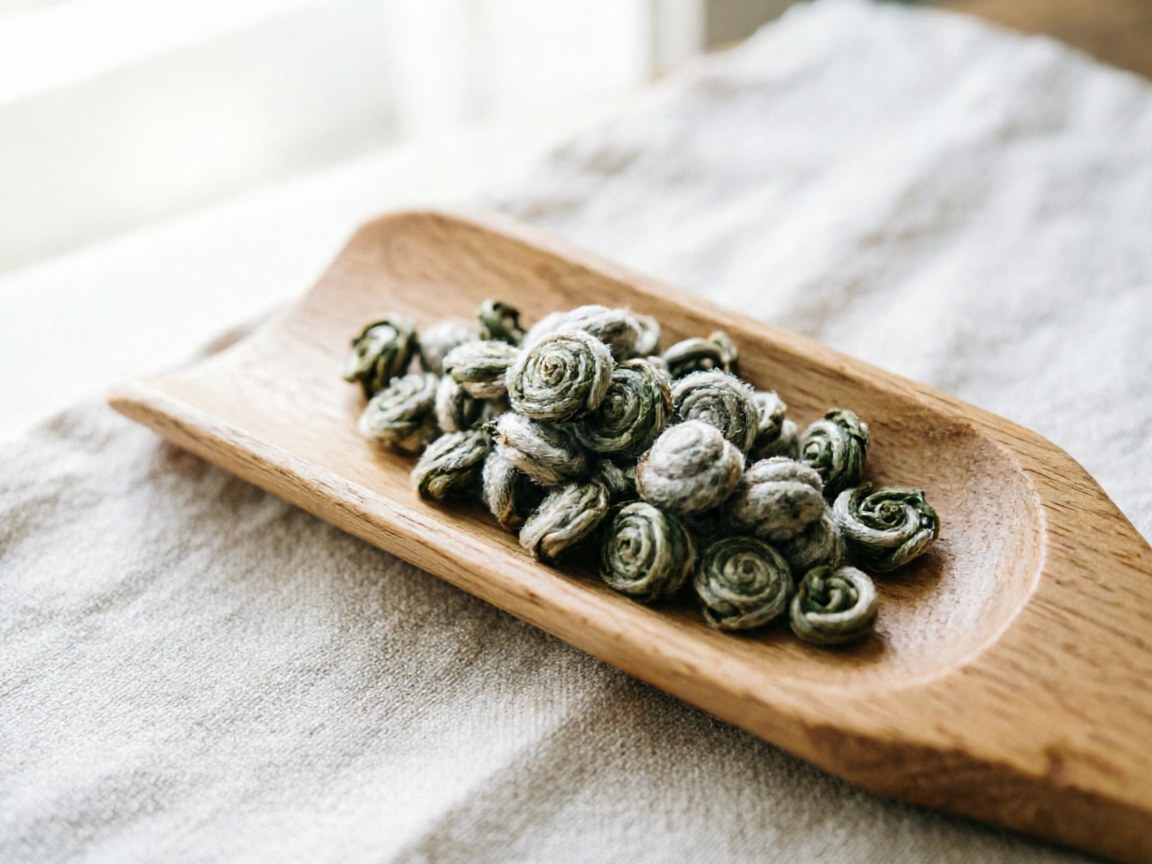
Biluochun is picked small and rolled smaller. The finest lots take 14,000–15,000 tender shoots to make a single kilogram [2]. Each shoot is pan-fired gently — a lighter kill-green than Longjing’s hot wok — preserving delicate aroma compounds, then hand-rolled into its spiral and dried slowly so the white down (bai hao) stays on the bud. Each grade also carries a physical reference sample, renewed every three years, so tiers look consistent harvest after harvest [1].
The National 5-Tier Grade System (GB/T 18957-2008)
Marketing labels aside, the national standard defines exactly five grades, judged on curl, down, aroma, liquor, and taste [1]:
| Grade | Dry leaf | Aroma | Liquor | Taste |
|---|---|---|---|---|
| 特级一等 · Extra Grade First | Fine, tight spirals, full white down | Tender, fresh | Bright tender-green | Fresh, mellow, sweet |
| 特级二等 · Extra Grade Second | Fine, well curled, ample down | Fresh | Bright tender-green | Fresh, mellow |
| 一级 · Grade 1 | Tight, slender leaf | Clean | Bright green | Fresh, brisk |
| 二级 · Grade 2 | Fairly tight curl, moderate down | Pure | Green, fairly bright | Fairly fresh, mellow |
| 三级 · Grade 3 | Looser curl, less down | Plain but clean | Pale green | Softer, lighter |
You will still see “Supreme” and seven-step ladders on packets — commercial and legacy market names, not the national standard [2].
Mingqian vs Yuqian
Harvest timing is the second axis. Mingqian (Pre-Qingming, before early April) leaf is the year’s first flush: tiny buds, dense down, the steepest prices. The standard’s top tiers explicitly call for tender, many-bud leaf [1], and L-theanine — the amino acid behind green tea’s sweet, umami depth — is one reason first picks taste sweeter rather than stronger [11]. Yuqian picks follow Qingming with slightly larger leaf, rounder flavor, and friendlier prices.
Spotting Authentic Dongting Biluochun
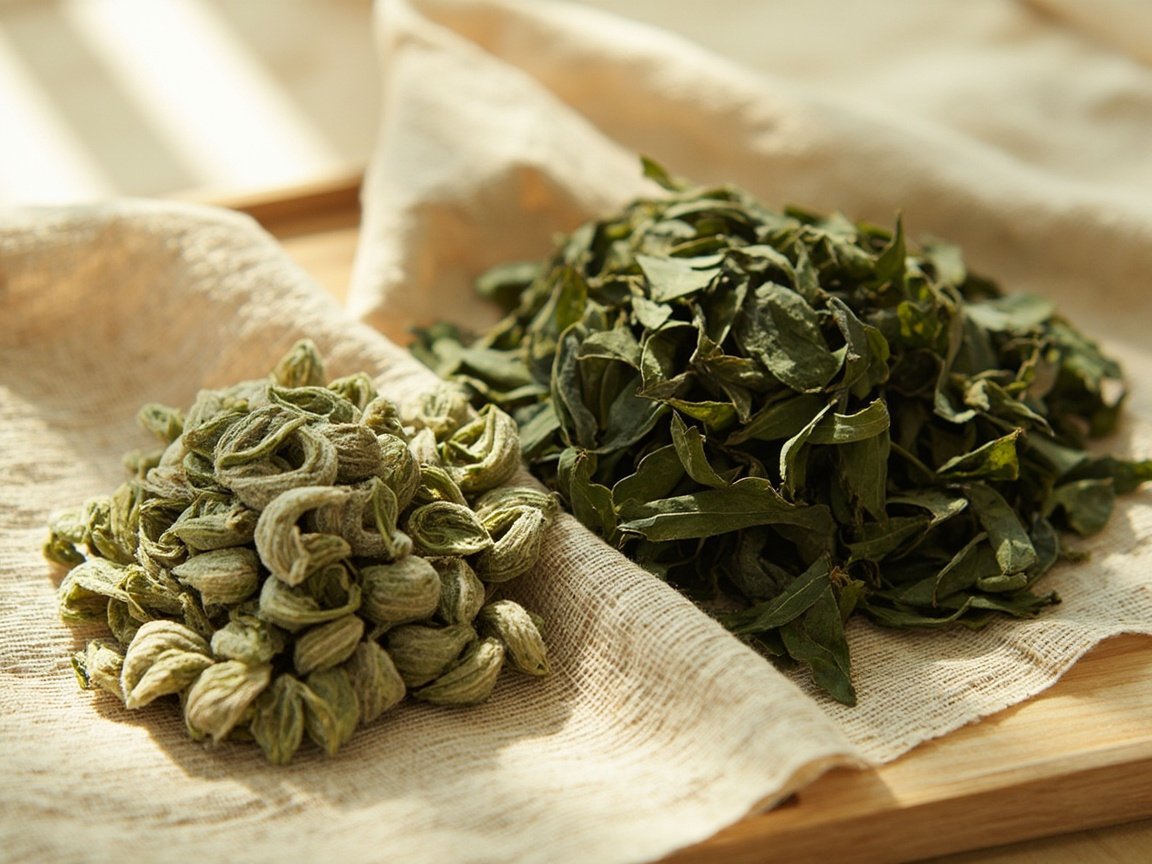
Check three cues: spiral tightness, down density, and whether the aroma leans fruity rather than nutty. Imitations from Zhejiang or Sichuan tend to run larger-leafed, looser, and nuttier [2]. Packaging should say Dongting or Suzhou, and the price should reflect hand-rolling labor.
Picks by grade and budget: FullChea Bi Luo Chun (250g) ($14.99) buys the most trial room per dollar. The oriarmcha Dongting (225g) ($27.00) names Suzhou origin in a Yuqian pick with a bigger pack. The Lingyunxi Spring Picking (120g) ($29.98) plays up the signature fruity, bean-like aroma. For the tender end of the calendar, JQ Mingqian Pre-Qingming (100g) ($26.90) is a genuine pre-Qingming harvest from Dongting. And the top pick, CHADUO Dongting Mountain (120g) ($29.98), shows what orchard terroir actually tastes like.
Character
Brewed, Biluochun pours a clear pale green-yellow with a light-to-medium body and a sweet finish that outlasts the cup’s delicacy. The aroma is the surprise: an orchid-floral lift over ripe peach, plum, and loquat, traceable to the intercropped orchards.
Under the poetry sits chemistry: linalool and geraniol — floral terpene alcohols — rank among the key aroma compounds characterized in green tea [4], and Biluochun’s gentle firing is built to keep them. Longjing takes the opposite road: hot wok-firing drives pyrazine-led chestnut and nutty notes into the leaf [5][6].
Biluochun vs Longjing at a Glance
| Biluochun | Longjing | |
|---|---|---|
| Shape | Hand-rolled spiral | Flat, pressed spear |
| Firing | Light and gentle | Hot wok |
| Aroma | Orchard-floral, fruity | Chestnut, nutty |
| Terroir | Dongting orchards, Lake Tai | West Lake, Hangzhou |
| Grade standard | GB/T 18957-2008 (5 tiers) | GB/T 18650-2008 |
| Liquor | Pale green-yellow | Yellow-green |
Elsewhere in the family: Silver Needle (white), Tieguanyin (oolong), Keemun (black), and matcha (stone-ground).
Ware
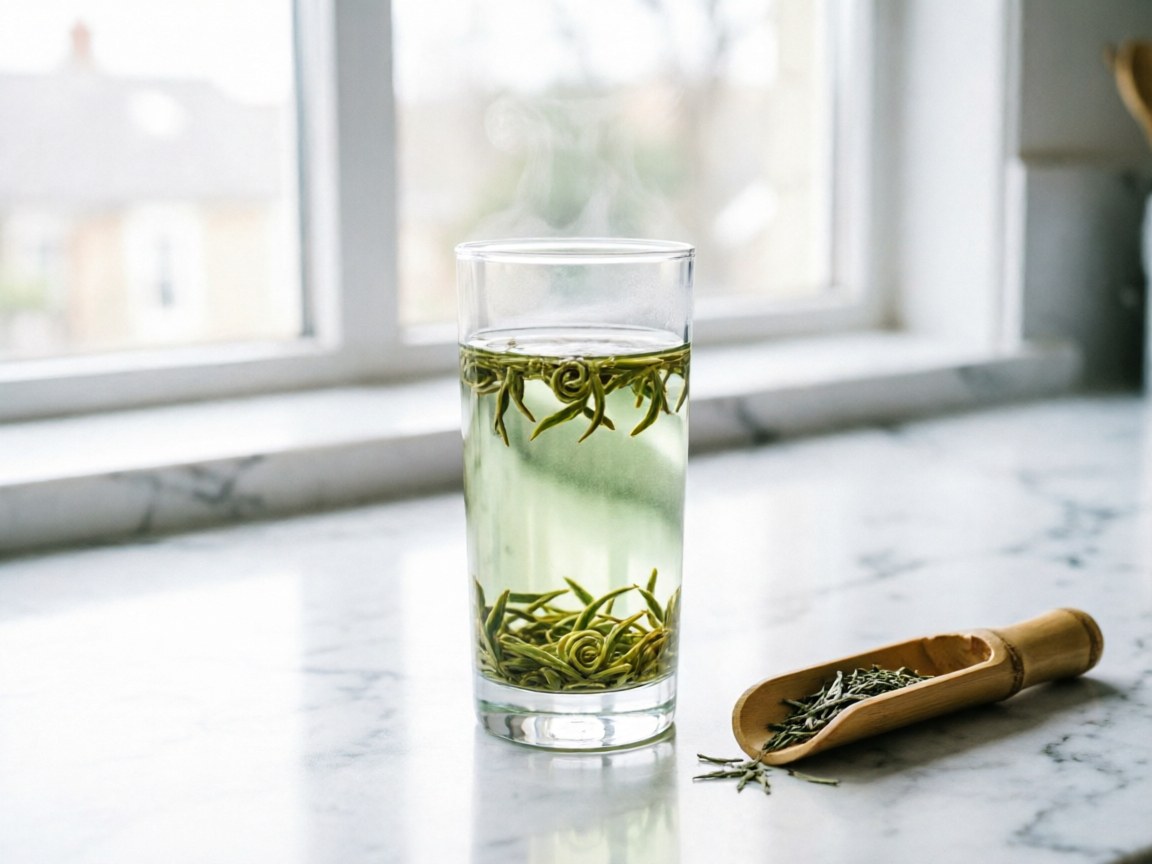
Half of Biluochun’s appeal is visual: watching spirals stand, sink, and unfurl in slow motion — something only glass allows. Porcelain has its place — the porcelain vs glass breakdown covers when glazed heat retention wins — but for Shangtou brewing, transparency wins.
Equipment for Shangtou Brewing
- Rishi Tea Simple Brew Glass Teapot (400ml) ($29.00) — built-in strainer, full view of the leaves.
- DOPUDO Glass Teapot with Removable Infuser (600ml) ($13.95) — the budget borosilicate option.
- Chefman Variable Temperature Electric Kettle (1.8L) ($29.99) — hits 75–80 °C precisely, no guessing.
- MAXUS Digital Pocket Gram Scale ($8.98) — 0.01 g accuracy for 3–4 g dosing.
For serving, see the how to choose a tea cup guide. Building a kit from zero? Teaware for beginners orders the purchases, and the how to choose a kettle guide explains when temperature control earns its spot.
Ritual
Biluochun rewards a gentler hand than most greens. The traditional method is Shangtou (上投, “top-pour”): water first, leaf on top, so the buds never take the brunt of a hot pour [7].
| Parameter | Value |
|---|---|
| Water temperature | 75–80 °C (167–176 °F), never boiling |
| Leaf | 3–4 g per 200 ml (about 1:50) |
| Vessel | Tall glass or glass teapot |
| First steep | 60–90 seconds |
| Re-steeps | 3–4, adding 15–30 seconds each |
The steps, in order:
- Warm the glass — hot water in, swirl, discard.
- Pour water first — 200 ml at 75–80 °C straight into the glass.
- Drop in the leaves — 3–4 g of spirals on top; watch them sink.
- Steep 60–90 seconds — the liquor turns pale green-yellow.
- Re-steep 3–4 times — add 15–30 seconds per round.
A glass teapot earns its keep here: the Rishi Simple Brew keeps the tall-glass theater while brewing for two.
For the wider system, see our how to brew tea guide, the green tea brewing guide for depth across varieties, the water temperature guide for the 75–80 °C band, and leaf-to-water ratio for dosing math. The brewing ratio tool and steeping time tool handle the arithmetic.
Benefits
Biluochun’s health story is a composition story. A 200 ml cup brewed with 3 g of leaf at 75–80 °C for 60–90 seconds lands roughly in the 15–40 mg caffeine range typical of green tea [8][12]. Brewing conditions move that number: lower temperature and shorter steeping extract less caffeine [9].
The leaf also carries catechins, polyphenols with EGCG the most studied, which laboratory research associates with antioxidant activity [10]. And it is a natural source of L-theanine, the amino acid behind green tea’s sweet-umami character and its calm-focus pairing with caffeine [11].
Those findings describe what the leaf contains and what early research observes — they are not promises about outcomes. Full policy: health information terms.
For numbers in context: caffeine by tea type and how much L-theanine is in tea.
The Mind of Biluochun
Biluochun teaches that greatness doesn’t require size. Its leaves are tiny — a kilogram contains 14,000 spiraled shoots, each hand-rolled. Yet what you taste isn’t intensity but subtlety: the orchard next door, the blossom on the wind, the patience of a maker who rolls each shoot by hand. To drink Biluochun is to slow down and notice that the most delicate things often carry the longest finish.
References
[1] GB/T 18957-2008 地理标志产品 洞庭(山)碧螺春茶 [Product of geographical indication — Dongting (mountain) biluochun tea]. State Administration for Market Regulation (China). Implemented 2008-11-01, status current. https://openstd.samr.gov.cn/bzgk/std/newGbInfo?hcno=AF9AC4AB905C93C6F7CB42A7AB4EBF88
[2] Wikipedia. “Biluochun.” https://en.wikipedia.org/wiki/Biluochun
[3] Duan Y, Wang G, Liang L, et al. “Intercropping fruit trees in tea plantation improves soil properties and the formation of tea quality compounds.” Plant Physiology and Biochemistry. 2024;210:108574. https://doi.org/10.1016/j.plaphy.2024.108574
[4] Zhu J, Zhu Y, Wang K, Niu Y. “Characterization of key aroma compounds and enantiomer distribution in Longjing tea.” Food Chemistry. 2021;361:130096. https://doi.org/10.1016/j.foodchem.2021.130096
[5] Kawakami M, Yamanishi T. “Flavor Constituents of Longjing Tea.” Agricultural and Biological Chemistry. 1983;47(9):2077-2083. https://doi.org/10.1080/00021369.1983.10865906
[6] Qu F, Li X, Wang P, Han Y, et al. “Effect of thermal process on the key aroma components of green tea with chestnut-like aroma.” Journal of the Science of Food and Agriculture. 2022;103(2):657-665. https://doi.org/10.1002/jsfa.12177
[7] Teavivre. “How to Brew Bi Luo Chun Green Tea.” (commercial practice guide) https://www.teavivre.com/info/brew-bi-luo-chun-green-tea.html
[8] Chin JM, Merves ML, Goldberger BA, Sampson-Cone A. “Caffeine Content of Brewed Teas.” Journal of Analytical Toxicology. 2008;32(8):702-704. https://doi.org/10.1093/jat/32.8.702
[9] Musilová A, Kubíčková A. “Effect of brewing conditions on caffeine content in tea infusions simulating home-made cup of tea.” Monatshefte für Chemie – Chemical Monthly. 2018;149(9):1561-1566. https://doi.org/10.1007/s00706-018-2204-0
[10] Cabrera C, Artacho R, Giménez R. “Beneficial Effects of Green Tea — A Review.” Journal of the American College of Nutrition. 2006;25(2):79-99. https://doi.org/10.1080/07315724.2006.10719518
[11] Türközü D, Şanlier N. “L-theanine, unique amino acid of tea, and its metabolism, health effects, and safety.” Critical Reviews in Food Science and Nutrition. 2015;57(8):1681-1687. https://doi.org/10.1080/10408398.2015.1016141
[12] USDA FoodData Central. Green tea, brewed — compositional data. https://fdc.nal.usda.gov/