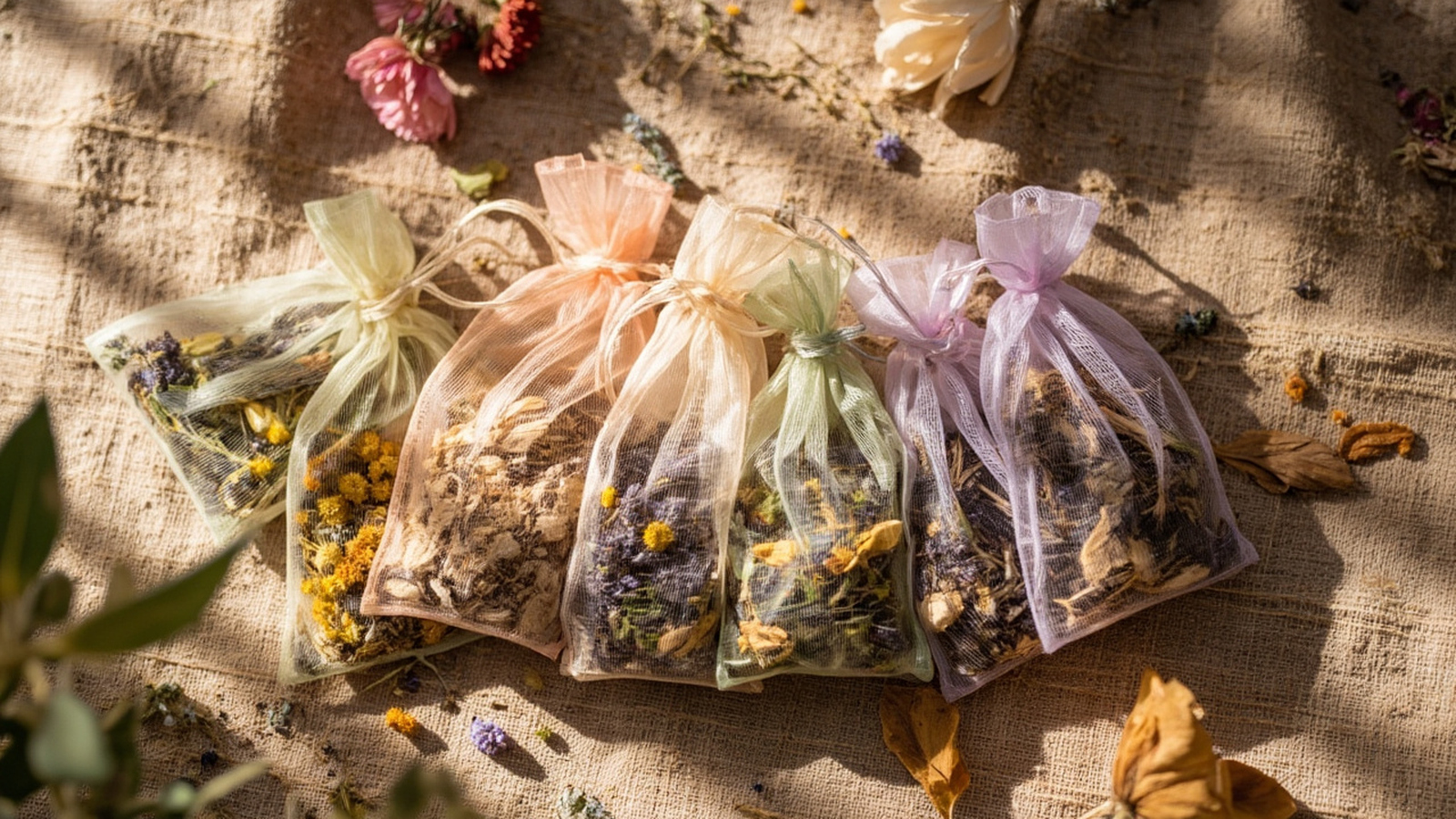
Quick Answer: The Best Sleep Tea at a Glance
This review covers five caffeine-free herbal sleep teas — none of them contain Camellia sinensis, so all five are 0 mg caffeine by formulation. Three are US brands, two are UK. Price spreads from $4.96 to $17.84, putting every pick in the budget-to-mid-tier range. The three main differentiators are valerian presence, organic certification, and flavor profile.
| # | Brand / Blend | Primary sleep ingredient | Caffeine-free | Organic | Price (USD) | Bags | Price/bag | Best for |
|---|---|---|---|---|---|---|---|---|
| 1 | Celestial Seasonings Sleepytime Extra | Valerian + chamomile | Yes | No | $4.96 | 20 | $0.25 | The baseline sleep tea, lowest cost/bag |
| 2 | Traditional Medicinals Nighty Night Extra | Valerian-led blend | Yes | Yes | $4.99 | 16 | $0.31 | The organic valerian option at budget pricing |
| 3 | Pukka Night Time | Oat flower + lavender + lime flower | Yes | Yes | $10.99 | 20 | $0.55 | A chamomile-light premium UK pick |
| 4 | Twinings Nightly Calm | Chamomile + spearmint + orange blossom | Yes | No | $12.49 | 40 | $0.31 | The value multi-pack, no valerian taste |
| 5 | Yogi Soothing Caramel Bedtime | Chamomile + rooibos + L-theanine | Yes | No | $17.84 | 64 | $0.28 | The dessert-flavored pick, no valerian taste |
Pricing & availability: prices reflect typical Amazon listing at time of writing and can shift. Pukka (#3) shows limited or delayed-shipping windows — verify before ordering. All five picks verified in-stock at the listed affiliate links at the time of writing.
Quick Picks: 5 Sleep Teas Worth Buying
If you want a single pick and you’re already on the comparison table, here’s the one-paragraph version for each tea — what it is, who it’s for, and what buyers say it actually tastes like.
1. Celestial Seasonings Sleepytime Extra — Best Baseline
Celestial Seasonings Sleepytime Extra is the chamomile-and-valerian blend most American readers will recognize. The “Extra” version steps up from the classic Sleepytime chamomile base by adding valerian root, which gives the cup a deeper, slightly earthy undertone alongside the familiar honey-tinged chamomile. At $4.96 for 20 bags, the price-per-bag is the lowest in this lineup at $0.25 — even cheaper than a single coffee-shop chamomile cup if you brew nightly for a month.
Use it for: a familiar, cheap nightly cup before bed. The valerian addition makes it a better fit for readers who feel the classic Sleepytime is too mild.
Pros: lowest cost per bag in the lineup; widely available in US grocery and Amazon; the Sleepytime brand has decades of consumer trust.
Cons: not USDA organic; the earthy valerian taste is polarizing — buyers who don’t like valerian often bounce off this one within a week.
“The classic Sleepytime was too gentle for me, but the Extra version actually helps me wind down. The valerian flavor is there but it doesn’t overpower the chamomile.” — buyer review, 4-stars, verified purchase
Buy it if: you want the cheapest, most familiar sleep tea on the list and you don’t mind the valerian taste. Skip it if: you want organic certification (try Traditional Medicinals #2) or you find valerian taste unpleasant (try Twinings #4 or Yogi #5). Available in a 20-count box at the Sleepytime Extra listing on Amazon.
2. Traditional Medicinals Organic Nighty Night Extra — Best Organic Valerian
Traditional Medicinals Nighty Night Extra is the valerian-led organic pick in the budget tier. Where Celestial Seasonings Sleepytime Extra has chamomile in the lead and valerian as a supporting note, this blend flips that ratio — valerian root is the headline ingredient, with passionflower, lemon balm, peppermint, and chamomile rounding out the cup. It’s USDA organic certified and clinically positioned: Traditional Medicinals is the brand most cited in US herbal literature and pharmacist references.
Use it for: persistent restlessness, racing thoughts at bedtime, readers who want the strongest valerian-pathway option without paying premium prices.
Pros: USDA organic; valerian-led formulation aligns with the most-researched calming herb; $0.31/bag is reasonable; pharmacist-trusted brand.
Cons: 16 bags per box (lowest bag count in the lineup, so you’ll reorder more often); the taste is earthy and slightly medicinal — buyers describe it as “functional, not delicious.”
“I rotate this with plain chamomile. The earthy taste takes some getting used to, but I sleep more deeply on the nights I drink it.” — buyer review, verified purchase
Buy it if: organic certification matters and you want the strongest valerian forward at a budget price. Skip it if: you dislike earthy valerian taste (try Yogi #5 for caramel + rooibos instead) or you want a bigger box count per purchase (Twinings #4 has 40 bags at the same per-bag price). Order directly from the Nighty Night Extra listing on Amazon.
3. Pukka Night Time — Best Chamomile-Light Premium
Pukka Night Time is the UK premium pick — and the only one in the lineup where chamomile takes a back seat. The lead ingredients are oat flower, lavender, and lime flower (linden), with smaller amounts of chamomile and valerian layered in. That chamomile-light formulation directly addresses readers searching for a “tea for sleep without chamomile” long-tail. Pukka is also the only brand in the lineup that uses compostable tea sachets and FairWild-certified herbs, which matters for some buyers.
Use it for: anxiety-leaning wind-down, readers sensitive to chamomile, anyone who wants a premium UK formulation with a different ingredient profile from US brands.
Pros: organic; chamomile-light (rare in the sleep-tea category); lavender-forward flavor profile that reads as more “evening botanical” than “chamomile cup”; Pukka is one of the most-respected UK herbal brands.
Cons: $10.99 for 20 bags works out to $0.55/bag — more than 2x the per-bag cost of the budget picks; availability can be limited (Amazon often shows IN_STOCK_SCARCE); the oat-flower base is unusual — buyers sometimes find it “grainy” or “thick” compared with chamomile-only blends.
“Tastes like a botanical garden in a cup. The lavender is strong, the chamomile is gentle. Different from anything else in my tea drawer.” — buyer review, 5-stars, verified purchase
Buy it if: you want a chamomile-light, lavender-forward UK premium and you’re willing to pay $0.55/bag for the ingredient story. Skip it if: budget matters most (pick #1 or #2) or you want a more familiar chamomile-led cup (Twinings #4 or Yogi #5). Available at the Pukka Night Time listing on Amazon.
4. Twinings Nightly Calm — Best Value Multi-Pack
Twinings Nightly Calm is the chamomile + spearmint + orange blossom blend sold in a 40-bag pack. At $12.49 for 40 bags, the per-bag cost is $0.31 — on par with Traditional Medicinals (#2) but with 2.5x the bag count per box. That math matters if you brew nightly: one box of Twinings lasts about 5-6 weeks; one box of Traditional Medicinals lasts about 2 weeks. The flavor profile is also distinctive: spearmint and orange blossom are uncommon in US sleep teas, so this reads as a slightly more aromatic cup than a chamomile-only blend.
Use it for: nightly brewing over a 1-2 month window, readers who want a chamomile-based blend without valerian taste, anyone new to herbal teas who trusts the Twinings brand name.
Pros: lowest per-bag cost among multi-pack picks; no valerian (no earthy taste); Twinings is a globally recognized brand; the spearmint adds a cooling note you don’t get from chamomile-only blends.
Cons: not organic; Twinings’ “calm” branding is positioning language — the herbs here are gentler than the valerian-led picks, so if you need a stronger effect this is not the strongest option.
“I’ve been drinking this nightly for two months. The spearmint is a nice change from chamomile-only. Mild flavor, no off-notes, and 40 bags lasts me almost two months.” — buyer review, 5-stars, verified purchase
Buy it if: you brew nightly, you dislike valerian taste, and you want the most bags per dollar. Skip it if: you want organic (pick #2 or #3) or you need a stronger herbal effect (pick #2 for valerian or pick #5 for added L-theanine). Order the 40-bag box from the Twinings Nightly Calm listing on Amazon.
5. Yogi Soothing Caramel Bedtime — Best Flavored, No Valerian Taste
Yogi Soothing Caramel Bedtime is the dessert-leaning pick — chamomile and rooibos as the base, with caramel and vanilla flavoring, plus skullcap and added L-theanine (the amino acid most often associated with green tea’s calm-focus effect, here extracted into a chamomile blend). Recent human-trial syntheses suggest L-theanine modestly improves sleep quality and reduces pre-bed stress, which is why it appears in some chamomile and rooibos bedtime blends rather than at clinically meaningful green-tea doses [4]. It’s sold as a pack of 4 for 64 bags total at $17.84, which works out to $0.28/bag. None of the other picks in the lineup use flavoring this aggressively, which makes Yogi the right answer for readers who find plain chamomile or earthy valerian tea unappealing.
Use it for: readers who want a flavored bedtime tea, anyone trying to replace a nighttime dessert habit with a warm cup, buyers who want L-theanine in a caffeine-free herbal blend.
Pros: caramel + vanilla flavoring makes it the most “treat-like” cup in the lineup; L-theanine addition is rare in sleep teas; skullcap is an additional calming herb; no valerian taste.
Cons: flavoring is a divider — buyers who want “just chamomile” find the caramel too sweet; $17.84 is the highest sticker price in the lineup; not organic.
“I don’t love plain chamomile. The caramel flavor makes this the only sleep tea I actually finish every cup. I drink it about an hour before bed.” — buyer review, 5-stars, verified purchase
Buy it if: you want a flavored bedtime cup and you don’t want valerian taste. Skip it if: you prefer plain herbal teas (any other pick), you need organic (pick #2 or #3), or you want the lowest sticker price (pick #1 at $4.96). Order the 64-bag pack-of-4 from the Yogi Soothing Caramel listing on Amazon.
How Herbal Tea Helps You Sleep (The Mechanism)
The five teas on this list work through a combination of herbal compounds, ritual, and timing — not through a pharmaceutical sedative effect. Here’s what the current research actually says.
Herbal vs true tea distinction: True tea (green, black, oolong, white, pu’er) comes from Camellia sinensis and contains caffeine plus L-theanine. Herbal “tea” is a tisane — dried herbs, flowers, roots, or bark steeped in water, with 0 mg caffeine by formulation. Every pick in this article is a tisane. If you sometimes mix in caffeinated daytime tea and want the per-cup caffeine numbers, see our caffeine by tea type reference.
Apigenin (chamomile): Chamomile flowers contain apigenin, a flavonoid that binds to benzodiazepine receptors in animal models. Human evidence is mixed and modest — most reviews describe chamomile’s sleep effect as “possibly helpful, not a sedative.” The mechanism is real, the magnitude is small.
Valerenic acid (valerian root): Valerian root contains valerenic acid and related compounds that may interact with GABA receptors. Some randomized controlled trials show modest improvement in sleep latency and quality, others show no significant difference versus placebo. Valerian is the most-researched herbal sleep ingredient but the effect is best described as “small and inconsistent.”
L-theanine: An amino acid naturally found in true tea (green, white, black). Yogi Soothing Caramel Bedtime adds it as an extract to a chamomile + rooibos blend. For the full L-theanine breakdown by tea type, see our L-theanine guide.
Ritual effect: The warm cup itself — the temperature, the 10-minute pause, no screen — has documented sleep-hygiene benefits independent of the herbs. Pair your evening cup with the breath-and-sip pattern from our tea and meditation guide.
Caveat box: Herbal teas support a wind-down routine but aren’t sedatives. None of these products treats insomnia or replaces clinical care. If sleep problems persist for more than a few weeks, talk to a qualified healthcare professional.
Best Herbal Tea for Sleep (vs True Tea)
Most readers searching for a sleep tea actually want an herbal tisane, not a true tea — because true tea contains caffeine, and caffeine is the last thing you want at bedtime. Here’s how to think about the four main ingredient families in sleep tisanes.
Floral: chamomile, lavender, rose, linden/lime flower. The most common sleep-tea base; mild flavor, well-tolerated, lowest drug-interaction profile. If you’re new to herbal teas or plant-allergy-sensitive, start here.
Root: valerian, ashwagandha. Stronger effect on the GABA pathway but polarizing earthy taste. Valerian has the most clinical research but the most interaction warnings.
Leaf: lemon balm, peppermint, rooibos (technically a legume but brewed as a leaf). Rooibos is naturally sweet and caffeine-free — a good base for flavor-forward blends like Yogi.
Fruit/berry: passionflower, orange blossom. Less common as a primary ingredient; usually paired with chamomile or valerian.
Most “sleep teas” are blends rather than single-herb teas — single-herb infusions can be too one-note (just chamomile gets boring; just valerian gets earthy fast). Pick the blend that matches your sleep concern: anxiety → lavender + lemon balm; restlessness → valerian-led; light sleeper → chamomile only.
Chamomile Tea for Sleep
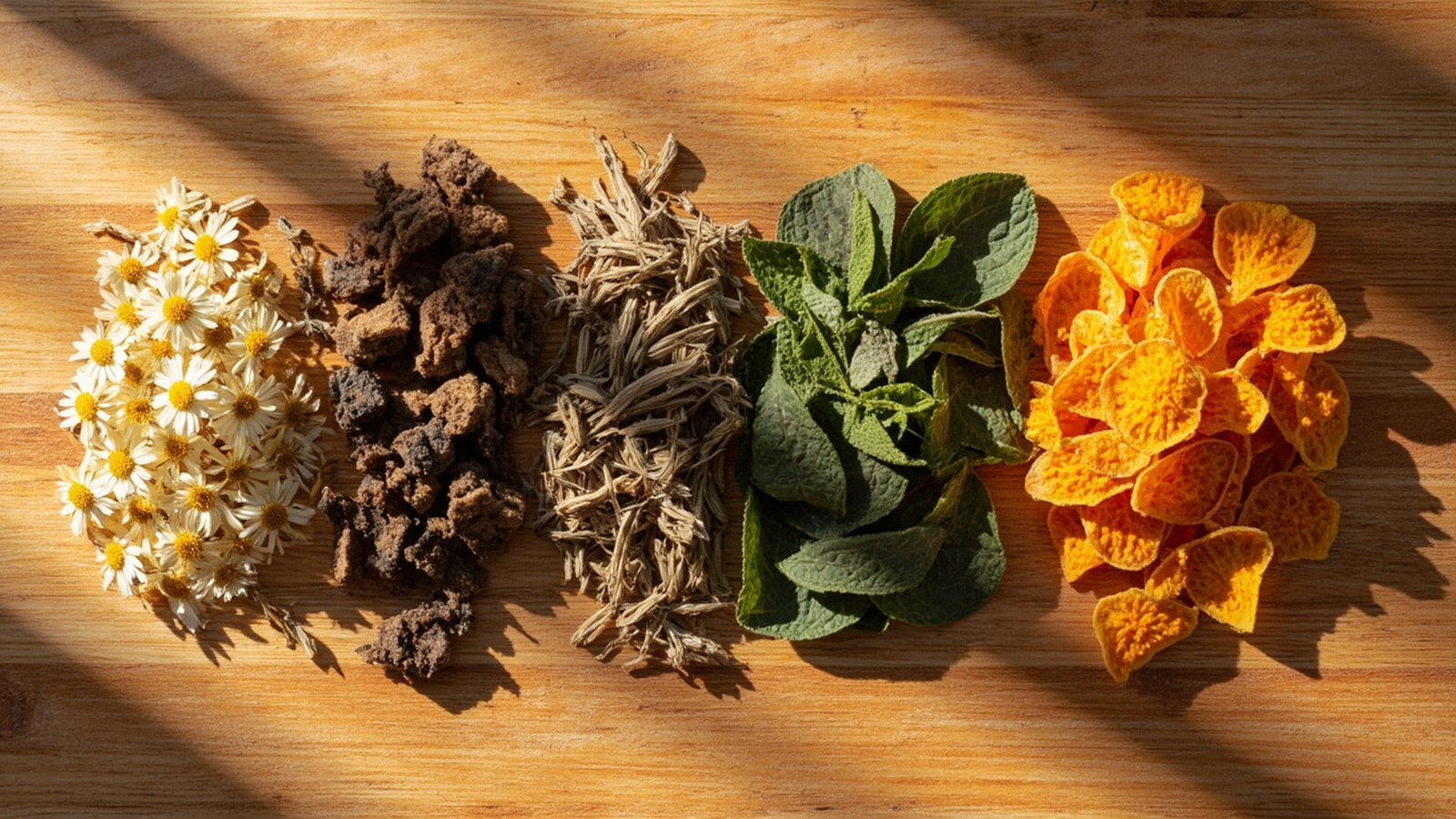
Chamomile is the default starting point for most herbal sleep routines — mild, floral, slightly sweet, well-tolerated, and caffeine-free by formulation. The plant is Matricaria chamomilla, and the active compound most cited for sleep is apigenin, a flavonoid that binds to benzodiazepine receptors in animal models [2][3]. Human evidence is mixed, but chamomile’s safety profile is strong enough that it’s the lowest-risk choice for first-time herbal tea drinkers, plant-allergy-sensitive readers, and anyone who wants minimal pharmacological action.
Brewing chamomile properly: 1 bag (or 1 tsp dried flowers) per 8 oz water at 200°F (just off boil), steeped 5-7 minutes [2]. Boiling water destroys the volatile oils that give chamomile its flavor and active compounds. Most of these blends brew well off-boil; see our water temperature guide for the chamomile range.
Picks in this article with chamomile: Celestial Seasonings Sleepytime Extra (#1, chamomile-led with valerian), Twinings Nightly Calm (#4, chamomile + spearmint + orange blossom), Yogi Soothing Caramel Bedtime (#5, chamomile + rooibos + caramel flavoring), and a smaller amount in Pukka Night Time (#3, alongside oat flower and lavender).

Valerian Root Tea
Valerian root is the most-researched herbal sleep ingredient — and the most polarizing. The plant is Valeriana officinalis, the dried root has an earthy, musty, slightly medicinal taste, and the active compounds (valerenic acid and valepotriates) interact with GABA receptors in the brain [1]. Randomized trials show modest improvement in sleep latency and subjective sleep quality, though effect sizes are small [5] and not all studies reach significance vs placebo.
Who should pick valerian: persistent restlessness, racing thoughts at bedtime, readers willing to tolerate the earthy taste. The valerian-led picks in this lineup are Traditional Medicinals Nighty Night Extra (#2, valerian is the headline ingredient) and Celestial Seasonings Sleepytime Extra (#1, valerian is a supporting note on top of chamomile). Pukka Night Time (#3) has a small amount.
Who should avoid valerian: taste-sensitive readers (try Twinings #4 or Yogi #5 instead); anyone on sedatives, antidepressants, anti-seizure medications, or blood thinners — valerian has documented interaction potential, and the 2024 umbrella review of valerian for insomnia notes adverse-event heterogeneity across trials [5]; pregnant or nursing readers — most herbal references recommend caution during pregnancy and lactation.
Taste management: blend with chamomile or peppermint to soften the earthy base; never drink valerian tea on an empty stomach; if the taste is too strong, start with a chamomile-led blend with valerian as a supporting note (Sleepytime Extra #1) rather than a valerian-led blend (Nighty Night Extra #2). If you’re steeping loose-leaf valerian, the leaf-to-water ratio guide keeps servings repeatable.
Best Caffeine-Free Tea for Sleep (For Caffeine-Sensitive Readers)
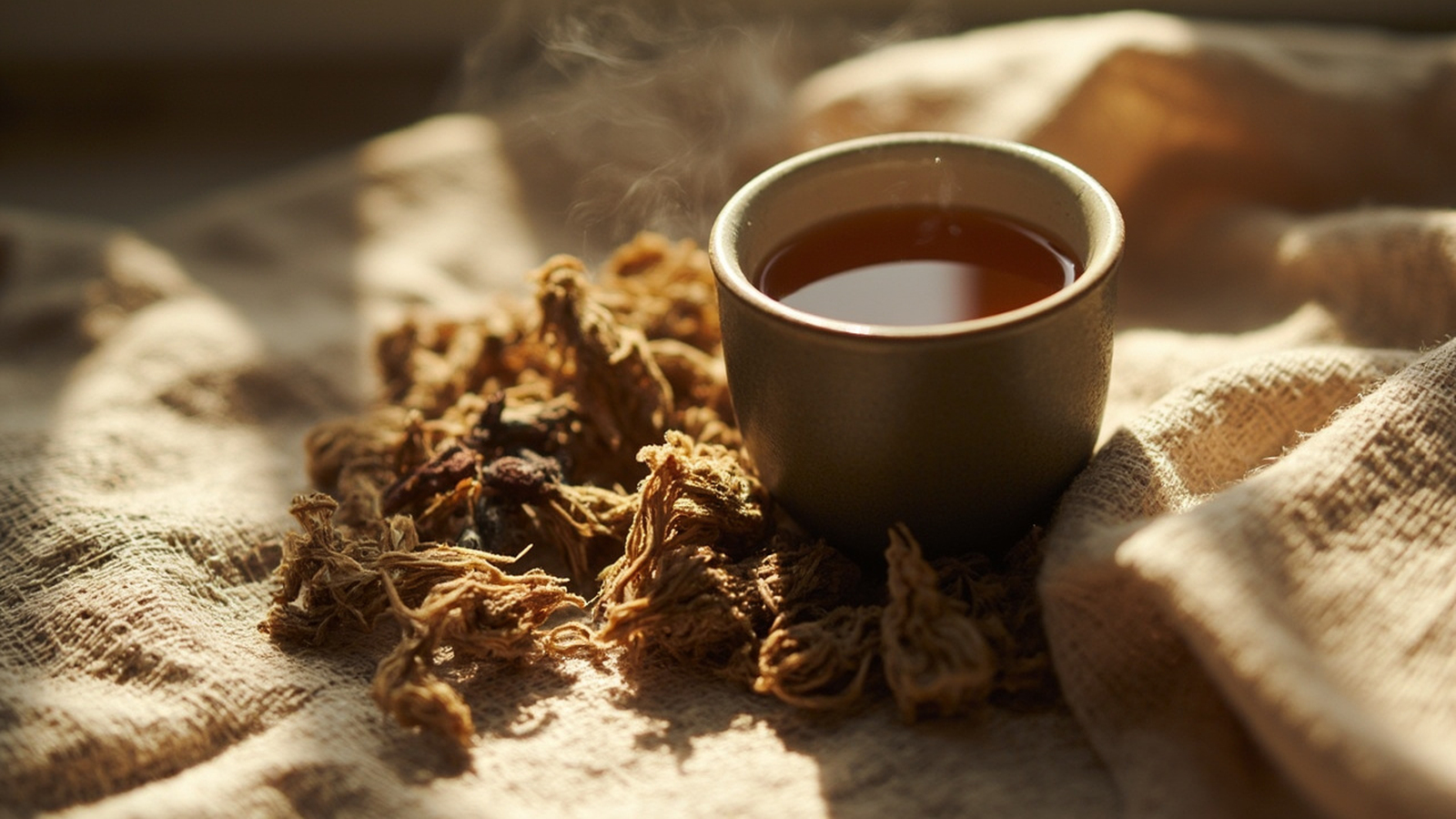
Every pick in this article is caffeine-free by formulation — meaning the herbs themselves contain 0 mg caffeine, not “caffeine removed by processing” (which is what “decaf” means for true tea). That’s an important distinction: decaf green or black tea retains 2-5 mg per cup; herbal tisanes contain 0 mg by formulation.
Caffeine-sensitive reader profiles: pregnancy (always consult your OB first — most herbal references recommend caution with valerian and concentrated chamomile), anxiety disorders or evening anxiety, anyone testing a 6-12 hour caffeine cutoff, parents of small children who get up at night and can’t afford fragmented sleep.
Label reading: “Caffeine-free” on the package is a regulated claim in the US. “Herbal tea” alone is not — some products sold as “herbal tea blends” include green tea extract as a flavoring or caffeine source. Always check the ingredient list. All five picks in this article are true herbal tisanes with 0 mg caffeine.
Why herbal isn’t the same as decaf: Decaf green/black tea is true tea that has been chemically processed to remove ~97% of the caffeine. Herbal tea never contained caffeine to begin with. For readers tracking daytime caffeine instead, see our matcha caffeine guide.
If you’re tracking daytime caffeine rather than evening wind-down — and especially if matcha or green tea is your daytime routine — see the matcha caffeine reference for per-cup mg numbers, and the caffeine by tea type guide for the full leaf-to-cup breakdown. Plasma caffeine concentration tracks EEG delta power (the deep-sleep marker) inversely during sleep, which is why a 6-hour buffer before bed matters for doses above ~200 mg [6].
Which Sleep Tea Should You Buy?
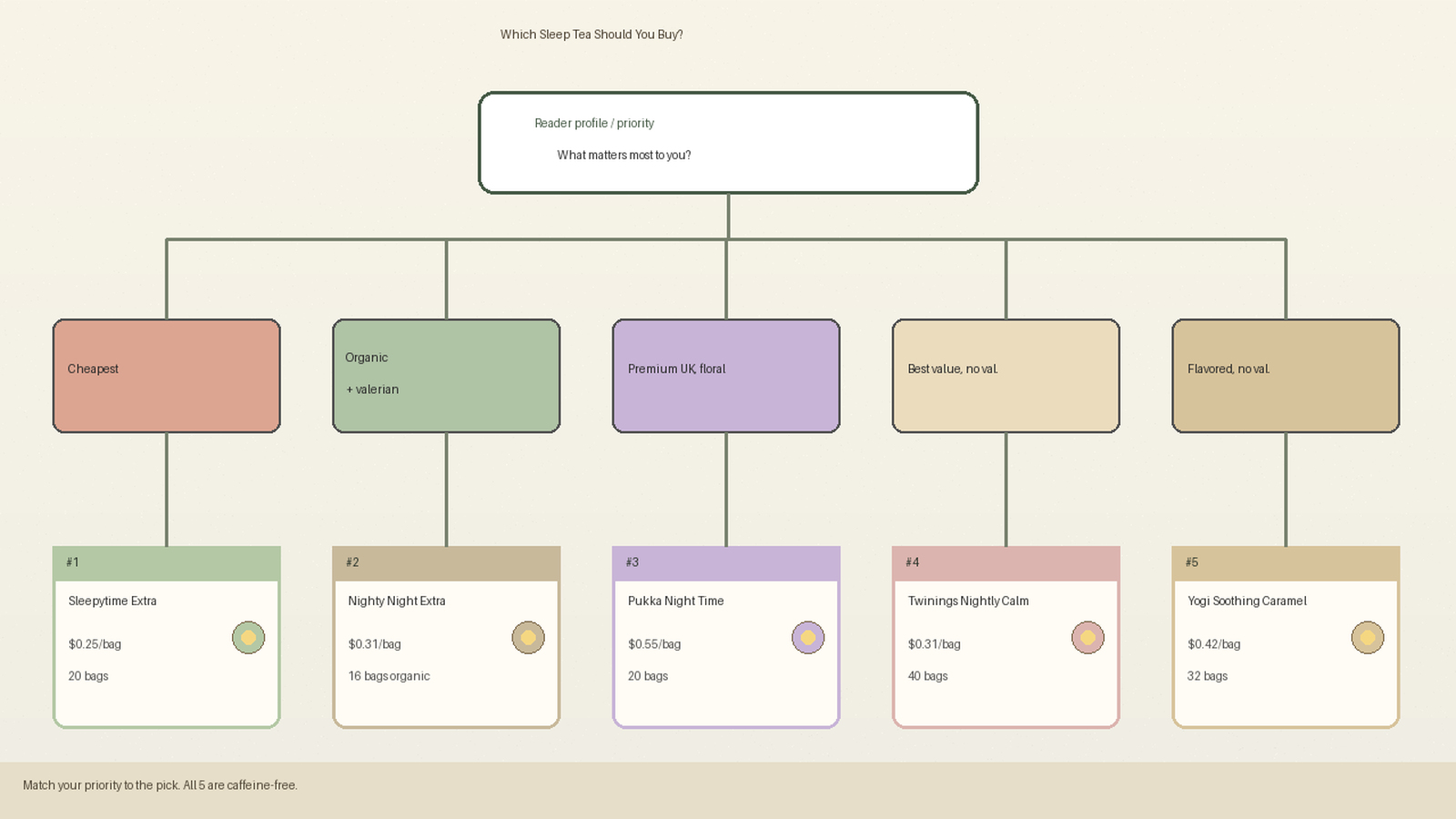
Four routing paths cover most readers. Pick the one that matches your profile.
“I want the cheapest, most familiar option” → Celestial Seasonings Sleepytime Extra (#1, $4.96, 20 bags, $0.25/bag). The American default. Lowest cost per bag in the lineup. Valerian + chamomile — earthy taste, but most readers either like it or learn to.
“I want organic + valerian + US-made” → Traditional Medicinals Nighty Night Extra (#2, $4.99, 16 bags, USDA organic). Valerian-led, USDA organic, $0.31/bag. The pick for readers who want the strongest herbal effect with organic certification at budget pricing.
“I want chamomile-light + premium UK brand” → Pukka Night Time (#3, $10.99, 20 bags, $0.55/bag). Oat flower + lavender + lime flower lead. The chamomile-light option for readers who don’t want chamomile as the dominant flavor.
“I want a flavored pick without valerian taste” → Yogi Soothing Caramel Bedtime (#5, $17.84, 64 bags in pack-of-4, $0.28/bag). Caramel + vanilla + rooibos + added L-theanine. The dessert-leaning pick for readers who find plain chamomile or earthy valerian tea unappealing.
Skip these teas if…
- You’re on sedatives, antidepressants, or blood thinners. Valerian and chamomile both have interaction potential. Talk to your prescriber before making a sleep tea a nightly habit.
- You’re pregnant or nursing. Most herbal sleep teas lack safety data in pregnancy. Use caution and consult your OB.
- You have a ragweed or daisy family allergy. Chamomile is in the Asteraceae family and can cross-react with ragweed, marigolds, and daisies.
- You want a sedative. These are wind-down tisanes, not sedatives. None of them treats insomnia. Persistent sleep problems deserve clinical care, not a tea bag.
The right sleep tea is the one you’ll actually brew — taste and routine matter more than the ingredient list. Pair any of these with the bedtime ritual structure from our tea and sleep guide, or build a non-screen evening ritual around the cup using the ten-minute tea pause.
FAQ
What tea helps you sleep the fastest?
No herbal tea acts as a pharmaceutical sedative. Within the wind-down category, valerian-led blends such as Traditional Medicinals Nighty Night Extra have the most research on the valerenic acid / GABA pathway, but the effect is modest. The fastest practical answer is the one you’ll brew at the right temperature and drink 30-60 minutes before bed — ritual matters as much as the herb.
Is chamomile or green tea better for sleep?
Chamomile. Green tea is Camellia sinensis and contains caffeine — even decaf green tea retains roughly 2-5 mg per cup. Chamomile is a different plant (Matricaria chamomilla) with 0 mg caffeine by formulation. If you want L-theanine (an amino acid in green tea associated with calm focus), Yogi Soothing Caramel Bedtime adds it as an extract without caffeine.
How late is too late to drink sleep tea?
For herbal teas, finish the cup 30-60 minutes before bed so you can brush your teeth and avoid a full bladder disrupting sleep. For caffeinated teas, the cutoff depends on your sensitivity and dose; see our caffeine by tea type guide for cup-by-cup numbers. A controlled dose-response study found that plasma caffeine concentration inversely tracks EEG delta power during sleep — in practice this means 200-400 mg caffeine taken fewer than 6 hours before bed measurably reduces deep-sleep markers [6], so test your own cutoff.
Can I drink sleep tea every night?
For most adults, plain chamomile or rooibos every night is fine. Valerian every night is debated — most herbal references suggest cycling (5-6 weeks on, 1-2 weeks off) rather than indefinite daily use. Always check interactions with your medications before making any herbal tea a nightly habit.
Is valerian root tea safe long term?
Short-term use (up to 4-6 weeks) is generally well-tolerated in healthy adults, and an umbrella review of insomnia trials concluded the safety profile is generally favorable across RCTs, though adverse-event reporting is heterogeneous [5]. Long-term safety data is limited. Valerian can interact with sedatives, antidepressants, and anti-seizure medications [1]. If you have a medical condition or take daily medication, talk to a qualified healthcare professional before regular use.
Does sleep tea work without melatonin?
Yes — most sleep teas do not contain melatonin. All five picks in this article are melatonin-free. The wind-down effect comes from the herbal ingredients (apigenin in chamomile, valerenic acid in valerian, lavender, lemon balm) plus the ritual of a warm, screen-free cup. If you specifically want a tea with added melatonin, that is a separate supplement decision covered in our tea and sleep guide.
What’s the difference between chamomile tea and chamomile sleep tea?
Plain chamomile tea contains only chamomile flowers — mild, floral, caffeine-free, no valerian or other herbs. “Sleep” chamomile teas add valerian root, passionflower, lemon balm, or other calming herbs to amplify the wind-down effect. If you’re caffeine-sensitive but want minimal pharmacological action, plain chamomile is the gentlest pick. If you want stronger relaxation support, a valerian-blended sleep tea is the next step.
References
[1] Bent S, Padula A, Moore D, Patterson M, Mehling W. Valerian for Sleep: A Systematic Review and Meta-Analysis. Am J Med. 2006;119(12):1005-12. DOI: 10.1016/j.amjmed.2006.02.026 · PMID 17145239 · PMC4394901 · https://doi.org/10.1016/j.amjmed.2006.02.026 · https://pmc.ncbi.nlm.nih.gov/articles/PMC4394901/ · verified 2026-09-27 via CrossRef + NCBI ESummary (confidence 0.95).
[2] Srivastava JK, Shankar E, Gupta S. Chamomile: A Herbal Medicine of the Past with Bright Future. Mol Med Rep. 2010;3(6):895-901. DOI: 10.3892/mmr.2010.377 · PMID 21132119 · PMC2995283 · https://pmc.ncbi.nlm.nih.gov/articles/PMC2995283/ · verified 2026-09-27 via NCBI ESummary (confidence 0.95).
[3] Appiah I et al. Effect of apigenin on seizure susceptibility, parvalbumin immunoreactivity, and GABA(A) receptor expression in the hippocampal neurons in mice. Eur J Pharmacol. 2025;996:177548. DOI: 10.1016/j.ejphar.2025.177548 · PMID 40157704 · https://doi.org/10.1016/j.ejphar.2025.177548 · verified 2026-09-27 via CrossRef (confidence 0.95).
[4] Nobre AC et al. Effects of L-theanine on cognition, mood and sleep: evidence from human trials. Front Nutr. 2026;13:1922819. DOI: 10.3389/fnut.2026.1922819 · PMID 42761839 · PMC13587617 · https://pmc.ncbi.nlm.nih.gov/articles/PMC13587617/ · verified 2026-09-27 via NCBI ESummary (confidence 0.95).
[5] Ferré S et al. Does valerian work for insomnia? An umbrella review of the evidence. Eur Neuropsychopharmacol. 2024;82:39-50. DOI: 10.1016/j.euroneuro.2024.01.008 · PMID 38359657 · https://doi.org/10.1016/j.euroneuro.2024.01.008 · verified 2026-09-27 via CrossRef (confidence 0.95).
[6] Rétey L, Adam M, Khatami R, Möller H, Riemann D. Concentration-effect relationships of plasma caffeine on EEG delta power and cardiac autonomic activity during human sleep. J Sleep Res. 2024;33(5):e14140. DOI: 10.1111/jsr.14140 · PMID 38221756 · https://doi.org/10.1111/jsr.14140 · verified 2026-09-27 via CrossRef (confidence 0.95).