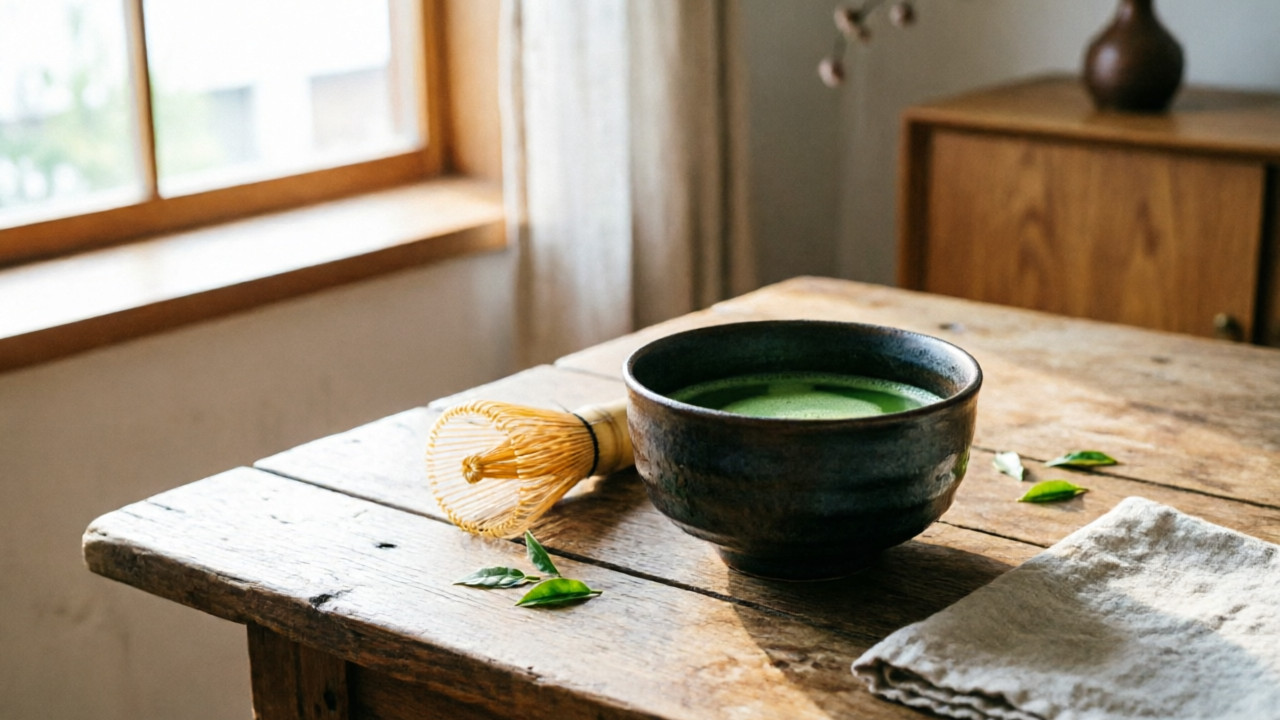
Monks didn’t drink tea before meditation by accident. The leaves of Camellia sinensis contain L-theanine, an amino acid that research links to alpha brain wave activity — the same pattern your brain produces during light meditation [1]. Tea won’t replace a practice. But it can change the texture of the minutes you spend sitting still.
This guide covers why tea pairs naturally with meditation, which teas work for different times of day, and a simple breath-and-sip technique you can run in ten minutes. If you’re exploring our broader wellness collection, this article sits alongside the caffeine by tea type reference and the matcha caffeine guide.
Why Tea and Meditation Work Together
The connection isn’t mystical — it’s chemical. L-theanine, found almost exclusively in tea plants, crosses the blood-brain barrier and modulates neurotransmitter activity. Research published in Asia Pacific Journal of Clinical Nutrition found that L-theanine increased alpha wave activity in the occipital and parietal regions of the brain — the same relaxed-alert state that meditation practitioners spend years cultivating [1].
Here’s what makes tea different from coffee for a meditation session: caffeine and L-theanine work together. A 2017 review in Current Pharmaceutical Design noted that the L-theanine and caffeine combination improved attention and reaction time compared to caffeine alone [2]. You get the alertness without the jittery edge that can make sitting still feel like a fight.
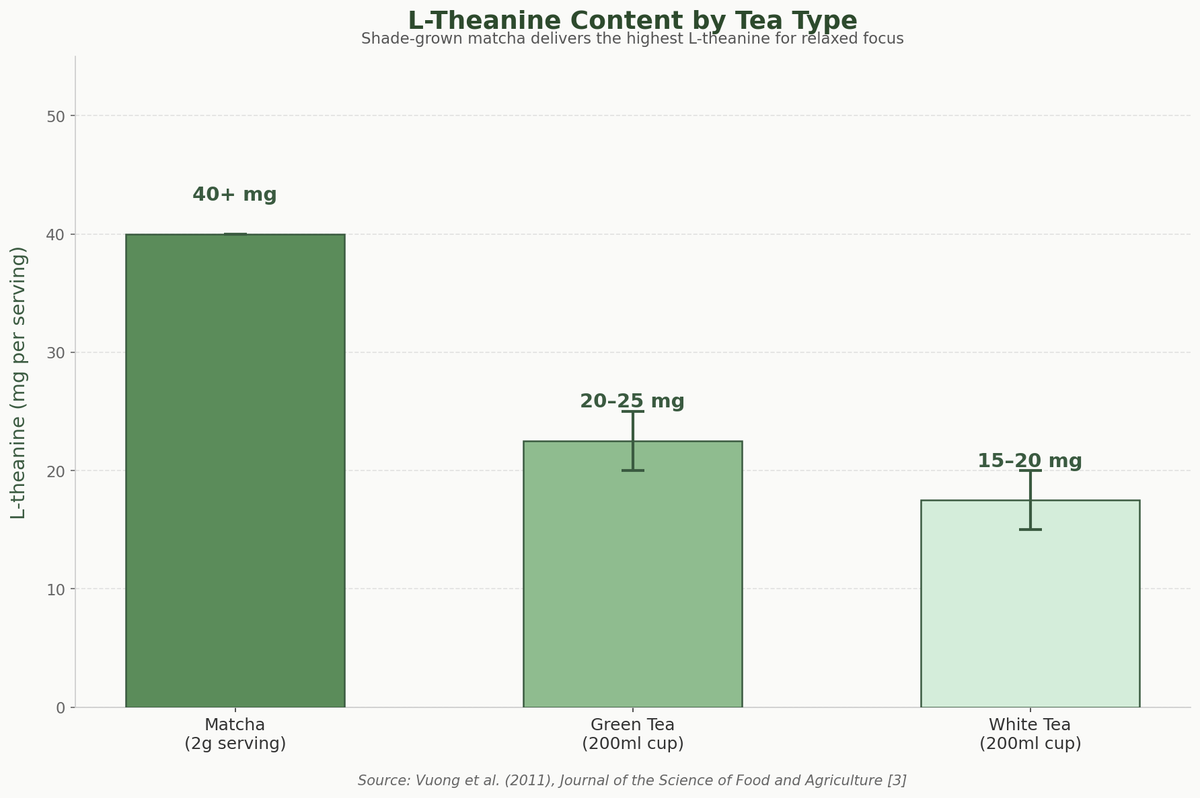
Shade-grown teas — primarily matcha and gyokuro — accumulate more L-theanine because the shading blocks sunlight conversion of theanine into catechins [3]. A typical green tea cup contains about 20–25 mg of L-theanine per 200 ml, while a 2 g bowl of matcha can deliver 40 mg or more since you consume the entire leaf [3]. L-theanine reaches peak plasma concentration 30–50 minutes after ingestion, so brewing tea 30 minutes before a sit gives you the overlap [2].
This isn’t about tea as a productivity hack. It’s about a 1,200-year-old observation that the people who drank the most tea — Chan monks in China, Zen monks in Japan — also seemed to meditate with unusual steadiness. Modern neuroscience hasn’t validated mysticism, but it has identified a plausible mechanism in L-theanine.
How L-Theanine Shapes Your Brain State
L-theanine works on two fronts. First, it increases GABA (gamma-aminobutyric acid) production — the brain’s primary inhibitory neurotransmitter. GABA dampens overexcited neural circuits, which is why L-theanine produces calm without drowsiness. Second, it boosts alpha wave oscillations in the 8–13 Hz range. Alpha waves dominate when you’re awake but relaxed — the state between active concentration (beta) and sleep (theta) [1].
A 2010 double-blind study by Giesbrecht et al. in Appetite found that the L-theanine and caffeine combination improved cognitive performance on attention-switching tasks more than caffeine alone [3]. The practical takeaway: a cup of green tea before meditation gives you both molecules in a ratio that nature already balanced. Coffee gives you caffeine without the L-theanine counterweight.
The ratio matters. A standard green tea cup delivers roughly 25 mg of caffeine and 20–25 mg of L-theanine — close to a 1:1 ratio. Matcha pushes the L-theanine higher because you consume the whole powdered leaf. A 2g matcha serving can deliver 40+ mg of L-theanine alongside 60–70 mg of caffeine. This is why monks historically preferred matcha and gyokuro for long meditation sessions — the amino acid load better offsets the stimulant [4].
Timing also plays a role. L-theanine reaches peak blood concentration 30–50 minutes after drinking [2]. If you sit down to meditate immediately after the last sip, you’re catching the rising curve. For a 20-minute sit, brew 30 minutes before, sip slowly for 5 minutes, then sit. The L-theanine will peak during your session.
Choosing Your Tea
Different teas suit different meditation contexts. Here’s how to match tea to practice:
Matcha is the classic meditation tea in both Japanese chado and Chinese chan practice. Shade-growing concentrates L-theanine, and whisking the powder into water means you ingest the full leaf. The Naoki Matcha Organic Ceremonial First Spring Blend from Kagoshima hits the sweet spot between quality and price at $25.99 for 40g. If you want a more affordable daily option, the Emerail Ceremonial Matcha Powder ($25.99 for 60g) is a solid first-harvest ceremonial choice. For whisking technique and the ceremony context, see our matcha brewing guide and the Japanese tea ceremony article.
Green tea — lighter and easier to brew than matcha, green tea is the everyday meditation companion. The moderate caffeine keeps you alert without racing. A jasmine pearl tea like FGO Organic Jasmine Pearl ($10.99 for 4oz) adds a floral aroma that gives your mind something gentle to rest on during seated practice. For a straightforward everyday green, HANDPICK Green Tea Loose Leaf ($11.99 for 255g) is hard to beat on cost-per-cup. The green tea brewing guide covers temperature and timing.
White tea — the lowest caffeine option (typically 15–30 mg per cup), white tea works well for evening practice or for anyone sensitive to caffeine. Davidson’s Organics Himalayan White ($30.76 for 16oz) is a bulk option that lasts months. See the white tea brewing guide for steeping details.
Quick Tea Comparison
| Tea Type | Caffeine (per cup) | L-theanine (approx.) | Best For |
|---|---|---|---|
| Matcha (2g) | 60–70 mg | 40+ mg [3] | Morning sit, ceremonial practice |
| Green tea | 25–35 mg | 20–25 mg [3] | Daily practice, any time of day |
| White tea | 15–30 mg | 15–20 mg [3] | Evening, low-caffeine sessions |
For the full caffeine ladder across all tea types, see our caffeine by tea type guide.
Tea Selection by Meditation Goal
Different meditation goals call for different teas. Here’s a matrix:
| Meditation Goal | Best Tea | Why |
|---|---|---|
| Concentration / focus sit | Green tea (Longjing or sencha) | Balanced caffeine + L-theanine keeps you alert without racing [1] |
| Open-awareness / body scan | Jasmine pearl or white tea | Floral aroma gives the mind a gentle anchor; low caffeine |
| Evening wind-down | White tea (Silver Needle) | Lowest caffeine (15–20 mg), won’t disrupt sleep |
| Deep practice (long sit) | Matcha (2g serving) | Highest L-theanine load; sustained alpha wave support [3] |
| Beginner / first attempt | Green tea, light steep | Familiar taste, forgiving brew, moderate effects |
If your goal is a morning focus session, the Naoki Matcha Ceremonial Blend gives you the strongest L-theanine dose. For an afternoon reset, the HANDPICK Green Tea Loose Leaf ($11.99) offers a gentler lift. And for evening practice when you want calm without caffeine, Davidson’s Himalayan White is the go-to. You can explore more options in our how to choose a gaiwan guide if you want to pair your tea with the right brewing vessel.
How to Brew Mindfully
Mindful brewing isn’t about owning fancy equipment — it’s about paying attention to each step. That said, a few tools make the process more consistent:
What You’ll Need
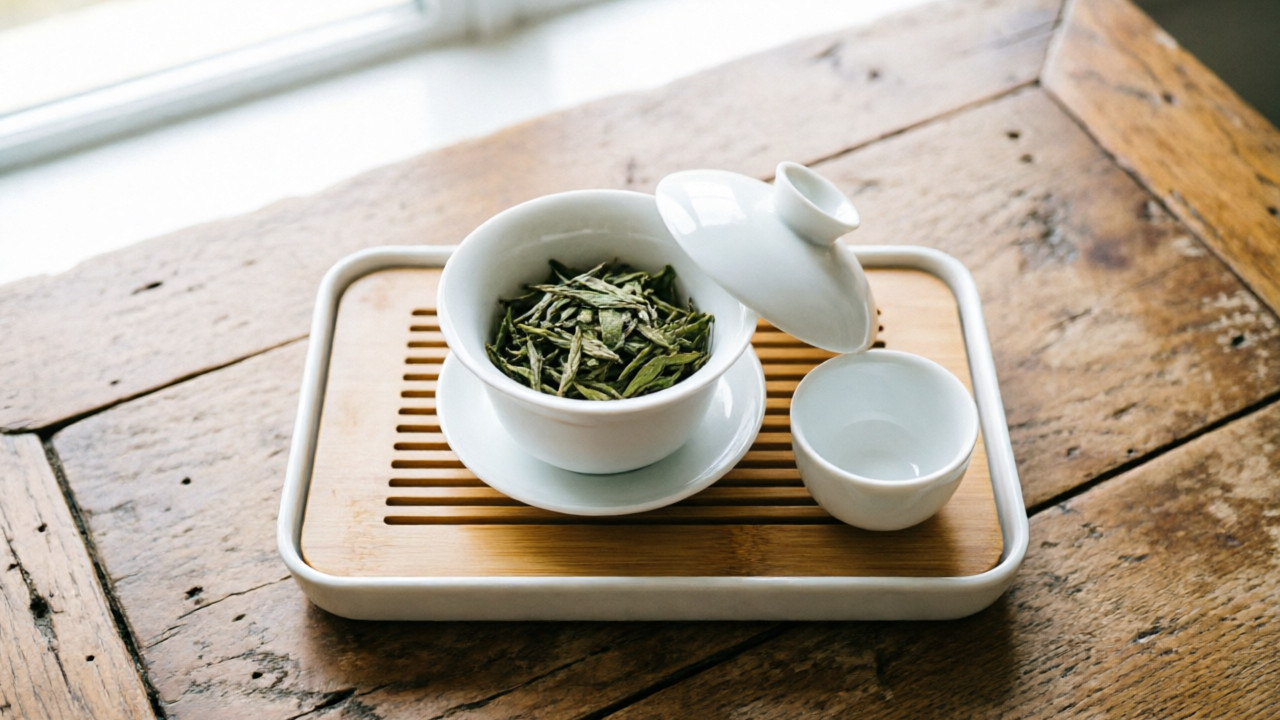
- A gaiwan or simple teapot. The Cididu 3 Set Porcelain Gaiwan ($16.99) gives you the traditional lidded bowl that forces you to slow down. A gaiwan demands attention — the lid becomes a strainer, the bowl a cup. For gongfu-style brewing context, read about the gongfu tea ceremony.
- A temperature-control kettle. Green and white teas need water below boiling — 75–80°C for green, 70–75°C for white. The Cosori Gooseneck Kettle ($69.99) holds precise temperatures. The HIYAKOI Gooseneck Kettle ($39.99) is a solid budget alternative with similar temperature control.
- Your chosen tea. Start with 2–3 g of leaf green tea or 2 g of matcha powder.
The Brewing Steps
- Heat the water. Watch the steam. When small bubbles form along the kettle wall — roughly 80°C for green tea — you’re ready. Don’t let it reach a rolling boil for green or white teas.
- Warm the vessel. Pour hot water into your gaiwan, swirl, and discard. This isn’t ceremony for its own sake — a warm vessel keeps the brew temperature stable.
- Add the leaf. Use 2–3 g of loose leaf (about a tablespoon) for a 150 ml gaiwan. If using matcha, sift 2 g (one chashaku scoop or half a teaspoon) into a bowl.
- Pour with attention. Listen to the sound of water hitting the leaf. Watch the leaves open. This is where most meditators find the practice begins — not in the sitting, but in the pouring.
- Wait. Green tea steeps 1–2 minutes. White tea 3–5 minutes. Matcha gets whisked for 15–30 seconds in a zigzag motion.
- Pour and sit. Decant completely — don’t let the leaves sit in water between infusions. Then settle into your breath.
If you’re short on time and want a structured version, our ten-minute tea pause guide walks through a timer-based version.
Breath and Sip: A Simple Practice
You don’t need a cushion, a bell, or an app. Here’s a practice that takes 10 minutes and works with any tea:
Minutes 1–3: Brew with full attention. Every action — measuring leaf, pouring water, waiting — gets your complete focus. When your mind wanders to your to-do list, bring it back to the sound of water, the warmth of the cup, the smell of the leaf.
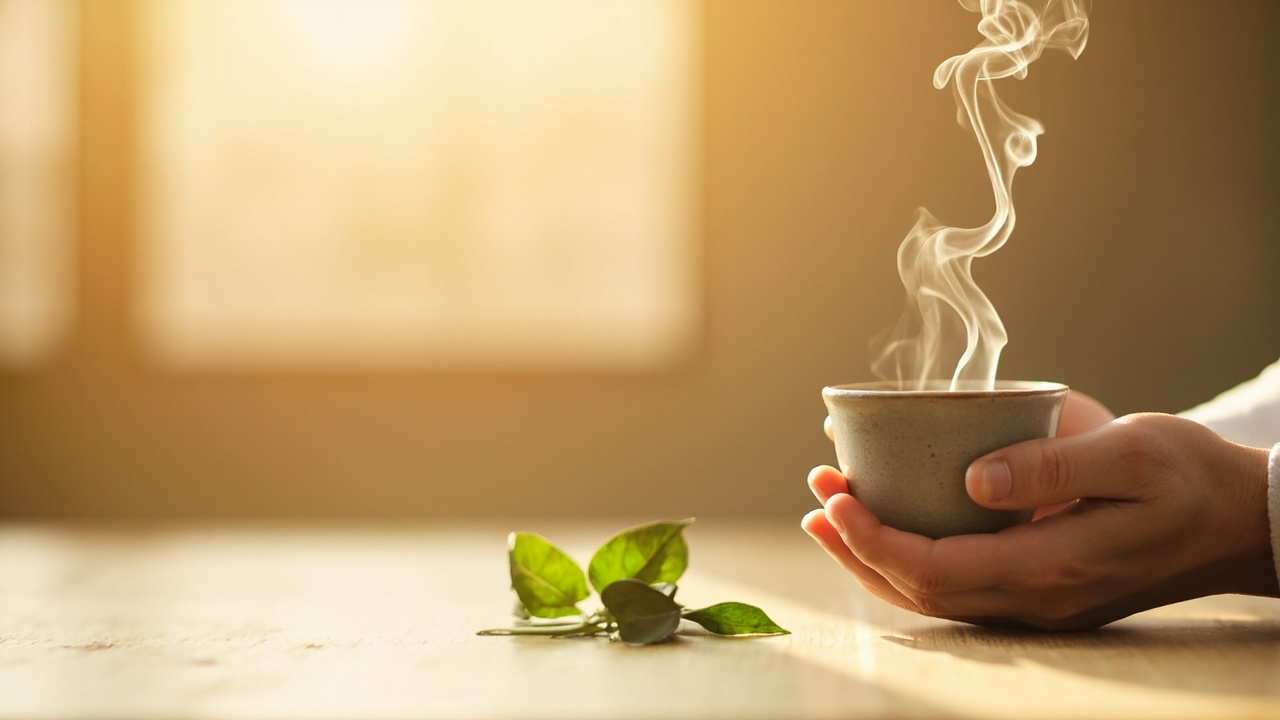
Minutes 4–7: Sip and breathe. Hold the cup. Feel the weight. Take one slow breath in. Sip. Notice the temperature, the texture, the first flavor and the finish. Take one slow breath out. Repeat. This is the core of the practice — there’s nothing to achieve, no state to reach. Just cup, breath, taste.
Minutes 8–10: Sit with the aftertaste (hui gan). Put the cup down. Close your eyes if that feels natural. Notice the lingering sweetness or astringency. Notice your breath without trying to change it. Notice sounds without labeling them.
That’s it. Ten minutes, one cup, no props. The tea ceremony tradition of Japan calls this ichigo ichie — one time, one meeting. Each cup is unrepeatable.
Building a Daily Ritual
A meditation practice sticks when it’s anchored to a time and place. Tea gives you both:
- Pick a time. Morning works for matcha — the caffeine and L-theanine combo supports alertness for the day. Afternoon suits green tea. Evening calls for white tea or a very light brew.
- Keep it simple. One vessel, one tea, one spot. Don’t complicate the setup. If you’re using a gaiwan daily, it becomes muscle memory within a week.
- Start small. Three minutes of mindful brewing is better than a plan for 30 minutes that never happens. Build from there. Many practitioners report that the first week feels mechanical — measuring, pouring, tasting — and somewhere around week two or three, the mind starts to settle more quickly into the cup.
- Let it grow. After a few weeks, the ritual starts to carry its own momentum. You’ll find yourself looking forward to the quiet. That’s the practice working — not the tea doing something to your brain, but the repetition training your attention. The Japanese tea tradition calls this keiko (稽古) — repeated practice that slowly reshapes how you approach the cup.
A 7-Day Tea Meditation Progression
If you’re starting from zero, here’s a week-by-week ramp:
Days 1–2: Just brew. Don’t meditate yet. Pick one tea — we recommend a green tea like FGO Organic Jasmine Pearl ($10.99) for its forgiving brew and pleasant aroma. Brew it in the Cididu Porcelain Gaiwan ($16.99). Pay attention to the process — measure, pour, wait, taste. Notice what you notice. Two minutes of brewing attention is the seed.
Days 3–4: Add the sit. After your last sip, set a timer for 3 minutes. Close your eyes. Follow your breath. When the timer goes off, go about your day. The goal isn’t depth — it’s consistency.
Days 5–6: Extend to 5 minutes. By now the brewing is muscle memory. Use the freed attention for the breath-and-sip technique from the previous section. If you find your mind racing, switch to a lower-caffeine white tea for the evening session.
Day 7: Full 10-minute session. Combine brewing (3 min) + breath and sip (4 min) + aftertaste sit (3 min). You’ve now run a complete tea meditation. The Cosori Gooseneck Kettle ($69.99) makes temperature control automatic so you can focus on the ritual, not the thermometer.
After week one, the practice is self-sustaining. You’ll know which tea suits your morning sit and which works for evening. The form is set — depth comes with time.
The Mind of Tea
Tea asks nothing and gives quietly. The leaf opens in hot water because that’s what leaves do — not because you told it to. Your job is simpler than you think: heat the water, wait, pour, taste. The meditation is already in the cup. Sip slowly. Breathe fully. Sit with what’s here.
References
[1] Nobre AC, Rao A, Owen GN. “L-theanine, a natural constituent in tea, and its effect on mental state.” Asia Pacific Journal of Clinical Nutrition. 2008;17(S1):167–168. https://pubmed.ncbi.nlm.nih.gov/18296328/
[2] Dietz C, Dekker M. “Effect of Green Tea Phytochemicals on Mood and Cognition.” Current Pharmaceutical Design. 2017;23(19):2874–2905. https://pubmed.ncbi.nlm.nih.gov/28322147/
[3] Vuong QV, Bowyer MC, Roach PD. “L-Theanine: properties, synthesis and isolation from tea.” Journal of the Science of Food and Agriculture. 2011;91(11):1931–1939. https://pubmed.ncbi.nlm.nih.gov/21432890/
[4] TeaWithMind. “Caffeine by Tea Type.” https://teawithmind.com/wellness/caffeine-by-tea-type/